Small-scale tea growers and other industry stakeholders have raised several questions about the proposed levy, including whether it amounts to double taxation and whether farmers will ultimately bear the cost. The tea industry is a key foreign exchange earner for the country.
The debate comes at a time when small-scale tea growers who supply green leaf to KTDA started receiving their second payment, the annual bonus, in their bank accounts from this week. The payments are expected to boost the circulation of money in rural areas where the farmers live.
Mr Kagombe was cited for disorderly conduct after failing to declare his interest in the matter, having been identified as a director of three companies, during debate on the Tea Amendment Bill, 2023. This was in violation of Parliamentary Standing Order 107A (1) (e).
The Standing Order provides that failure to declare a personal interest in a matter before the House or a committee violates Standing Order 90 and constitutes disorderly conduct by a member.
National Assembly Speaker Moses Wetang’ula referred the matter back to MPs, who returned to the drawing board after a petition filed by Dr John Kennedy Omanga was allowed. It was established that Mr Kagombe had failed to declare his interest in the matter before the House.
Gatundu South MP Gabriel Kagombe makes a call at the Machakos law courts on June 7, 2024.
Photo credit: Pius Maundu | Nation Media Group
Tea Board of Kenya (TBK) chief executive Willy Mutai has sought to clarify the proposed Tea Levy Regulations, 2026, which are pending before the National Assembly, to help farmers and other stakeholders understand their implications.
The tea levy is a statutory charge introduced under the Tea (Levy) Regulations, 2026, pursuant to Section 53 of the Tea Act, 2020.
It is intended to provide sustainable funding for tea research, market development, quality assurance, infrastructure development and farmer income stabilisation.
In an interview with the Nation , Mr Mutai said the levy would not affect farmers’ earnings because it would be charged on importers and exporters.
However, farmers have questioned whether the financial burden could ultimately be passed on to tea growers through deductions from payments made by individual factories.
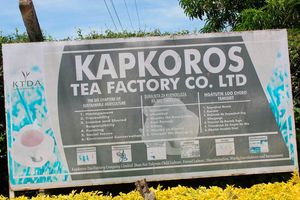
KTDA has 77 factories, which have been consolidated into 54 units. The factories are expected to pay farmers between Sh12.50 and Sh50 per kilogramme of green leaf supplied in the 2025/2026 financial year, depending on the performance of their tea in the local and export markets.
The levy is expected to enable the Tea Board of Kenya to finance campaigns to promote Kenyan tea, international market promotions, trade missions, exhibitions, market intelligence and research.
Mr Mutai said Kenyan tea currently earns an average export price of $2.27 per kilogramme, compared with $5.84 for Sri Lankan tea, $4.53 for Chinese tea and $3.23 for Indian tea. He said the levy was expected to help increase earnings from Kenyan tea in the export market.
Kenyan tea is exported to 100 markets, but 85 per cent of exports are concentrated in 10 countries and markets, including Pakistan, Iran, the United Kingdom, the United Arab Emirates (UAE), Russia, Oman, India, Poland, Kazakhstan, Egypt and the Commonwealth of Independent States (CIS).
Kenya is seeking to expand into new markets, including North America, West Africa, China and other parts of Asia.
Warehousing hubs are expected to be established in strategic markets, alongside improvements to logistics and distribution channels. The initiatives are also intended to help Kenya recapture re-export markets currently dominated by other countries.
Mr Mutai said the levy was intended to address a funding gap that emerged after the government abolished the ad valorem levy in 2016.
Mr Willy Mutai (left) the Tea Board of Kenya Chief Executive Officer and Dr Paul Ronoh, the Principal Secretary for Agriculture, confer during a meeting with farmers at Tirgaga tea factory in Bomet county on August 24, 2024.
Photo credit: Vitalis Kimutai | Nation Media Group
Who is required to pay the 0.8 per cent Tea Levy under the law?
Tea exporters are required to pay 0.8 percent of the auction or custom value for direct sales of made tea in the country.
What percentage are the tea importers to Kenya charged under the new regulations?
Since Kenya is one of the highest tea producing countries in the world, tea importers are required to pay 100 percent of the import value per consignment of made tea.
For clarity, tea factories in the country, wholesale and retail outlets, aggregators, domestic traders, and the local consumers are not required under the regulations to pay the levy.
What is the purpose of the levy and how will it be allocated?
The fund is intended to be solely ring-fenced for the tea sector development with – 50 percent going to Tea Prices Stabilization Fund, 20 percent to Tea Research Institute (TRI) based in Kericho, 15 per cent to Tea growing county governments towards infrastructure development in the tea belts, and the remaining 15 percent to the Tea Board of Kenya (TBK) which is the regulator in the industry.
How will accountability and transparency be assured in management of the fund?
The fund will be subject to Public Finance Management laws, and as a result will be audited and findings made public.
Digital monitoring systems have been introduced with regular audits and reporting requirements being applied as well as stakeholder oversight mechanisms provided under the existing laws in the country. There will also be parliamentary and stakeholder oversight.
How will accountability and transparency be assured in management of the fund?
The fund will be subject to Public Finance Management laws, and as a result will be audited and findings made public.
Digital monitoring systems have been introduced with regular audits and reporting requirements being applied as well as stakeholder oversight mechanisms provided under the existing laws in the country. There will also be parliamentary and stakeholder oversight.
There have been concerns by the tea growers and stakeholders that the levy will reduce the earnings by farmers for supply of green leaf to factories. Explain.
There should be no fear that the cost will be passed to farmers, that will eat into their earnings. The levy is charged on exporters and importers at the point of export or import. There should be fear of the cost being passed to this cluster of stakeholders. The farmers’ earnings in terms of monthly pay and annual bonus, determined by the factory will absolutely remain untouched.
What informed the proposal to levy 100 percent on importers of tea?
It is important to note that Kenya produces tea predominantly sold in the export market either directly or through the Mombasa Tea Auction floor.
The decision to charge a 100 percent levy on importers is meant to protect the local farmers and tea producers/processors from unfair competition which arises from a possible cheap and low-quality teas that has the potential to damage Kenya’s tea quality reputation in the local and global market.
New Content Item (1)
Photo credit: File | Nation Media Group
Under the new Levy Regulations, are there any exemptions given to the exporters?
There are exemptions aimed at encouraging value addition of tea before being offloaded to the market in what is expected to spur economic growth, on – Domestic retail tea sales, value added tea packed and exported under 10 kilograms, tea extracts and tea aroma products, tea processed in Export Processing Zones (EPZs) or Special Economic Zones (SEZs) for local consumption.
How are farmers expected to benefit from the new levies?
It is envisaged that the tea growers in the country will have infrastructural upgrades in the tea growing belts in the country, better research and extension services to spur production, improved quality standards, enhanced market promotion and access resulting in better prices, there will be price stabilization mechanisms in place, an increase in competitiveness and sustainability in the tea industry.
What exactly should farmers expect from the research and innovation in the industry from the new regulations?
The 20 per cent levy to the Tea Research Institute (RTI) is targeted at the roll out of specialty and value-added tea development, climate resilient initiatives in the sector, pest and disease management, development of improved tea varieties that would result in high green leaf production, product diversification, modern processing technologies,
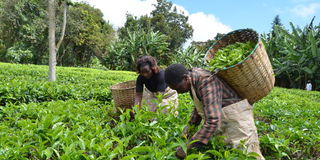
Farmers picking tea in Gatanga, Murang'a County.
Photo credit: File | Mation Media Group
Are there penalties applied for non-compliance?
The Tea Levy Regulations (2026) shall be fully applied and those who have flouted it will face a raft of penalties including suspension of permits and any other sanctions provided under the Tea Act, 2020 and related regulations.
Claims abound of multi-level taxation in the tea industry eating into farmers’ earnings. Comment.
The tea industry generates around Sh4.6 million annually from licensing fees, with the industry players paying taxes like other sectors of the economy, most of which is shouldered by the consumers and not the farmer.
It should also be noted that the tea sector enjoys several tax exemptions, including VAT exemptions and the zero-rated provision in what supports competitiveness.
The zero rating applies to tea supplied to auction centres for export, tea purchased locally for value addition before export.
The VAT exemption on the other hand applies to locally consumed teas, tea packaging materials.
Still, there is a fertilizer subsidy that has been lowered from Sh2,500 to Sh2,000 per 50kg bag compared to market prices of approximately Sh7,000 that previously applied across. We are also in negotiation with China and other countries (export markets) for tariff reductions.