The Kenya Tea Development Agency (KTDA) is to release annual bonus payments to more than 700,000 small-scale farmers today, with the money set to hit their bank accounts alongside their September monthly earnings.
KTDA Holdings chairperson Enos Njeru said the funds had been released last Friday. “Farmers will access their money from Monday, during normal banking hours,” he said at the weekend.
In a break with tradition, factories will announce their bonus rates, also known as second payments, instead of the KTDA board announcing the rates on their behalf. The sum to be paid by the 77 factories, which have been consolidated into 54 units, including satellite factories operating under mother factories, has not been announced yet.
In 2024/25, farmers received Sh69.8 billion, about Sh20 billion less than the Sh89.6 billion paid in 2023/24. Though the figures for this year have not been made official, bonus rates will range from Sh12.50 to Sh50 per kilogramme depending on a factory and due to variations in the prices fetched from different factories at the Mombasa Tea Auction and through direct sales to local and export markets. Buyer preferences are influenced by several factors, including rainfall, altitude, soil type and the quality of tea produced in a region. Practices, such as weeding, fertiliser application, plucking and pruning, also affect yields and quality.
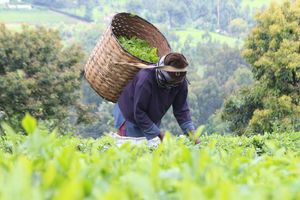
A farmer picking tea.
Photo credit: File | Nation Media Group
Factories account for the cost of processing and selling the crop before determining how much they can pay farmers. Tirgaga Tea Factory chairperson Kipngeno Rono said factories calculate the cost per kilogramme by weighing their operating expenses against the prices fetched by processed tea. “Electricity, wood, fuel, water, leaf collection expenses, maintenance of equipment, workers’ payments, loan repayments, among others, are factored in when calculating the cost of green leaf per kilogramme.”
An accountant by profession, Mr Rono said the bonus payment is based on the financial year ending June 30. Prices at the auction and the eventual payments to farmers are also influenced by the performance of the shilling against the dollar during the period under review. The differences in bonus rates among factories have repeatedly raised questions about how the payments are calculated and why farmers in some regions earn more than others.
First payment refers to a reserve price individual factories pay farmers annually, per month, for supplies to the factory management by the Kenya Tea Development Agency. The prices vary from factory to factory because of operation costs, market share, and resulting prices.
A factory calculates the amount it received from the sale both at the Mombasa Tea Auction – a regional trading floor – and the direct sales in the country to retail outlets, annually. The cumulative production cost in the year under review, including salaries and allowances, fuel, loan repayments, statutory deductions and taxes, maintenance of equipment, purchases, transport, and management fees, is then added.
The factory management then subtracts operation costs from cumulative sales, with the difference (revenue) dictating the amount the farmers are paid per kilogramme. The factories will calculate the number of kilogrammes received and processed and divide by sales. After arriving at the cost per kilogramme, they then deduct the monthly payment (first payment) that had been advanced to farmers, with the difference being bonus due.
Individual factories use the same rate card to pay farmers the annual bonus (second payment) in their zones (which varies from one factory to the next), but the total earnings by individual farmers are different and depend on the annual cumulative kilogrammes supplied by a grower. Farmers supply different amounts depending on the acreage of tea bushes they have, the agronomic practices and production levels on their farms, and thus cannot earn the same even as the same rate card is applied.
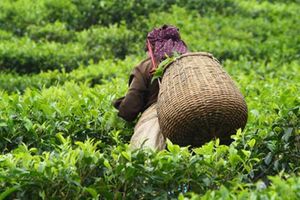
A farmer plucking tea.
Photo credit: File | Nation Media Group
No. The multinational tea companies and private companies pay slightly higher prices for supplies to factories, as compared with what the KTDA factories pay, but do not pay a bonus to the growers.
The West of Rift region encompasses tea-growing belts in the Rift Valley, including Bomet, Kericho, Nakuru, Kisii, Nyamira, Narok, Nandi, Elgeyo Marakwet, Uasin Gishu and Trans Nzoia. The East of Rift refers to the larger Mount Kenya region, including Nyeri, Kiambu, Meru, Embu, Kirinyaga, Murang’a and Tharaka Nithi.
The reason that has been given over the years, but contested lately by the stakeholders, is that the tea from West of Rift is less superior to that of the East of Rift because of agronomic practices and harvesting standards. Whereas the West of Rift has the highest number of KTDA-managed, private and multinational factories, the claim has been that its tea is of lower quality than that of the East of Rift. This matter has lately become contentious, with claims that the narrative was a marketing gimmick against one region.
The standard practice is the harvest of two leaves and a bud, which produces premium tea that is in demand in local and export markets.
On average, 4.3kg of green tea leaves make one kilogramme of processed tea.
Black CTC tea refers to the traditional tea in most households and hotels. While black is the colour it maintains after processing, CTC means cut, tear and curl, which is the production process it is subjected to at the factory.
Cost of production in factories is different and is mainly dictated by the amount of green leaf crushed, the cost of transport, electricity, fuel and wood, among others. Some factories that have adopted solar energy and hydroelectric projects have significantly cut down their operating costs, ploughing back the savings into paying farmers.
Factories that have less or no loans to repay also pay their small-scale tea growers more, compared with the other factories.
In the high rainfall season, the factories operate optimally due to increased production and supplies, thus cutting down on costs, as compared with when a long drought is experienced.