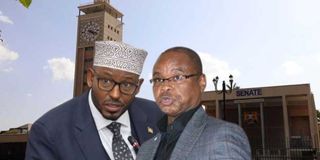
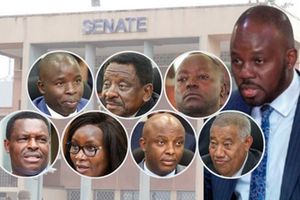
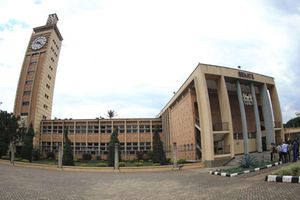
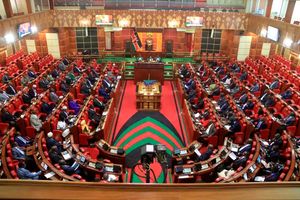
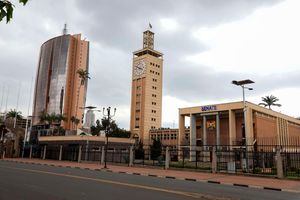
The bribery storm involving senators and governors has exposed a web of corruption allegations in Parliament, sharpening tensions over accountability in the use of public funds.
Governors say they have evidence that some members of the Senate County Public Accounts Committee (CPAC) demanded bribes during meetings to review audit reports.
They claim the problem has escalated and say they are ready to present the evidence to Senate leadership at a formal meeting.
Senators, however, have challenged the governors to substantiate their claims, questioning why officials who say they have nothing to hide would submit to extortion.
The standoff intensified on Tuesday when Narok Governor Patrick Ntutu and Kitui Governor Julius Malombe broke ranks with the Council of Governors (CoG) to appear before the Senate, arguing that accountability is an individual, not collective, responsibility.
Narok Governor Patrick Ntutu.
Photo credit: File | Nation Media Group
On Tuesday, the CoG reiterated its accusations of extortion, harassment and intimidation by some CPAC members, saying it would present evidence against the alleged rogue senators to Speaker Amason Kingi and House leadership.
In a protest letter to Senate Speaker Amason Kingi, the council’s chairperson, Ahmed Abdullahi, said the governors were seeking a meeting with Senate leadership “at the earliest opportunity” to address their grievances. Mr Kingi did not immediately set a date but, in a press statement, criticised the public condemnation of senators.
Senate Speaker Amason Kingi at the Senate in this picture taken on Wednesday, May 3, 2023.
Photo credit: Dennis Onsongo | Nation Media Group
Mr Abdullahi said extortion, which he claimed had become commonplace in Parliament, had escalated into a crisis. The Wajir governor described the bribery allegations as systemic, noting that President William Ruto and the late opposition leader Raila Odinga had previously raised similar concerns.
“The Presidency has said the same, and our late party leader, Raila Odinga, also spoke about it. There is nothing new we are saying, except that the situation has escalated and must be addressed. It cannot be swept under the carpet,” he said.
He added that the governorship was an exposed position, leaving governors compelled to “buy peace” at multiple levels.
He said the decision to boycott the Homa Bay Senator Moses Kajwang’-led committee did not amount to fleeing accountability or financial responsibility.
County Public Accounts Committee Chair Senator Moses Otieno Kajwang’ during a session on February 8.
Photo credit: Lucy Wanjiru | Nation Media Group
The second-term governor said governors only took issue with that committee and some of its members. He added that Senate Standing Orders require members mentioned in investigations to step aside.
“This is why we limited our concerns to one committee and certain members. We deliberately avoided naming individuals. I have since written to the Speaker seeking an audience with Senate leadership, where governors will table any evidence they have. We expect changes in that committee,” he said.
Nyeri Governor Mutahi Kahiga said oversight must be exercised responsibly, adding that governors would not be intimidated. Kisii Governor Simba Arati accused some senators of using oversight meetings to extort governors.
Nyeri Governor Mutahi Kahiga.
Photo credit: Joseph Kanyi I Nation Media Group
“Some of those senators are aspiring governors and are siphoning funds for the 2027 elections,” Mr Arati claimed.
Mr Kahiga, a former Council of Governors vice-chairman, said governors had sufficient evidence and would not be cowed. “We are also elected, just as you are,” he said.
In a statement, Senate Speaker Amason Kingi urged the Council of Governors to raise its concerns through established and legitimate institutional channels.
He said the Senate remained open to constructive engagement with devolution stakeholders but warned that unsubstantiated media allegations risk undermining intergovernmental cooperation.
The former Kilifi governor maintained that accountability could not be substituted with excuses of any kind.
“I have been governor of Kilifi County for 10 years and have never had a problem appearing before the Senate. If you are doing the right thing, you will not be afraid. But if you are doing something wrong, you will start panicking. You must account for the resources entrusted to you,” Mr Kingi said.
He added: “The Senate notes the Council of Governors’ demand for the reconstitution of the County Public Accounts Committee, citing alleged political witch-hunts, harassment, extortion and intimidation by four unnamed members. While the Senate remains open to structured dialogue, resorting to mudslinging and unsubstantiated media allegations, unsupported by evidence, is neither appropriate nor conducive to intergovernmental cooperation.”
Senate Majority Leader Aaron Cheruiyot said public condemnation of the Senate by governors, as well as threats to skip Senate summonses, would not be tolerated and amounted to a violation of the law.
Kericho Senator Aaron Cheruiyot.
Photo credit: Lucy Wanjiru | Nation Media Group
“We cannot be addressed from hotels in Kilifi by people purporting to be excellencies when there is nothing excellent about their conduct. If, as a governor, you believe you have done nothing wrong, why would you allow yourself to be extorted?” asked the Kericho senator.
He said governors who had handled public funds properly should appear before the Senate and respond to questions instead of lecturing lawmakers.
As the standoff between the two sides continues, MPs have for years been accused of turning parliamentary committees into avenues for soliciting bribes.
“They collect money in the name of Parliament, yet most of it never reaches the institution but ends up with a few individuals. Did you know that some members collected Sh10 million to pass the Anti-Money Laundering Bill?” the President asked.
He also questioned the role of “welfare” chairpersons in parliamentary committees, alleging they were involved in extortion. Referring to a recent Senate scandal, he asked how an individual could raise Sh150 million, questioning whether the money came from personal sources or county coffers.
President Ruto made similar accusations a week earlier at a private sector forum, where he accused corporate executives of bribing MPs to influence policy and legislation.
At the opening of the devolution conference in Homa Bay on August 13, President Ruto accused some MPs of soliciting bribes from State officials to influence committee reports in their favour.
Last year, former Attorney-General Justin Muturi said he had been targeted by rent-seekers during his Cabinet vetting, describing the problem as systemic in Parliament.
“When I went to the Senate to answer questions, I was hidden in a room and told to ‘toa ya wazee.’ I told them off,” the former CS said.
“When I went to defend the NYS [National Youth Service] supplementary budget, a ministry official requested that we provide some money for MPs. I refused.”
“Remember when I was Speaker, I even invited the EACC to Parliament to help me fight this vice,” Mr Muturi recalled.
As Parliament again faces scrutiny over allegations of extortion and harassment, senators insist they will continue holding governors accountable.
Senator Kajwang said only governors engaged in wrongdoing should fear the Senate, challenging the Council of Governors (CoG) to provide evidence of misconduct among senators instead of spreading gossip.
“If you come here with embarrassing records, we will embarrass you. If you come up with poor responses, we will embarrass you. If your audit reports reveal theft, we will not protect you,” Mr Kajwang said. “We will not attend meetings based on gossip or character assassination.”
Nairobi Senator Edwin Sifuna said the Committee on Powers and Privileges (CPAC) is not an appendage of the CoG to dictate its membership.
He added that even if the committee is reconstituted, the new senators will continue to hold governors accountable.
“Even if you choose another set of senators, no one will allow Sh4 million to be spent on a Christmas tree or the CAIPs account to be raided for boda boda celebrations,” said the Senate deputy minority whip. “They should, in fact, send us the names of the senators they want.”
Minority Leader Stewart Madzayo said the Senate will not tolerate interference with CPAC, expressing confidence in the committee. “There is nothing the committee is doing outside the law. Any governor who refuses to appear will be in breach of the Constitution,” he said.
Nandi Senator Samson Cherargei added: “The way we fight for more county resources is the same way we will demand accountability. Governors can run, but we will catch up with them.”
Senate County Public Investments and Special Funds Committee Chairperson Godfrey Osotsi responded to governors who said they would appear only once per audit cycle, saying they will be required to appear at least three times.
He said his committee has 560 reports to process, with each county submitting an average of 11 reports — too many to handle in a single meeting.
The Vihiga senator warned that the Senate will not approve disbursement schedules for any county whose governor fails to appear before it. “Appearance before the Senate is not dictated by the CoG. That is an amorphous body. We appropriate funds to specific counties, and appropriation must be followed by accountability. We have decided to process four reports per session, and governors will have to appear before us at least three times,” said Mr Osotsi.
Kitui Senator Enock Wambua added that accountability for public resources is individual, not institutional. Governors who heed the CoG call will do so at their own risk.
Kitui Senator Enoch Wambua.
Photo credit: File | Nation Media Group
“There will be consequences for non-appearance. Each governor will carry their own cross. Those who refuse to appear are running away from mistakes in managing county resources. We work late to ensure more money reaches counties, yet some governors draw the line when accountability is demanded. We shall not be bowed,” he said.