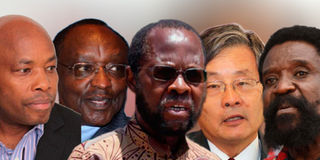
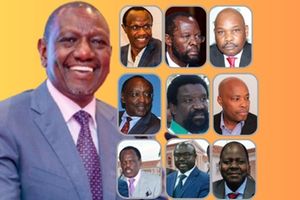
The team of scholars behind President William Ruto's ambitious economic plan to steer Kenya towards developed-country status have careers spanning academia, public service, governance and international development.
Rather than assigning the task of crafting Kenya's post-Vision 2030 development blueprint to politicians or career bureaucrats, President Ruto turned to five distinguished professors—Prof Hiroyuki Hino, Prof Anyang' Nyong'o, Prof Michael Chege, Prof Karuti Kanyinga and Prof Peter Wanyande—to undertake what he described as "an exercise in scholarship and strategic thinking on Kenya's future beyond Vision 2030."
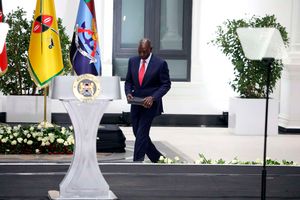
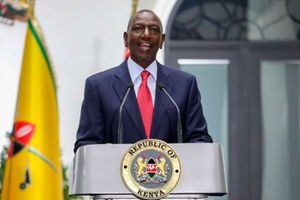
Receiving the team's report on July 21, President Ruto publicly acknowledged their contribution.
"Once again, I thank Professor Hiroyuki Hino, Professor Anyang' Nyong'o, Prof. Michael Chege, Prof. Karuti Kanyinga, Professor Peter Wanyande, their distinguished colleagues, and all those who contributed to this important work," he said.
According to State House Spokesperson Hussein Mohamed, the composition of the team reflected the President's decision to draw from scholars with deep expertise in political economy, governance, public policy, development planning and comparative politics rather than relying solely on government officials.
Their collective experience cuts across Kenya's political divide—from former President Mwai Kibaki's reform agenda to the late former Prime Minister Raila Odinga's policy circles—while also bringing international perspectives on economic transformation.
During his national address last Week, President Ruto noted that the conversation on Kenya’s future plan stems from “extensive consultations he held with “former President Uhuru Kenyatta, former Prime Minister Raila Odinga,” and a host of other leaders.
The team tasked with the mission combines expertise in economics, governance, constitutionalism, public administration and comparative development, fields considered central to designing a long-term national vision capable of surviving changes in political leadership.
Prof Hiroyuki Hino.
Photo credit: File | Nation
Prof Hiroyuki Hino brings extensive international financial and development experience to the assignment.
A Japanese national, he joined the International Monetary Fund (IMF) in 1975 and later served as Director of the IMF's Regional Office for Asia and the Pacific after his appointment in 2002. Before that, he was mission chief for the Fund's work in several African countries and also contributed to IMF policy development through the institution's Exchange and Trade Relations Department.
He served as Professor of Economics at Kobe University between 1996 and 1997 and has spent decades studying development trajectories across Asia and Africa.
His Kenyan experience also bridges political divides. During the Grand Coalition Government, he served as an economic adviser to then Prime Minister Raila Odinga, giving him first-hand knowledge of Kenya's policy environment.
According to Mr Mohamed, Prof Hino's comparative work on East Asian transformation complements President Ruto's repeated references to countries such as South Korea, Singapore, China and Vietnam as examples of nations that successfully transformed themselves through long-term planning, institutional discipline and sustained economic reforms.
His experience offers lessons on how developing countries can transition into industrialised economies while balancing fiscal discipline with development priorities.
Prof Anyang’ Nyong’o.
Photo credit: File | Nation
If Prof Hino contributes international experience, Prof Anyang' Nyong'o provides institutional memory.
Few Kenyans have combined academia and public service as extensively as the Kisumu Governor, former Cabinet minister, senator and political scientist.
Prof Nyong'o has built a distinguished academic career spanning teaching, research and institutional leadership. After earning a First-Class Honours degree in Political Science from Makerere University, where he also served as Guild President in 1969/70, he pursued graduate studies at the University of Chicago, obtaining both a Master's degree and a PhD in Political Science in 1977.
Returning to Kenya, he joined the University of Nairobi as a lecturer before rising to Professor of Political Science. His academic work also took him to universities in Mexico and Addis Ababa as a visiting professor.
Until 1987, he combined teaching with research before becoming Head of Programmes at the African Academy of Sciences, where he promoted scientific research across Africa. In 2013, he served as a Brundtland Senior Leadership Fellow at Harvard T.H. Chan School of Public Health, teaching leadership and health policy.
Throughout his career, he has authored numerous books and scholarly publications on governance, democracy, political economy and development in Africa.
Beyond academia, Prof Nyong'o served as Minister for Planning and National Development during President Kibaki's first administration, helping steer reforms that laid the foundation for Vision 2030.
Defending the proposed National Development Charter, he insists Kenya is building on earlier efforts rather than abandoning them.
"This is definitely not the first time the country is being called upon to embrace a long-term vision for transformation," he told the Nation.
He recalls that attempts to prepare a long-term development framework began in the 1980s before being derailed by economic challenges.
Another opportunity emerged after the Narc administration took office in 2002, when planning reforms contributed to economic recovery that eventually culminated in Vision 2030.
According to State House, Prof Nyong'o's experience provides continuity by linking previous planning efforts with the proposed post-2030 framework while reinforcing the President's position that national development should outlive political transitions.
Prof Michael Chege.
Photo credit: File | Nation
Prof Michael Chege contributes expertise in governance, political economy and state-building.
Currently teaching public policy and international development at the University of Nairobi, he previously served for nearly a decade as a UNDP policy adviser at Kenya's Ministry of Planning and the National Economic and Social Council.
Earlier, he was Professor and Director of the Centre for African Studies at the University of Florida and chaired the Africa Committee of the US Social Science Research Council in New York.
He also served as Programme Officer for Public Policy and International Affairs for Eastern and Southern Africa at the Ford Foundation.
Prof Chege taught at the University of Nairobi between 1977 and 1988 and later at the University of Florida between 1995 and 2005. He has also been a visiting scholar at Harvard University and the University of Geneva.
He earned his bachelor's degree in Economics from the University of Nairobi before obtaining both his MA and PhD from the University of California, Berkeley.
His scholarly work has appeared in leading international journals, and he has consulted for organisations including the World Bank, African Development Bank, UNDP, USAID, SIDA, IDRC and the Rockefeller Foundation.
Insiders say Prof Chege's work examines why some countries sustain reforms while others fail despite possessing similar resources.
"Great nations are built not merely through ambitious policies but through institutions capable of surviving changes in political leadership."
That thinking underpins proposals such as the National Infrastructure Fund and Sovereign Wealth Fund, both intended to finance long-term development beyond individual administrations.
Prof Chege's contribution, according to the president, thus reinforces the view that sustainable development depends not only on economic growth but also on resilient institutions capable of maintaining policy consistency over decades.
Prof Karuti Kanyinga.
Photo credit: File | Nation
Prof Karuti Kanyinga brings decades of expertise in governance, devolution, constitutional implementation and public policy.
He is among Kenya's leading development scholars, with more than thirty years of experience in research, teaching and academic leadership.
Prof Kanyinga earned a Bachelor of Arts degree from the University of Nairobi in 1987, a Master of Arts in Government from the same institution in 1990, and a PhD in Social Sciences (International Development Studies) from Roskilde University in Denmark in 1998.
At the University of Nairobi's Institute for Development Studies, he has served as Research Professor, Associate Director and later Director, leading multidisciplinary research programmes on governance, democracy and development.
His scholarship focuses on governance, devolution, land rights, ethnicity, civil society and electoral politics, with publications that have influenced policy debates across Kenya and Africa.
Throughout his career, he has advised governments, constitutional review bodies, development agencies and international organisations on governance reforms and institutional development.
Prof Kanyinga's inclusion, according to the president reflects recognition that economic transformation must be supported by effective governance.
In both his July 21 remarks and July 30 State of the Nation Address, President Ruto argued that the next national blueprint should operationalise constitutional guarantees relating to health, housing, education, food security and social justice.
His work has also examined how institutional weaknesses, exclusion and policy inconsistency undermine national development, making his expertise relevant to designing a framework capable of translating constitutional aspirations into measurable outcomes.
Prof Peter Wanyande.
Photo credit: File | Nation
Completing the team is Prof Peter Wanyande, a respected scholar on governance, public administration and democratic institutions, who also served as an adviser to the late Raila Odinga.
Prof Wanyande's academic career spans more than three decades in teaching, research and university leadership.
He earned a Bachelor of Arts (Honours) in Government and Sociology from the University of Nairobi in 1976, a Master of Arts in Government from the same institution in 1981, and a PhD in Political Science from the University of Florida in 1993.
He later obtained a Postgraduate Diploma in Mass Communication from the University of Nairobi in 1996.
Prof Wanyande joined the University of Nairobi as a Tutorial Fellow before rising through the ranks to Lecturer, Senior Lecturer and Associate Professor.
He has published extensively on comparative politics, governance and public administration.
Beyond teaching, he served as Chairman of the Department of Political Science and Public Administration and later Dean of the Faculty of Arts, while also serving on several university governance committees.
State House says Prof Wanyande's lifelong scholarship has focused on strengthening public institutions, improving accountability and promoting democratic governance.
That expertise aligns with President Ruto's repeated argument that development should not be interrupted every election cycle but should instead become a continuous national project.
His research on governance reforms, decentralisation and institutional development provides insight into how state institutions can remain effective regardless of changes in political leadership.
According to Mr Mohamed, each professor contributes a distinct but complementary area of expertise.
Prof Chege contributes scholarship on governance, political economy and state-building.
Prof Kanyinga brings expertise in constitutional implementation, governance reforms and public policy.
Together, the team combines several centuries of teaching, research, public service and policy advisory experience.
Receiving the report, President Ruto said its greatest value was not necessarily in providing every solution but in broadening national thinking and challenging assumptions about Kenya's future.
According to Mr Mohamed, the decision to entrust the assignment largely to scholars reflected the belief that academics are better positioned to think beyond electoral cycles and immediate political pressures.
Prof Nyong'o has similarly argued that the proposed charter should not be seen as replacing Vision 2030 but as the next phase of Kenya's long-standing pursuit of a shared national development agenda.
That philosophy, Mr Mohamed says, is consistent with President Ruto's message that future governments should compete over implementing one enduring national vision rather than replacing it with new agendas after every election.