Margaret Mbai, the widow of Dr Crispin Odhiambo Mbai, was at a hospital in Kisumu on Tuesday, October 20, attending to her elder brother, when news of her late husband’s posthumous recognition reached the family in the most unexpected way.
She had learnt earlier that her brother had collapsed the previous day. She rushed to the hospital and spent the entire day by his side.
Later in the evening, her son, John Mbai, sent her a WhatsApp message accompanied by a photograph taken from a television screen.
John had received the image from a friend who had been watching news on NTV and spotted Dr Mbai being honoured during the Mashujaa Day luncheon at State Lodge, Eldoret, in Uasin Gishu County, presided over by President William Ruto.
But John was taken aback. He had no idea that his father was among those being honoured posthumously.
He turned to his mother for answers, only to discover that she, too, had not been informed.
“As a family, nobody told us that my husband was going to be honoured. We missed the chance of witnessing history in the family,” Ms Mbai said.
She described the omission as an oversight, saying the family should have been notified in advance to prepare for the occasion and receive the award.
The National Heroes Council had lined up 264 heroes and heroines for recognition during this year’s Mashujaa Day celebrations. The honourees were individuals whose exceptional contributions in various fields had helped shape the country’s development.
Their contributions spanned public service, human rights, sports and culture.
Forty-six people were honoured posthumously, including William Ole Ntimama, Achieng Oneko and Dr Mbai.
Ms Mbai said the family should, at the very least, have been informed of the recognition.
“We could have travelled to Eldoret to receive the award. I wonder what happened,” she said.
During the event, President Ruto also launched the autobiography of the late independence freedom fighter Achieng Oneko, The Price of Freedom.
Dr Mbai was a prominent Kenyan academic and political scientist, widely revered as the “Father of Devolution” for his pioneering role in shaping Kenya’s devolved system of government.
Who killed Dr Odhiambo Mbai? Family still demands justice
His posthumous recognition affirmed his place in the country’s long struggle for human rights, social justice and constitutional governance.
A leading scholar, he served as Head of the Department of Political Science at the University of Nairobi. During the Bomas Constitutional Conference, he chaired the Devolution Committee, where he championed and helped shape the decentralised system of county governance that became a cornerstone of the 2010 Constitution.
But the man whose ideas helped shape Kenya’s governance system met a violent end before he could witness their full realisation.
On September 14, 2003, Dr Mbai was brutally assassinated by three gunmen who stormed his home in Woodley Estate, Nairobi, and shot him several times in the presence of his daughter. He later succumbed to his injuries while undergoing surgery at Nairobi Hospital.
His killing sent shockwaves across the country and sparked violent protests by university students. It was widely viewed as a politically motivated assassination by powerful interests seeking to derail the constitutional review process and silence his campaign for equitable distribution of resources beyond Nairobi.
The initial police investigation came under intense scrutiny amid accusations of a high-level government cover-up. Former legislator Norman Nyagah, a prominent politician at the time, was implicated as a person of interest but denied any involvement.
Although suspects were arrested and tried, they were acquitted in 2005 for lack of evidence, amid allegations of manipulation of the proceedings.
In 2013, the Truth, Justice and Reconciliation Commission (TJRC) concluded that Dr Mbai had been assassinated because of his political views on devolution. The commission recommended that the Director of Public Prosecutions reinvestigate the murder, but its recommendations remain unimplemented.
To this day, those behind his assassination have not been brought to justice.
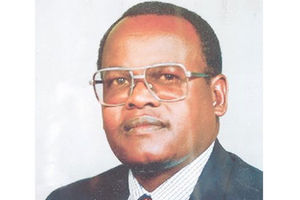
The TJRC report concluded that Dr Chrispine Odhiambo-Mbai was killed because of his political views about devolution. Photo/FILE
Dr Mbai was buried at his rural home in Masara Village, Homa Bay County, on September 27, 2003.
Ms Mbai said she had always hoped that the government would one day recognise her husband’s contribution to the country.
However, she had expected to be present to receive the award on behalf of her family
That opportunity slipped away on Mashujaa Day, with the family learning of the honour only after it had been broadcast on television.
“I felt it was not right. It would have been good for me to go there. There are people who may perceive it that I knew what was happening and chose not to go. I want it to be clear that we did not know what was happening. If we had known, we would have been in Eldoret to receive the recognition,” she said.
Despite her disappointment, Ms Mbai welcomed the President’s decision to honour her late husband for his role in advancing devolution.
She said Orange Democratic Movement leader Raila Odinga had occasionally acknowledged Dr Mbai as the architect of devolution, but previous administrations had not considered recognising his contribution.
Last year, the Homa Bay County Government also recognised Dr Mbai. However, Ms Mbai said that the occasion was similarly marred by communication gaps.
“I am the one who reached out to the governor to make inquiries when she told me that I was supposed to receive President William Ruto,” she said.
President Ruto, accompanied by Governor Gladys Wanga, presided over the official opening of the Homa Bay County Arboretum and the Ugatuzi Amphitheatre on August 13, 2025.
The project was developed as part of environmental conservation efforts and infrastructure milestones associated with the Devolution Conference.
Ms Mbai said she had been asked to provide photographs of her late husband, but no one informed the family that they were expected to attend the event.
“The following day, I was called 30 minutes before the late Raila Odinga arrived at the same venue and told that I was supposed to meet him. I was on my way to Kisumu to take my daughter to the airport, as she was travelling back to Nairobi. I did not get a chance to meet the former Prime Minister,” the widow said.
Beyond the recognition of her husband’s legacy, Ms Mbai said the promise of devolution remained unfulfilled for many Kenyans, who continued to struggle to access essential services such as water and healthcare.
She called on governors to ensure public funds were used prudently and translated into tangible improvements in people’s lives.
“I would be happy to see lives change. There should be some difference in how services are offered to people,” she said.
Her concerns echo those raised by leaders during Dr Mbai’s memorial service in September, when they warned that his dream would remain unfulfilled unless county governments managed public resources responsibly.
At his anniversary commemoration at Dr Mbai Senior School in Homa Bay Sub-county on Saturday, leaders said the misappropriation of public funds and misplaced priorities were denying citizens the services devolution was intended to deliver.
Kisumu Deputy Governor Mathews Owili, Homa Bay Woman Representative Joyce Osogo and former Homa Bay County Secretary Isaiah Ogwe said devolution could transform lives only if implemented in accordance with the Constitution.
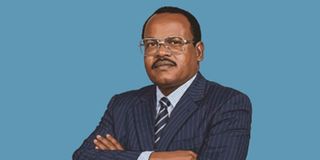
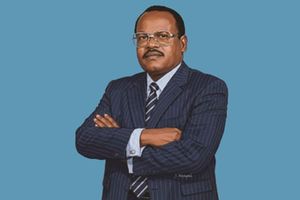
Former University of Nairobi don and devolution architect Dr Crispin Odhiambo Mbai.
Photo credit: John Nyagah | Nation Media Group
Dr Owili challenged governors and county government staff to uphold the Constitution and prioritise service delivery, saying leaders had a duty to ensure their constituents received better services.
“The Constitution is very clear on how to implement devolution and we should abide by it. This is therefore a challenge to all leaders who work in county governments,” the deputy governor said.
He urged governors to improve water supply, healthcare and environmental sanitation, noting that Dr Mbai’s central ambition was to create a system that improved lives through access to services such as water, health and education.
“We will still have Dr Mbai’s debt on his grave if we fail to provide all devolved services appropriately as county government leaders,” Dr Owili said.
Mr Ogwe blamed poor leadership for preventing Kenyans from reaping the benefits of devolution, arguing that the system offered an opportunity for citizens to improve their livelihoods and create wealth.
“People are failing to get good services because they elected bad leaders. Kenyans should not take devolution for granted. They should therefore elect leaders who can serve effectively,” Mr Ogwe said.
The memorial service was also attended by Prof Adams Oloo, Sports Kenya Director Barnabas Odiero and politician Moline Ngala.
The leaders also held a fundraiser to support the construction of Dr Mbai Senior School in Homa Bay, an institution named in honour of the scholar.