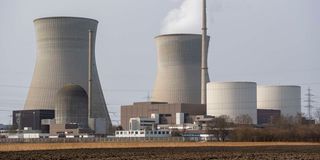
The planned construction of a Sh500 billion nuclear power plant in Siaya County has hit another legal hurdle after a petition was filed challenging the implementation of the project at the proposed Lenya site.
The petition, filed by Francis Owino at the Environment and Land Court in Kisumu, seeks to stop the government from undertaking any irreversible construction works, involuntary displacement, demolition, binding procurement or financing arrangements, or material land acquisition until the court determines that all constitutional and statutory requirements have been met.
Mr Owino is also seeking orders barring the government and other agencies involved in the project from taking steps that could substantially alter the proposed site or affect the rights of residents before the necessary legal and regulatory safeguards are complied with.
He said the petition was not intended to declare nuclear energy unlawful or prevent Kenya from assessing and, if found lawful, pursuing nuclear power as part of its energy strategy.
“The petitioner’s case is that no technology, however important to national development, is above the Constitution, statutory safeguards, independent scientific scrutiny, public participation, environmental protection, transparency and the rights of affected persons,” Mr Owino stated, in the petition dated September 1.
The Environment and Land Court in Kisumu certified the matter as urgent on September 7, and directed Mr Owino to serve the petition and other court documents on all the parties named in the case.
Siaya Governor James Orengo (left) and Nuclear Power and Energy Agency Chairman Eng. Lawrence Gumbe briefing the media on the sidelines of an induction of the Siaya County Leadership on Nuclear power held at a Kisumu Hotel from April 15, 2026 to April 18, 2026.
Photo credit: Rushdie Oudia | Nation Media Group
The respondents include the Attorney General, the Ministry of Energy, the Nuclear Power and Energy Agency, the Kenya Nuclear Regulatory Authority, KenGen, the National Environment Management Authority, the National Lands Commission and the Siaya County Government.
The case adds to the legal and regulatory scrutiny facing the proposed project as the government advances plans to build Kenya’s first nuclear power plant.
The petition raises questions about the legality and timing of the project, particularly whether the government can make irreversible decisions before completing the required environmental, nuclear safety, land, public participation and financial accountability processes.
Mr Owino argues that the proposed plant could have far reaching consequences because of its potential impact on Lake Victoria, surrounding communities, land rights, public finances and future generations.
He says the project requires rigorous scrutiny because the proposed site is close to a major freshwater ecosystem that supports fishing, agriculture, biodiversity and other livelihoods.
“The project is of exceptional public importance because it may entail nuclear construction, major and long term fiscal exposure, acquisition of private, public and community land, displacement and resettlement,” he added.
He argues that the government must first demonstrate compliance with all statutory requirements governing nuclear installations and environmental protection before making any irreversible commitment.
The petitioner has also questioned whether residents and the wider public have access to sufficient information to participate meaningfully in decisions concerning the project.
“Public engagement cannot lawfully be reduced to sensitisation, public relations or consultation undertaken after fundamental decisions have already been made or rendered irreversible,” Mr Owino noted.
He wants the government to disclose documents relating to the selection and assessment of the Lenya site, including geological, seismic, hydrological, ecological and climate studies, as well as environmental and social impact assessments.
The documents sought also include plans for radioactive waste, spent fuel, emergency preparedness and decommissioning, records of public participation and documents relating to land acquisition, compensation and resettlement.
Mr Owino has raised particular concerns about the possible impact of the project on Lake Victoria, the generation and management of radioactive waste and the consequences that could extend to future generations.
“A nuclear facility near a significant water body requires particularly rigorous and publicly accountable assessment of cooling water requirements, thermal impacts, aquatic ecosystems, emergency scenarios, radioactive releases, waste management and long term decommissioning,” he says.
He invokes the precautionary principle, arguing that uncertainty over potentially serious or irreversible environmental consequences should not be used to justify proceeding before adequate scientific assessment has been undertaken.
The petitioner also wants the government to disclose the project’s financing arrangements, including borrowing, sovereign guarantees, power purchase agreements and other commitments that could expose taxpayers to long term financial obligations.
“The public is entitled to know, before material commitments are made, the financing structure, fiscal risks, risk allocation, public liabilities and mechanisms by which the project’s cost and long term obligations will be managed,” he says.
On land, Mr Owino argues that any acquisition must comply with constitutional protections, lawful procedures and compensation requirements. He says no displacement should take place before a comprehensive resettlement plan is prepared.
Among the orders sought are declarations that public participation must be meaningful, informed, inclusive and timely, and capable of influencing the final decision.
He also wants the court to declare that no construction authorisation should be issued until compliance with the Nuclear Regulatory Act, environmental laws and constitutional requirements is demonstrated.
Mr Owino is further seeking orders compelling disclosure of the project’s complete documentary record, preservation of project related records, a fresh public participation process and protection of affected landowners from unlawful displacement.
He wants the court to restrain the respondents from undertaking construction, demolition, involuntary displacement, irreversible land acquisition, binding procurement or financing commitments until the petition is determined and all constitutional and statutory safeguards have been complied with.