In the mid-1950s, Harry Belafonte stood on a New York stage and sang of departure. His warm baritone carried the rhythm of the Caribbean and the ache of leaving home:
But I’m sad to say, I’m on my way,
The song was Jamaica Farewell-adapted from a traditional Jamaican mento melody by Lord Burgess and immortalized on Belafonte’s 1956 album Calypso.
It became a worldwide hit, a lullaby for wanderers, migrants, and dreamers in distant lands.
To many, it was just a song. But to those who knew what it meant to leave and build, it was something deeper: a quiet anthem of longing, possibility, and return.
For Belafonte, music was never just melody. It was a vessel. A bridge.
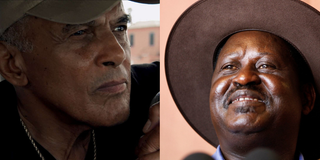
Harry Belafonte in Los Angeles on his way to meet ex-gang members in 2012.
Photo credit: Nation Media Group
Long before the term “global South” became fashionable, Belafonte understood that liberation was not just about flags but about minds.
He also envisioned an Africa whose future would be shaped by its own educated sons and daughters. That vision brought him close to East Africa at a pivotal time.
In the late 1950s, Belafonte threw his influence behind Airlift Africa-USA-the ambitious project that sent hundreds of young East Africans to study in the United States.
He was part of the network of artists, activists, and philanthropists who raised funds to make those flights possible.
The airlifts were more than logistical miracles. They were a statement: that the destiny of a newly independent continent would not be written in colonial boardrooms but in classrooms and laboratories across the Atlantic.
Belafonte even sent delegations of Americans to Kenya, forging bonds that outlived the moment.
This was not the last time Belafonte stood with Africa. In 1985, when famine ravaged Ethiopia, he led the call for artists to respond.
Together with Michael Jackson and others, he helped birth We Are the World-an anthem of global solidarity. They even tried to incorporate Kiswahili in the song, but they could not find the perfect combination.
From the airlifts to the humanitarian stage, Belafonte kept returning to the same truth: Africa’s story was global, and the world could not look away.
It is easy to imagine why Raila Odinga may have loved “Jamaica Farewell.” He, too, was born of a generation that understood departure-sometimes as exile, sometimes as education, sometimes as both.
Former Prime Minister Raila Odinga speaks to the media in Nairobi, January 21, 2011.
Photo credit: Reuters
His father, Jaramogi Oginga Odinga, stood at the crossroads of African liberation and global solidarity, his name echoing far beyond Kenyan borders.
In the United States, the name Oginga Odinga carried weight. In certain circles of the Black freedom movement, before Malcolm X rose to speak, audiences would sing “Oginga Odinga” as a song of resistance. It was not just a name-it was a symbol of Black internationalism.
Top: Mohinder Dhillon filming a Kenyatta interview in the early 1960s; Above: relaxing in his house; Opposite page: Mohinder and Harry Belafonte; Below: Doing what he knows best.
For Raila, Belafonte’s voice would not have been foreign. It was part of the same political weather that shaped his father’s generation-a chorus of artists and activists who believed that Africa’s rise was a shared human cause.
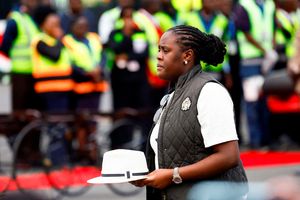
And then, decades later, a plane carried Raila home. Not on an airlift for students-but on a final journey. His body was flown from India aboard Kenya Airways, piloted by Kenyans whose opportunities stood on the shoulders of that earlier airlift generation.
In a quiet, symbolic way, the arc that began with Harry Belafonte’s dream found its closing gesture in that flight.
The education he championed had borne fruit. The planes that once carried young, ambitious Africans to American universities were now flown by their descendants.
Where Belafonte once sang of leaving, this journey spoke of return.
“Jamaica Farewell” is not about grandeur. It is about leaving home, looking back, and whispering a promise to return-even if only in memory. Belafonte’s song outlived its era because departure is timeless. So is the yearning to come home.
In Raila’s passing, the threads of Belafonte’s activism and Odinga’s legacy intertwined again. One man sang of leaving. The other lived a life marked by struggle, exile, education, and return.
The circle closed-softly, like the last line of a song sung across oceans.
But I’m sad to say, I’m on my way,