Kenya’s battle against corruption is entering a troubling phase, with new international data indicating that graft is not only persistent but increasingly entrenched.
Findings from the 2025 Corruption Perceptions Index (CPI) reveal a country mired in a cycle of reforms without tangible results, where institutions tasked with enforcing accountability remain weak, and public confidence continues to erode.
The CPI, compiled annually by Transparency International (TI), is widely regarded as the world’s leading indicator of public-sector corruption. It ranks countries using a scale from 0 to 100, where zero represents highly corrupt systems and 100 indicates very clean governance.
The index aggregates expert assessments and business surveys from multiple independent institutions, standardizes them, and calculates an average score for each country. This methodology enables comparisons across nations and over time, providing what analysts refer to as a global snapshot of how corruption is perceived in governments.
In the 2025 edition, Kenya scored 30 out of 100, a drop from 32 in 2024 and 31 in 2023, a decline that reinforces a long-term pattern.
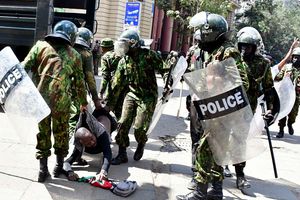
Counties and national institutions like Parliament, the Judiciary, the National Police Service, among others, have become dens of corruption and bribery.
Photo credit: Nation Media Group
Over the past 13 years, Kenya’s score has fluctuated only between 25 and 33, showing little real progress despite repeated anti-corruption drives.
Such stagnation, the report noted, signals structural problems rather than isolated scandals, suggesting reforms have not fundamentally changed how power and public resources are managed.
“This year, the score dropped by 2 points. The country’s score has largely oscillated between 25 and 33 over the last 13 years, indicating high levels of corruption and stagnation in the fight against corruption despite several legislative and institutional reform,” Transparency International-Kenya, (TI-Kenya) said.
TI-Kenya Executive Director Sheila Masinde attributed the stagnation to systemic weaknesses embedded across governance structures, adding that corruption has been normalised within procurement, budgeting, licensing, and regulatory processes.
“Kenya’s latest score indicates that corruption is no longer a series of isolated incidents; it has evolved into a sophisticated, resilient system that has permeated all levels of society and government, undermining democracy, the rule of law, good governance, transparency, and accountability,” she said.
Impunity and weak prosecution
One of the drivers for the status quo, TI-Kenya noted is impunity. The lobby group noted that major corruption cases rarely result in convictions, while some collapse or are withdrawn before conclusion.
Weak prosecution and a pattern of stalled investigations have allowed influential suspects to escape accountability, reinforcing a perception that political influence can override justice. Ms Masinde cautioned that this trend perpetuates a culture in which corruption is viewed as low-risk and highly rewarding.
Ethics and Anti-Corruption Commission CEO Abdi Mohamud.
Photo credit: Wilfred Nyangaresi | Nation Media Group
Legal safeguards exist but are often under-enforced. Kenya’s Constitution includes leadership and integrity provisions that are meant to bar individuals implicated in wrongdoing from holding public office.
However, gaps in implementation and weak enforcement have undermined these safeguards, lowering standards and eroding trust in oversight bodies.
“To decisively deal with corruption, anti-corruption laws, particularly the leadership and integrity provisions, must be fully enforced, to ensure that only individuals that meet the constitutional bar for leadership occupy public office,” Ms Masinde said.
This, the TI-Kenya boss said, may deal with the deep-seated challenges of lack of political will to tackle corruption, individuals that abuse public office to profiteer from public coffers and political interference in institutional mandates
The CPI findings place Kenya within a broader regional challenge but also highlight its specific struggles. Sub-Saharan Africa recorded an average score of 32, making it the lowest-performing region globally, with only four countries scoring above 50.
While regional conditions partly explain Kenya’s position, comparisons with neighbors show that improvement is possible: Rwanda scored 58 and Tanzania 40, both outperforming Kenya. However, Uganda with 25 points and Burundi (17), scored worse than Kenya in the East African region.
Conversely, Denmark, with 89 points, leads the pack of countries with clean governance. It is followed by Finland (88), Singapore (84), New Zealand and Norway tied at 81 points, with Sweden and Switzerland, each with 80 points, closing the top five spots.
South Sudan and Somalia, at nine points, were the worst-ranked in the 182 countries covered in the 2025 CPI report. They were followed by Venezuala (10), Yemen, Libya, Eritrea (13) with Sudan and Nicaragua each earning 14 points.
Globally, the 2025 CPI revealed a worrying trend. The worldwide average stands at 42, the lowest in more than a decade- and more than two-thirds of countries score below 50. Even historically strong performers have seen declines, indicating that corruption challenges are intensifying across political systems. Transparency International notes that shrinking civic space and restrictions on freedoms of expression and association often accompany falling scores, suggesting that governance transparency and civil liberties are closely linked.
Francois Valerian, Chair, Transparency International called for national and multilateral cooperation to protect the public interest and “tackle public interests and tackle shared challenges like corruption”
“At a time when we are seeing a dangerous disregard for international norms from some states, we need to protect a rules-based global order that is grounded in transparency, accountability to citizens and respect for human rights,” he said.
For Kenya, the implications are both political and economic. Corruption in public finance management diverts funds from essential services such as healthcare, education, and infrastructure. It inflates project costs, distorts procurement decisions, and undermines investor confidence. Businesses frequently cite bribery, opaque tendering, and regulatory favoritism as barriers to operating efficiently, while citizens face higher living costs as mismanaged funds reduce service quality.
More than policy promises needed
Among its recommendations are for states to ensure independent, transparent and accessible justice institutions, especially for people harmed by corruption. It also called for the tackling of undue influence on political decision making, the fostering of civic space and anti-corruption reporting.
Integrity Centre that hosts Ethics and Anti-Corruption Commission (EACC) offices in Nairobi.
Photo credit: File | Nation Media Group
Countries should also work to prevent, detect and punish large-scale corruption and illicit financial flows and enhance transparency and oversight in public services and public financial management, the report stated.
In the Kenyan context, Ms Masinde called for stronger protections for whistleblowers, expanded digital transparency in systems such as e-procurement, and adequate funding for oversight agencies so they can investigate and prosecute cases effectively. The organisation also called for stricter regulation of campaign financing ahead of future elections, warning that opaque political funding can fuel corruption once candidates assume office.
Equally important is the protection of civic space and media freedom, she said.
Although the CPI measures perception rather than proven incidents, perception carries real-world consequences. International investors, development partners, and diplomatic allies rely on such indices to assess governance risk. A declining score can therefore translate into reduced foreign investment, higher borrowing costs, and diminished global credibility.