Moments after Dr Victoria Mutiso died at the Kenyatta National Hospital, the Directorate of Criminal Investigations (DCI) took on another high-profile murder case — one investigators describe as complex and involving multiple strands.
The killing of clinical psychologist Dr Victoria Mutiso, wife of respected doctor and scholar Prof David Musyimi Ndetei, has drawn detectives into alleged land disputes, family tensions, suspected rogue police officers and a possible link to the killing of lawyer Mathews Kyalo Mbobu on September 9, 2025.
At the centre of the inquiry is a 20-acre parcel of land near the Mlolongo weighbridge in Machakos County, which investigators believe may explain the events leading to her murder. The DCI says some suspects under investigation are also linked to Mr Mbobu’s alleged assassination, claims that remain untested in court.
DCI Amin names police suspects in Dr Victoria Mutiso killing
Court documents and a Friday briefing by DCI Director Mohamed Amin detail how detectives reconstructed the murder and identified six prime suspects.
On July 29, a black Toyota Prado blocked the Uber vehicle carrying Dr Mutiso before a motorcycle pulled alongside and the pillion passenger opened fire.
The driver rushed her to Kenyatta National Hospital, but she was pronounced dead on arrival.
Crime scene experts later recovered two spent cartridges from Mawensi area in Upper Hill, while a bullet fragment was retrieved from her body two days later.
Ballistics examination at the National Police Forensic Laboratory established that the bullets were fired from a police-issue Mini Jericho pistol, according to Mr Amin.
Three police officers and four civilians — including the ex-wife, son and daughter of Dr Mutiso’s husband — are among those being investigated.
Detectives say they used digital forensics, witness accounts, property records, civil documents, recovered vehicles, communication analysis and forensic evidence to reconstruct events before and after the killing.
The inquiry is examining several leads, including CCTV footage, call data records, ballistic evidence, the disputed Mlolongo property, alleged vehicle thefts, reported threats and the movements of suspects arrested after the shooting.
Court filings place the murder within a dispute that existed months before the attack. Detectives say Dr Mutiso’s caveat on land parcel LR 1504-13 in Mlolongo may have triggered conflict with other parties involved in its ownership.
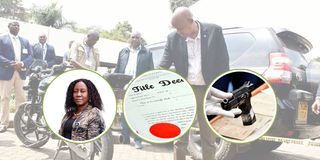
Director of Criminal Investigation Mohamed Amin points to a motorcycle that was allegedly used during the fatal shooting of Dr Victoria Mutiso (inset).
Photo credit: Francis Nderitu | Nation Media Group
“The investigators have established that Dr Mutiso had placed a caveat on land no LR 1504-13, situated within Mlolongo in Athi River sub-county. This action was perceived as a direct threat to the interests of certain parties involved in the ownership and control. This is under investigation,” Mr Amin said.
Documents indicate that before her death, Dr Mutiso reported being followed by unknown motorcycle riders.
A neuroscientist, mental health researcher and director of the African Institute of Mental and Brain Health, she had also been involved in a long-running property dispute over the Mlolongo land.
Rigorous forensic analysis, intelligence and CCTV footage led investigators to two key suspects: Daniel Mwangi Njoroge and Kelvin Ngugi Kinuthia.
Daniel Mwangi is suspected of coordinating the operation and driving Prado KDH 600, which was used to block the Uber vehicle.
“Daniel coordinated the logistics and facilitated the movement of suspects using two Prados — one to block the driver and another, KDE 400W, to transport members of the execution team,” Mr Amin said.
Kelvin Ngugi, arrested on the evening of August 6, is accused of transporting the suspected shooter, police constable Elijah Kibelion Kimoi, to the scene.
The DCI said interrogations of the two suspects led investigators to two serving police officers allegedly directly linked to the fatal shooting.
“Thorough analysis of evidence has established that one Police Constable Elijah Kibelion Kimoi attached to Karinde Police Station pulled the trigger that killed Ms Mutiso,” Mr Amin said.
The Jericho Pistol used in the murder of Dr Victoria Mutiso on August 07, 2026 at the DCI headquarters.
Photo credit: Francis Nderitu | Nation Media Group
Inspector Kenneth Kipkemboi, the officer in charge of Nderi Police Post under Kikuyu Police Station, is suspected of acting as an intermediary between financiers and hitmen and providing the firearm used in the killing.
“Police visited Nderi Police Post and found a Jericho pistol together with 12 rounds of 9mm ammunition. After scrutiny, it was established that the firearm had been issued to Inspector Kenneth Kipkemboi. A ballistic report positively identified his Mini Jericho pistol as the murder weapon,” Mr Amin said.
Intelligence gathered in Kibera and Karen initially led detectives to Rose Mbithe Mulwa, also known as Rose Mbithe Ndetei, and her son Chris Mulwa, whom investigators suspect were among the financiers of the operation.
The two were arrested during an intelligence-led operation and taken to court, where detectives obtained orders to detain them for 21 days to allow completion of investigations. Angela Mulwa, the daughter of Prof Ndetei and Ms Mulwa, was also detained for 14 days by a Mavoko court as part of the inquiry.
Threats against Dr Mutiso
According to the DCI application, homicide detectives took over investigations from Kilimani Police Station before assembling a multi-agency team to process the crime scene and preserve evidence. Detectives told the court they were analysing call data records linked to Dr Mutiso and the respondents while subjecting the Uber vehicle she was travelling in to forensic examination.
They argued the investigations could not be completed within the constitutional period required before suspects are charged, citing pending forensic analysis and the need to establish the roles of each suspect.
At the time detectives sought the detention orders, the post-mortem examination had not been completed, further delaying the preparation of the homicide file.
Investigators told the court that the dispute involving Ms Mulwa, Prof David Ndetei and Dr Mutiso was central to the inquiry.
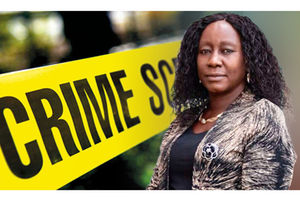
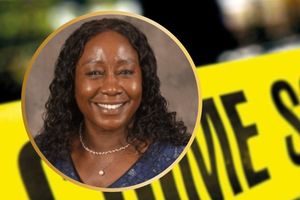
An undated photo of slain clinical psychologist and mental health researcher Dr Victoria Nthunya Mutiso.
Photo credit: Pool
Police alleged the dispute had previously resulted in the eviction and demolition of property belonging to Dr Mutiso’s family. They further claimed threats against her began after the eviction.
Detectives told the court that on July 7, while driving along Ngong Road near Junction Mall, Dr Mutiso was allegedly confronted by two men on a motorcycle who pointed a firearm at her and attempted to shoot. She escaped and reported the incident at Kilimani Police Station under OB No.63 of July 7.
Police further stated that after the incident, Dr Mutiso informed her husband and officers that one of the men who had allegedly followed her had been identified as Chris Mulwa. The allegations remain untested in court.
Investigators also told the court that Dr Mutiso reported another incident on July 27, in which she was allegedly followed by unknown motorcycle riders while travelling from her home to work.
Two days later, she was shot dead while travelling in an Uber in Upper Hill.
The investigating officer told the court that Ms Mbithe was the former wife of Prof Ndetei, following their divorce in 2001. The couple had four children, including Chris Mulwa, one of the suspects arrested in connection with the murder.
“During the arrest of the second respondent (Mulwa), he was found to have crucial exhibits relating and belonging to Dr Mutiso, which the investigating team strongly believes were shared with the unknown gunmen before she was brutally murdered and which are pending forensic analysis,” Corporal Oduor said.
Detectives said those allegations were being examined alongside other evidence gathered after the killing.
Police opposed the release of the suspects, arguing that doing so could expose witnesses to interference, allow destruction of evidence and create opportunities for collusion with other suspects who had not been arrested.
The investigating officer added that Prof Ndetei was yet to record a statement because of trauma following his wife’s death.
One of the two vehicles and the motorcycle that were used in the murder of Dr Victoria Mutiso on August 07, 2026 at the DCI headquarters.
Photo credit: Francis Nderitu | Nation Media Group
His evidence, detectives said, was important in establishing details of previous threats against Dr Mutiso and identifying people suspected of trailing her before the murder. Police listed several forensic procedures they considered critical before deciding whether to prefer substantive charges.
These included ballistic examination, analysis of CCTV footage, review of call data records, forensic examination of the Uber vehicle, analysis of exhibits recovered from suspects and the post-mortem examination.
Detectives told the court those processes were necessary to establish “the identity and respective roles of all persons involved in the offence”.
Days later, detectives returned to court with another application before the Mavoko Chief Magistrate’s Court seeking more time to hold two additional respondents — Angela Mulwa and Nelson Masiga Makaralu.
The supporting affidavit expanded the scope of the investigation beyond the shooting, citing alleged land fraud, forgery of title documents, unlawful eviction, demolition of property and theft of four vehicles linked to the disputed Mlolongo land.
One of the vehicles, a Range Rover Sport registration number KDU 799Y valued at Sh15 million, had already been recovered from premises associated with the respondents, according to the affidavit.
Investigators said two of the vehicles belonged to the Africa Institute of Mental and Brain Health, while the other two belonged to Prof Ndetei.
Police alleged the respondents became persons of interest after detectives traced one of the recovered vehicles during investigations into the earlier demolition and alleged theft.
The affidavit states that the alleged property offences could not be separated from the homicide inquiry.
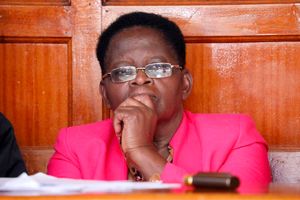
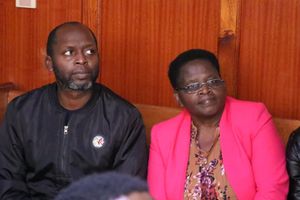
Rose Mulwa and her son Chris Mulwa at the Milimani Law Courts on August 3, 2026. They are persons of interest in the fatal shooting of Dr Victoria Mutiso.
Photo credit: Billy Ogada | Nation Media Group
Detectives said the suspects needed to undergo digital forensic examination, including analysis of CCTV footage and communication records to establish possible links with other suspects.
Investigators also sought more time to recover the remaining vehicles and other property allegedly removed during the demolition.
“The recoveries of the remaining three vehicles and other items stolen therein during the demolition depends on the safe custody of the respondents,” the affidavit states.
Court records show detectives are treating the murder inquiry as a multi-layered investigation supported by different evidence streams rather than a single crime scene reconstruction.
One strand involves digital evidence, including CCTV footage, mobile phone records and forensic examination of electronic devices.
Another focuses on witness accounts, particularly reports of alleged threats before the shooting and statements from family members. A third examines land ownership records, civil litigation documents and allegations of forgery involving the disputed Mlolongo property.
The fourth centres on physical evidence recovered after the killing, including vehicles, spent cartridges, a bullet fragment and other exhibits undergoing forensic examination.
Throughout the court applications, prosecutors maintained that additional time was necessary to connect the evidence streams before determining whether further charges would be filed.
They argued the investigation remained active, intelligence-led and involved multiple agencies, including homicide detectives, forensic specialists and officers handling the separate land dispute.
The court filings also reveal investigators are treating the inquiry as one involving several agencies working simultaneously.
Homicide detectives, forensic specialists and officers investigating the separate land dispute are all cited in the affidavits as contributing evidence to different parts of the inquiry.
Reporting by Joseph Wangui, Richard Munguti and Jurgen Nambeka