A police officer who was deployed during the June 25 protests is currently hospitalised, fighting to save his right eye that doctors say he may never see again unless two urgent corrective surgeries, costing at least Sh1 million, are performed.
For Corporal Charles Kwoba, 42, a day thousands of Kenyans remember as a protest for justice June 25, 2025 is a day he wishes to forget.
Around 2.15 pm that Tuesday, amid teargas, burning buildings and violent clashes between police and protesters, Mr Kwoba was simply trying to stay alive and return to his wife and six children in one piece.
When the Daily Nation visited Lions SightFirst Eye Hospital, the officer based at Kikuyu Police Station was writhing in pain. Doctors are working tirelessly to save his right eye which requires two delicate surgeries.
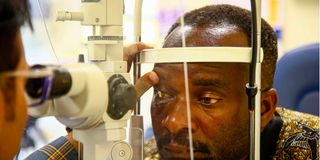
Corporal Charles Kwoba undergoes eye examination at Lions SightFirst Eye Hospital, Nairobi, on July 2, 2025 following an injury he sustained while on duty during protests on June 25, 2025.
Photo credit: Wilfred Nyangaresi | Nation Media Group
“That day, I saw death from point-blank range. My right eye has been in constant pain and now sees only darkness. The doctor says a lot of fluid and blood has accumulated and unless it's drained urgently, the chances of me regaining sight are only 30 to 40 percent,” he said, tears running down his cheeks.
On that day, Corporal Kwoba and his team received orders to provide security during the Gen Z-led protests.
According to briefing orders from OCPD Kikuyu Sub-county Moses Ndege and OCS Meshack Mulwa, officers were divided into three sectors. Mr Kwoba was assigned to Sector One alongside the OCS.
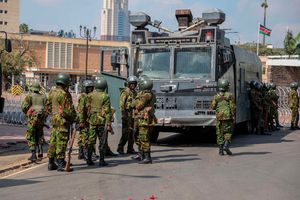
The team departed for mobile patrol duties at 10.30am and responded to unrest at Ndonyo Market in Dagoretti Town where they were quickly overwhelmed by a large crowd. Joined by officers from Karen and Dagoretti, the situation soon spiraled out of control.
Broken shield: Hundreds of police officers nurse injuries after June protests
“Honestly, the youth overpowered us. Our OCS had to call for backup from neighbouring stations,” Mr Kwoba recalled.
Soon after, they were redirected to Kikuyu Town where the situation was reportedly worse with threats to torch county offices and the Kikuyu Law Courts. When they arrived at Makutano underpass, thousands had already taken over the area.
“I have been a police officer since 2006 and have handled many protests but nothing like this. The sheer anger and hatred in those stones being hurled at us it was terrifying,” he said.
During the chaos, Cpl Kwoba’s team noticed the Kikuyu Police Station and Law Courts on fire. Smoke and teargas filled the air causing the officers to choke. While trying to assist his struggling superior, Mr Kwoba lifted the visor of his headgear to see better. In that moment, a stone struck him directly in the right eye, rendering him unconscious.
He was initially given first aid by journalists from Nation Media Group who had a first aid kit on site. As protests raged, his colleagues struggled to get him to Lifecare Hospital in Kikuyu.
But upon arrival, they faced a new nightmare as nearly 500 enraged youths had followed them demanding that the officer be handed over or they would burn down the hospital.
Consultant Paediatric Ophthalmology, Oculoplasty and Ocular Oncology, Dr Abhijit Rasal conducts eye examination on Corporal Charles Kwoba at Lions SightFirst Eye Hospital in Nairobi on July 2, 2025.
Photo credit: Wilfred Nyangaresi | Nation Media Group
“They said if I was not brought out, they would torch the hospital. I had to be evacuated through a back door to prevent endangering innocent patients and staff,” Mr Kwoba said.
He returned to camp in severe pain and unable to access further treatment until four days later when a well-wisher — Moses Ngugi, a man he had once helped, came to his aid.
“Moses picked me up and brought me to Lions SightFirst Eye Hospital. He has been covering all costs so far. Unfortunately, my medical insurance is too limited for my current needs,” he said.
Consultant ophthalmologist at Lions SightFirst Dr Abhijit Rasal said Mr Kwoba suffered a grievous blunt trauma injury. His eye pressure was dangerously high, close to 70 mmHg (normal is 10–21 mmHg).
“There is bleeding inside the eye, a dislocated lens and the development of a cataract. Even with treatment, the chance of saving the eye is only 30 to 40 percent. If pressure doesn’t reduce, he will need surgery possibly followed by another to address the cataract,” Dr Rasal explained.
Dr Zelalem Tafesse, cornea and refractive surgery specialist, confirmed that the damage starts from the outer eye and requires immediate intervention to relieve pressure and stabilise the eye lens.
“We are seeing inflammation and corneal swelling. The lens is unstable and the suspensory ligaments are weak. I will need to place support rings during surgery. Pressure in his eye was at 47 today. That pressure has also affected the angle of his eye and so have asked our glaucoma specialist to examine him,” Dr Tafesse said.
He added that Cpl Kwoba also faces a risk of nerve damage if pressure is not controlled urgently reinforcing the need for two surgeries costing between Sh500,000 and Sh1 million.
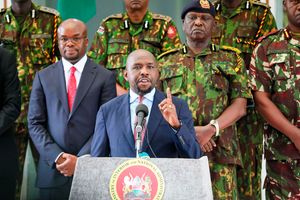
Even though APA Insurance renewed its contract with the National Police Service (NPS) in April 2025,Mr Kwoba’s case has exposed glaring inadequacies in the system.
Many injured officers from the June 25 protests reportedly cannot meet treatment costs despite the renewed insurance policy.
Corporal Charles Kwoba during an interview with the Daily Nation July 2, 2025.
Photo credit: Wilfred Nyangaresi | Nation Media Group
This is even after three months ago, APA Insurance Limited renewed its medical insurance contract with NPS for the period of April 1, 2025, to March 31, 2026.
In April, an internal police memo dated April 112025, from Apeles Chacha, issued on behalf of the Nairobi Regional Police Commander to all sub-county police heads indicated the policy’s terms had not changed from the previous year, where Sh6.7 billion was paid to NHIF.
“To ensure accurate record keeping, officers are encouraged to update the list of their beneficiaries before April 30, 2025. Kindly inform all officers under your command,” Mr Chacha further told police bosses which officers who spoke to the Daily Nation interpret to mean that children born or spouses married after April 30 may not be eligible for coverage under the new policy brought by the Kenya Kwanza regime.
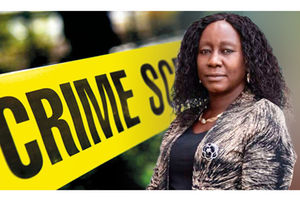
However, Auditor-General Nancy Gathungu later flagged irregularities in the scheme, revealing the total cost ballooned to Sh10.9 billion with little to show in terms of benefits.
Ms Gathungu questioned the Sh6.3 billion spent on Work Injury Benefits (Wiba), Group Life and Group Personal Accident (GPA) insurance covers.
She highlighted that Sh5.1 billion was used to cover the police between January and December 2023, before the contract was extended by three months to March 2024 at an additional cost of Sh1.3 billion, bringing the total to Sh6.4 billion.
With no solid medical insurance covers to write home about, police officers injured during the protests were rushed and admitted to various health facilities around the country and are still being treated for life-threatening injuries doctors say they may have to grapple with for the rest of their lives.
As you may know, in Kenya, police officers, including corporals, receive a medical allowance as part of their overall compensation package, which is determined by the Salaries and Renumeration Commission (SRC).
However, the cost of their medical cover is shared between the employer, the National Police Service (NPS) and the employee (police officer) and caters for a comprehensive medical coverage including inpatient and outpatient services, maternity and chronic illness coverage as well as last expense benefits for them and their dependants.
The specific amount can vary based on factors like location of assignment and the specific medical scheme offered.
The auditor general also revealed that the contract with the then NHIF was further extended by three months, from January to March 2024, at a cost of Sh2.2 billion. This brought the total cost to Sh10.9 billion, Ms Gathungu revealed. But how exactly did the officers sustain injuries on June 25th?
According to ten officers Nation spoke to who are stationed in ten different counties namely Nairobi, Kiambu, Nyandarua, Machakos, Murang’a, Uasin Gishu, Makueni, Nyeri and Embu, the Gen Z led protests were largely peaceful for the better part of the morning until goons hired by unknown people showed up in the afternoon in most of the affected counties.
“We are Kenyans too. We are brothers and sisters trying to do our job. Some things may go wrong, but we must find a way to work together.”