In Kenya's fast-changing political landscape, some of the fiercest battles are no longer being fought in rallies, Parliament or television studios. They are unfolding on WhatsApp.
Once created for coordination and to share mobilisation messages, various political WhatsApp groups have evolved into virtual battlegrounds where alliances are forged, scores settled and loyalty tested.
Being added to, removed from or even muted in a group has become a political statement, often triggering public outrage and making headlines.
In the past, rebels were physically ejected from party offices using goons or locked out of official meetings, but now, they are simply removed from WhatsApp groups. The groups have also turned into a theatre of heated political exchanges over controversial party positions. Some proposals are killed in WhatsApp groups while others become debates on the floor of both the National Assembly and Senate.
Apart from public exchanges by rival camps, the ongoing fierce power struggle for the control of the Orange Democratic Movement (ODM) has largely been executed in WhatsApp groups.
Some of the major decisions, including kicking out perceived rebels from key positions, have been carried out in WhatsApp groups.
Once created for coordination and to share mobilisation messages, various political WhatsApp groups have evolved into virtual battlegrounds.
Photo credit: File
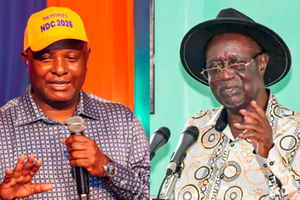
Last weekend, Members of Parliament allied to Linda Mwananchi were removed from ODM Parliamentary Group (PG) WhatsApp group. This is the group where the party’s legislative agenda is discussed and members whipped to take a particular position when debating on the floor of the House.
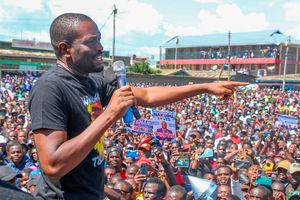
Those kicked out of the group formed after the 2022 polls include Senators Edwin Sifuna (Nairobi), Godfrey Ososti (Vihiga) and Richard Onyonka (Kisii). Others are MPs MPs Babu Owino (Embakasi East), Caroli Omondi (Suba South), Caleb Amisi (Saboti), Anthony Kibagendi (Kitutu Chache South), Clive Gisairo (Kitutu Masaba) and Wilberforce Oundo (Funyula).
“It is clear that those in the ODM leadership are done with us. After we finished our rally in Kitale, I just saw us being removed from the ODM WhatsApp group,” said Mr Sifuna on Citizen TV recently.
Mr Osotsi told the Nation that it was not the first time they were being removed from ODM WhatsApp groups. Mr Amisi was kicked out of ODM National Executive Council (NEC) WhatsApp group on February 10, 2026, a day before the NEC meeting that suspended Mr Sifuna as the party’s Secretary-General. Mr Sifuna and Mr Osotsi were also removed from the group after they lost their seats in the top party organ.
Vihiga Senator Godfrey Osotsi (left) and Nairobi Senator Edwin Sifuna during a press briefing at Karen Hospital on April 11, 2026, following Osotsi’s discharge from the facility.
Photo credit: Wilfred Nyangaresi | Nation
“Some of us were first removed from the NEC WhatsApp group. This latest one is for the PG,” said Mr Osotsi.
“They are basically telling us that we do not belong to ODM. We are now considering suspending our monthly contribution to the party,” said Mr Osotsi.
Removal of Mr Sifuna as the Senate Deputy Minority Whip also first played out on Azimio Senators’ WhatsApp group, before transitioning to a chaotic late-night physical meeting, which later turned into a physical brawl involving two rival camps.
A notice for the meeting was sent to the group by Senate Minority Whip Ledama Ole Kina at about 5.45pm, inviting the senators to attend a Parliamentary Group meeting at 7.30pm in his office. Notably, the communication did not specify the agenda.
But there were already speculations that it was convened to terminate Mr Sifuna’s tenure in the House leadership. This triggered fierce exchanges in the group, with some of the senators openly rejecting the meeting, according to chats seen by the Nation.
But it was the removal of former Deputy President Rigathi Gachagua from a State House WhatsApp group that was more dramatic.
Mr Gachagua, his Private Secretary and Chief of Staff were all removed from the group at the height of his bitter political fallout with President William Ruto. His removal from the group preceded his impeachment as the country’s second-in-command in October 2024.
Democracy for the Citizens Party (DCP) leader Rigathi Gachagua.
Photo credit: Bonface Bogita | Nation Media Group
“There is a page with everybody there. There is the Head of Public Service, there is the President himself. There is the Comptroller of State House, there is the Deputy Chief of Staff, there is me. There was my chief of staff, there was my private secretary, and there were our security people. The people who handle the President and myself were on that page,” Mr Gachagua said on September 20, 2024.
“Myself, I was removed; my private secretary was removed, my chief of staff was removed, so we have no access to the President’s diary,” he said then. When he was removed, he said, he found himself missing out on presidential functions.
Embakasi Central MP Benjamin Gathiru popularly known as Mejja Donk said most of Mr Gachagua’s perceived allies have since been removed from Kenya Kwanza WhatsApp groups.
The MP, who is a close ally of the Democracy for the Citizens Party (DCP) party leader, said they have been removed from Kenya Kwanza PG group and other groups that bring together MPs of UDA and its affiliate. He said it is only the Main Parliament WhatsApp group that they have not been removed from.
“We can no longer attend UDA PG because we were removed, and cannot get any communication about the party,” said Mr Gathiru.
He revealed that he has since reduced his monthly remittance to the party from Sh20, 000 per month to Sh500.
He said some of them have since been reduced to spectators in Parliament after being removed from crucial Standing Committees, which have many activities.
Interviews with politicians show how WhatsApp groups have become an integral part of their campaigns. Mr Kibagendi said most politicians use such groups to mobilise supporters for rallies, recruit volunteers, share campaign schedules and campaign postures.
Some of the groups with huge membership, he said, are also used to circulate political messaging.
“Politicians have small WhatsApp groups with their core teams to coordinate activities. Once you share a campaign schedule in that group, it is shared in other public forums. Strategies are also shaped in those groups,” said Mr Kibagendi.
But the groups have also become grounds for spying by rivals. Groups with many members have witnessed infiltration, leading to leakage of campaign strategies by rivals.
The cover of Cathy Irungu's book Unwritten Political Rules: A Young Woman’s Path in Kenyan Politics.
Photo credit: Francis Nderitu | Nation Media Group
In her book, Unwritten Political Rules , Cathy Irungu, who was in Raila Odinga’s 2022 presidential campaign, talks about how their rivals planted moles in their campaign teams. He linked Mr Odinga’s presidential loss to major infiltration, including in key campaign WhatsApp groups.
“In Kiambu, Rigathi* performed a Houdini act, disappearing from a critical Azimio WhatsApp group right after the win. This group had been a hub for sharing sensitive details, including agent lists,” she shares in the book.
She questions whether the member was only in the group to gather intelligence for their opponents, noting that ‘while technology can be a powerful tool, platforms like WhatsApp can also leave one dangerously exposed and insecure’.
With the 2027 polls barely a year away, the platform is set to play a crucial role in the campaigns. With it also comes the challenge of faster spread of misinformation, fabricated political statements and edited videos designed to mislead the public.