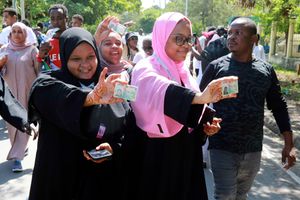
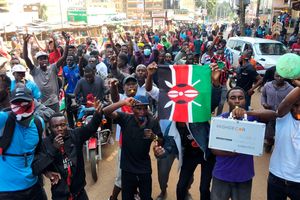
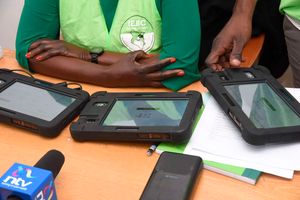
A quiet but potentially decisive force is emerging ahead of Kenya’s 2027 General Election—an estimated 12 million eligible citizens who hold national identity cards but are not registered as voters.
Their absence from the electoral roll, and the possibility of their sudden mobilisation, with the ongoing Enhanced Continuous Voter Registration (ECVR), could tilt the balance in what is expected to be a fiercely contested race.
Fresh data from the Independent Electoral and Boundaries Commission (IEBC) and the State Department for Immigration and Citizen Services paints a striking picture of a country where civic eligibility does not automatically translate into electoral participation.
Principal Secretary in the State Department for Immigration and Citizen Services Dr Belio Kipsang, in an interview, revealed that a total of 34,966,606 national IDs had been issued between 1995 and February 2026. Yet, as of March 10, 2026, only 22,328,801 Kenyans are registered voters—leaving a gap of roughly 12 million adults who are legally qualified to vote but remain outside the democratic process.
Immigration Principal Secretary Belio Kipsang at a past event.
Photo credit: File| Nation Media Group
This pool of unregistered citizens now stands out as the weakest link—and perhaps the ultimate prize—in the 2027 electoral equation.
Political strategists across the divide are likely to zero in on this group, whose registration and turnout could redraw traditional voting patterns, upset regional strongholds, and inject unpredictability into the race for the State House.
The figures also raise deeper questions about voter apathy, access to registration services, and the effectiveness of civic education efforts.
While past elections have largely revolved around mobilising known voter bases, the next contest could hinge on who successfully taps into this vast, untapped demographic.
At the same time, concerns about the integrity of Kenya’s identification and registration systems continue to simmer.
Election officials. The IEBC has assured all registered voters of the security of their registration details despite a temporary shutdown of the voter verification portal due to scheduled maintenance.
Photo credit: File | Nation Media Group
Allegations—often politically charged—have surfaced over claims that foreigners could be fraudulently issued with Kenyan documents and potentially infiltrate the voter register.
However, Dr Kipsang has firmly dismissed such assertions, insisting that the issuance of passports and identification documents follows strict legal and procedural safeguards.
“No Kenyan passports or documents have been issued to individuals who do not meet the legal requirements,” he said, adding that vetting processes remain rigorous and uniform across all issuance centres, including border counties such as Garissa, Bungoma, and Busia.
Even so, as the country edges closer to 2027, the spotlight is shifting to the millions who are missing from the voter roll—not because they are ineligible, but because they are unregistered.
Q: There have been proposals to have Kenyans vote using their IDs and not voters’ cards, what do you make of this?
A: The proposal to allow Kenyans to vote using national IDs instead of voter cards would require legislative changes. Lawmakers should engage the public to gather views before implementation. The idea could help reduce the cost and burden of registering voters for separate cards, since IDs already confirm eligibility. Instead of fresh registration, citizens could simply indicate their preferred voting location—such as constituency or polling station—through a system accessible to the electoral body. Overall, aligning existing laws to support this approach could simplify the voting process, cut costs, and make participation more convenient, but it requires careful consultation and legal adjustments.
Dr Belio Kipsang, Principal Secretary in the State Department of Immigration and Citizen Services before the National Assembly Administration and Internal Security committee at the County Hall, Nairobi on April 15, 2025.
Photo credit: Dennis Onsongo| Nation Media Group
A: About 460,000 national IDs remain uncollected at Huduma Centres, largely due to past delays when processing took up to two months. With faster turnaround times—now about seven days—collection rates are expected to improve, as applicants are more likely to pick up IDs while the application is still fresh. The department is also working with chiefs and national government administrative officers to distribute the documents. Additionally, starting in June, applicants will receive SMS notifications at key stages, including when IDs arrive in Nairobi, are printed, and are ready for collection—similar to the current passport tracking system.
Q: Over the years, border counties have complained that acquisition of citizenship documents was made extremely difficult. How is the government dealing with this?
A: In line with the Presidential directive, extra vetting requirements in border counties have been abolished. This led to the development of revised registration guidelines that harmonize procedures for acquiring National Identity Cards across the country. Chiefs and declared parents now emboss their thumbprints on registration forms, taking responsibility for verifying citizenship. Meanwhile, registration officers continue to collaborate with security agencies to prevent fraudulent applications.
Q: Looking at the patterns, does the government have reason to believe that some parts of the country had been denied these services?
A: The issuance of national IDs has never been denied in any part of Kenya. Previously, applicants in border counties underwent vetting because communities in these areas share language and customs with neighboring countries. Identification committees were therefore established to verify bona fide Kenyans. Under the new guidelines, chiefs and declared parents now assume responsibility for verifying citizenship within their jurisdictions.
Q: You have denied issuing Kenyan passports to foreigners including Sudanese warlords and the Zimbabwean tycoon despite credible reports by the US. But have you carried out an internal audit to establish officers behind this scandal?
A: No Kenyan passports or documents have been issued to individuals who do not meet the legal requirements. All recipients of such documents have fully satisfied the criteria for issuance and any other cases will be dealt with by all relevant government agencies.
Q: There are claims of illegal foreigners receiving passports at the newly opened Garissa office. How thorough is vetting there?
A: Garissa office is just like any other office across the country. It is not unique and sometimes I think such assertions are profiling. Concerns about document issuance can arise in any border county, including Bungoma and Busia, and should not be singled out. Passport vetting is rigorous and uniform across the country, requiring primary documents such as birth certificates, national IDs, and additional verification, including parents’ details where necessary. The same strict procedures apply in all offices, ensuring only eligible applicants receive passports. The government is committed to safeguarding the integrity of Kenyan documents, given the passport’s strong global standing—ranked 68th worldwide, top 10 in Africa, and allowing visa-free access to about 69 countries. Protecting this integrity is a national duty, and authorities will continue strengthening systems, including e-Citizen, to enhance transparency, accountability, and service delivery.
National ID cards. Students who have reached the age of 18 will be issued with identity cards and registered as voters while still in school if a new Bill before Parliament is passed.
Photo credit: File
A: From 1995 to February 2026, a total of 34,966,606 IDs have been issued. As of 10th March 2026, 22,328,801 voters are registered (Source: IEBC). This indicates that voter registration remains relatively low compared to the number of citizens with IDs—approximately 12 million eligible persons have yet to register as voters.
· Jukwaa la Usalama Engagements: Mobile registration conducted in all counties using live capture technology, reducing ID issuance turnaround from 30 days to 7 days.
· School-Based Registration: In partnership with the Ministry of Education, over 33,000 students aged 18 were registered during the 2nd and 3rd school terms. This program continues nationwide.
· Usajili Mashinani Program: Launched in October 2025, this initiative targets marginalized and ASAL counties, bringing services closer to communities with poor infrastructure. Expansion is ongoing to ensure inclusivity nationwide.
· Abolition of fees for first-time applicants (Gazette Notice, 19th March 2025) has eased financial burdens, boosted first-time applications, and supported voter registration.
· NRB has established 934 registration centres from regional to divisional level, ensuring broad coverage and inclusivity.
A: The State Department for Immigration and Citizen Services, in partnership with the Ministry of Education, registers students aged 18 and above in schools. Last year, over 33,000 students received IDs during school-based mobile registration exercises. These documents enable students to apply for HELB loans and enroll in government programs such as the NYOTA youth initiative.
IEBC officers in Kapsoya Estate, Eldoret City of Uasin Gishu Country on the first day of the commission’s continuous voters registration on September 29, 2025.
Photo credit: Jared Nyataya | Nation
Q: There are those who say the government is lowering the bar with regard to vetting especially in border counties and documents may land in the wrong hands. How is this being handled?
A: Chiefs and declared parents emboss their thumbprints on registration forms, assuming responsibility for verifying citizenship. Registration officers continue to work with security agencies to prevent fraud. Additionally, automation and system integration have strengthened integrity, while training of National Government Administrative Officers enhances accountability in citizen identification.
Q: How many new people have been registered since this administration came to office and how many does it hope to register by the time we go to the polls?
A: Between August 2022 and February 2026, 7,378,011 IDs were issued (Not Previously Registered) NPR – 4,097,192; Others – 3,280,819). NRB (National Registration Bureau) projects registering an additional 3,000,000 persons , based on (Kenya National Bureau of Statistics) KNBS population estimates.
Q: We have seen old people, some in their 70s, showing up to get citizenship documents. What do they say? Why didn't they acquire these documents earlier?
A: Since the launch of Usajili Mashinani in October 2025, older citizens have increasingly sought IDs. Many previously faced challenges such as poor terrain, long travel distances, and marginalization. Socio-cultural practices like pastoralism also contributed to delays. The program ensures inclusivity by bringing services closer to all Kenyans, regardless of socio-economic or geographic background.
Q: Is there a link between registration of persons and registration of voters? How does the government ensure those registered as citizens get registered as voters?
A: Yes. National Registration Bureau (NRB) and IEBC collaborate to verify voters using the NRB database. The government also conducts public sensitization campaigns urging all citizens with IDs to register as voters.
Independent Electoral and Boundaries Commission clerks register voters at Shimoni Fish Port in Kwale County on March 30, 2026.
Photo credit: Kevin Odit | Nation Media Group
Q: Groups have come up claiming to be pushing people to register as voters. But for people to vote, they must have citizenship documents. How are we doing with registration of persons?
A: The State Department is intensifying mobile registration programs to issue IDs. This enables citizens to participate in socio-economic activities and exercise their democratic rights through voting, as guaranteed by the Constitution.
A: Yes. All citizens who have registered for IDs are urged to collect their cards from registration centres. Currently, 462,502 ID cards remain uncollected. Collecting these IDs will allow citizens to register as voters, access government programs such as Affordable Housing, SHA registration, NYOTA, and engage in economic activities.