Kenya’s 2027 General Election could be shaped by a powerful movement that is steadily redefining the country’s political landscape.
Unlike previous electoral cycles, this wave is not being driven by established parties or seasoned politicians, but by Kenya’s youth—armed with social media, WhatsApp groups, and their latest rallying call, Niko Kadi.
The initiative, set to gain even more momentum as the electoral agency begins a 30-day drive to net 2.5 million new voters, has already mobilised thousands of young Kenyans to register as voters, underscoring once again how digital activism can translate into tangible civic participation.
And a report by a global alliance of civil society organisations released this month suggests that youth participation in the 2027 election is no longer a possibility, but an inevitability.
The “Niko Kadi” campaign, launched on March 17, encourages young Kenyans to register to vote ahead of the 2027 General Election.
Led by photojournalist Allan Ademba, the campaign relies on peer-to-peer mobilisation and social media, with participants documenting their voter registration journeys online.
Allans Ademba, 29, the man behind ‘Uko Kadi?’.
Photo credit: Bonface Bogita | Nation Media Group
“I decided to put a tweet out there and said that I am looking for 100,000 unregistered voters in Kasarani,” Allans Ademba, founder of Niko Kadi, recalled during an interview with a local radio station, even as he admitted he had little expectation of success.
“In my mind, I knew very well that it was not going to work because getting 100,000 people when you are just a beginner and nobody knows you was going to be difficult. I put it that way to gain a little bit of traction.”
Within hours, a WhatsApp group created to coordinate participants had grown to over 100 members. By the third day, the group had swelled to about 800 enthusiastic youths ready to take part in voter registration drives.
The timing of Niko Kadi is particularly significant given Kenya’s demographic reality. The 2019 Kenya National Bureau of Statistics (KNBS) census shows that more than 75 per cent of the population is under the age of 35.
In the 2022 elections, only 8.8 million voters aged between 18 and 34 were registered, accounting for 40 per cent of the electorate. By 2027, more than 14 million Gen Z voters will be eligible to vote—a 79.4 per cent increase from 2022.
Overall, the youth population aged 18 to 34 is projected to reach approximately 17.8 million, giving them the numerical strength to decisively influence electoral outcomes.
This demographic surge, combined with the movement’s decentralised structure, has unsettled politicians long accustomed to relying on ethnic and regional strongholds.
Former President Uhuru Kenyatta and President William Ruto have historically depended on alliances between the Mt Kenya and Rift Valley regions to secure victories in the 2013 and 2017 elections. Opposition figures such as the late Raila Odinga, on the other hand, drew support from Nyanza, the Coast and parts of Eastern Kenya.
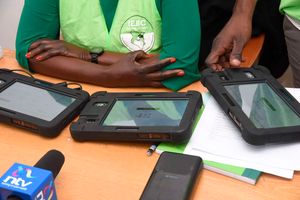
IEBC officers in Kapsoya Estate, Eldoret City of Uasin Gishu Country on the first day of the commission’s continuous voters registration on September 29, 2025.
Photo credit: Jared Nyataya | Nation
The rise of Gen Z now threatens to disrupt this predictable pattern, as young voters increasingly prioritise issues such as jobs, housing, education and corruption over ethnic loyalties.
A report by CIVICUS—a global alliance of civil society organisations and activists working to strengthen citizen action—released on March 13, 2026, notes that young people are increasingly at the forefront of change worldwide.
“Africa is the continent with the youngest population, with a medium age under 20, yet many nations are governed by leaders decades older. This mismatch, is creating deep generational chasms that could destabilize political systems if youth demands remain unmet,” the report states.
CIVICUS further observes that “economic grievances are a key driver of youth mobilization” and that “online campaigns can shape narratives, expose scandals and pressure institutions in real time. Viral content can reach millions within hours, forcing officials to respond or risk reputational damage.”
According to election expert and lawyer Tom Maosa, these forces are converging in Kenya through the Niko Kadi movement, which is channelling online energy into formal civic participation rather than street protests.
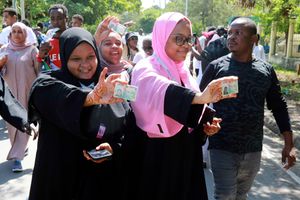
Youths in a peaceful procession on the streets of Mombasa during the 'Niko Kadi' voter registration campaign on March 24, 2026.
Photo credit: Kevin Odit | Nation Media Group
“As Kenya moves toward the 2027 polls, the question now is not whether youth will participate. They are now preparing to do that and they are the majority,” he says.
CIVICUS warns that ignoring youth grievances could escalate confrontation. Conversely, meaningful reforms could harness this demographic wave as a stabilising force.
The Niko Kadi initiative has not gone unnoticed by electoral authorities. IEBC Commissioner Alutalala Mukhwana confirmed that the campaign has triggered a nationwide surge in voter registration.
“We are seeing a surge across the country since this #NikoKadi initiative began in Kasarani last week,” he said during an interview with a local TV station on Tuesday, March 24, 2026. The commissioner said the campaign is already boosting turnout.
Mr Maosa notes that Niko Kadi is helping to convert concerns about youth voter apathy into action by transforming online enthusiasm into voter registration and civic awareness.
CIVICUS adds that such mobilisation makes youth movements more resilient: “There is no single leader to co-opt or discredit. This approach mirrors global trends, where Generation Z operates through networks rather than hierarchical structures, enabling sustained mobilization that is difficult for authorities or political elites to control.”
The political stakes could not be higher. With roughly 17 months to the General Election, political parties are scrambling to engage young voters who are increasingly resistant to traditional ethnic and regional appeals.
Civil society organisations are also innovating, using digital platforms to educate, mobilise and connect young voters. Yet experts contend that Niko Kadi has already shifted the political conversation.
The Independent Electoral and Boundaries Commission Chairperson Erastus Ethekon makes his remarks during the signing of a memorandum of understanding between IEBC and the Kenya Media Sector Working Group in Nairobi on March 27, 2026.
Photo credit: Francis Nderitu | Nation Nedia Group
“It proves that youth apathy is evitable and that digital activism can translate into real-world participation. By turning viral social media posts into organised voter registration, the initiative ensures that young voices will be counted and heard in 2027, giving Generation Z a tangible stake in Kenya’s democratic future,” says Maosa.
For millions of young Kenyans, he adds, the 2027 election is more than a routine transfer of power—it is a referendum on their future.
According to the 2019 KNBS census, over 75 per cent of Kenya’s 47.6 million people are under the age of 35.
Previously, many young people—whose lives have largely been shaped by the internet—remained apolitical, allowing seasoned politicians to dominate national affairs.
Their turnout in the 2022 election was low, as indicated in the post-election report by the Independent Electoral and Boundaries Commission (IEBC). However, this appears to have changed significantly following the June 2024 uprising.
In the 2022 register, 8,811,691 voters were aged between 18 and 34, representing 40 per cent of the total electorate.
With Niko Kadi gaining traction, this number is expected to rise sharply ahead of the 2027 polls.
By 2027, most of Gen Z will have attained voting age. Analysis of KNBS data shows that more than 14 million—four in five—will be eligible to vote, marking a 79.4 per cent increase from 2022.