There is the place of joint concerns, and then that of issues that weigh each of them down individually. And they must balance the common good with personal survival.
For opposition leaders, the road to the 2027 general election is a delicate balancing act, how can they dislodge President William Ruto from power while securing their place in the political landscape that will follow his departure?
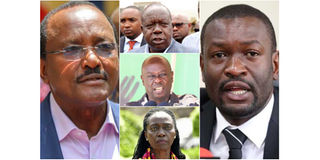
Beyond public calls for unity and negotiations over a joint presidential candidate, leading opposition figures, including Kalonzo Musyoka, Edwin Sifuna, Rigathi Gachagua, Fred Matiang'i and Martha Karua, are grappling with deeper anxieties concerning political survival, betrayal, regional influence, and the consequences of their coalition failing to secure power.
A divided opposition could hand President Ruto an advantage in 2027, and they seem to be alive to this. Internally, a contested presidential ticket could fracture the coalition before the campaign gains momentum. Even still, an opposition victory could leave its leaders fighting over the distribution of power.
Matiang'i pledges opposition unity to unseat Ruto in 2027 polls
These competing scenarios are weighing heavily on the minds of the opposition chiefs as they plan for the next general election. Each leader is confronting a different political dilemma: the risk of losing an election, the danger of being betrayed by allies, and the prospect of emerging from the contest with diminished political influence.
For some, 2027 could be their last realistic opportunity to realise a lifelong presidential ambition. For others, it is a gamble that could either propel them into national leadership or render them politically irrelevant.
Democracy for Citizens Party (DCP) leader Rigathi Gachagua, Jubilee's Fred Matiang'i and Wiper Patriotic Front's Kalonzo Musyoka.
Photo credit: Pool
For a few, the stakes are even more personal, as they fear what another Ruto presidency could mean for their political survival, influence, and legacy.
The latest Trends and Insights for Africa (TIFA) opinion poll, released on Thursday, has added another dimension to these calculations by exposing the divisions within the opposition, which has yet to agree on a joint presidential candidate.
The survey puts former deputy president Gachagua at the heart of these divisions, with 43 per cent of respondents identifying him as the biggest obstacle to opposition unity. President Ruto follows with 15 per cent, while Mr Sifuna and Mr Musyoka received seven and six per cent respectively.
Dr Matiang'i and Embakasi East MP Babu Owino each scored four per cent, and retired President Uhuru Kenyatta registered two per cent.
In his latest interview, Mr Owino has made damning claim about his secret deal with Mr Sifuna over the Linda Mwananchi Movement leadership, in what analysts now say could further disrupt their camp.
He has revealed that an initial agreement within the Linda Mwananchi camp was for Mr Sifuna to pursue the presidency while he took over the leadership of the proposed political party, but the arrangement later changed, raising questions about competing interests and political insecurities.
Mr Owino said the original understanding was intended to ensure that both leaders grew politically without one becoming subordinate to the other, warning that holding public office could expose politicians to vulnerabilities if they lacked control of their political parties.
He cited Mr Gachagua's impeachment, arguing that having his own political party could have offered him greater political security.
“We had agreed with Sifuna and other members that once we got the party, Sifuna would be the presidential candidate and I would be the party leader. But things changed. I also don't know how things changed,” he said.
Mr Owino said the concern was partly informed by the fear that an elected leader could eventually sideline political allies once they secured powerful positions.
He maintained that their ambitions were complementary, with Mr Sifuna eyeing the presidency and himself pursuing the Nairobi governorship, leaving no reason for rivalry.
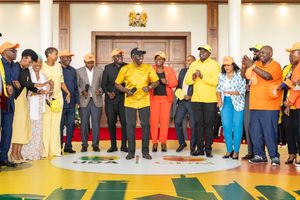
Opposition leaders from left: Kisii County Senator Richard Onyonka, Nairobi Senator Edwin Sifuna, Jubilee Party leader Dr Fred Matiang'i, Siaya Governor James Orengo and Embakasi East Member of Parliament Babu Owino after a private at a Nairobi hotel on September 10, 2026.
Photo credit: Billy Ogada | Nation Media Group
“There can't be competition between Babu and Sifuna. Sifuna is going for president, Babu is going for governor. What are we fighting over? Nothing,” he said.
He, however, cautioned against building political partnerships solely on personal trust, insisting that interests and accountability should take precedence.
“Politics is not about trust. Politics is about interest. Put the interest on the table. How will Mwananchi benefit? That is the first interest that must be served.”
He argues that the ultimate safeguard for their political partnership should be a commitment to delivering on promises to ordinary Kenyans.
Mr Sifuna, has since challenged supporters who had encouraged him to consider a presidential bid to remain by his side.
“I hope you are not taking me for a ride, encouraging me to pursue the presidency only for me to look back and find that you have abandoned me. Do you promise to stand with me to the very end?” Mr Sifuna posed during one of his campaign rallies in Western Kenya.
For Mr Gachagua, the fear is more immediate. His own political future is complicated by the legal uncertainty surrounding his impeachment, with an appeal pending after the High Court declined to quash the Senate resolution removing him from office.
With the impeachment tag hanging on his neck, his ineligibility to seek any public office is taking a toll on his ambition, with several Mt Kenya homegrown candidates – Ndindi Nyoro, Martha Karua, Jimi Wanjigi and Martha Karua, among others threatening to “eat his lunch.”
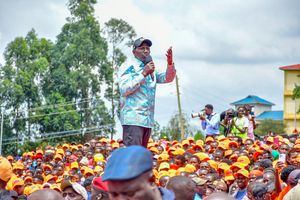
People's Party of Kenya (PPK) leader Ndindi Nyoro addresses a crowd in Njoro Town, Nakuru County, on October 21, 2026.
Photo credit: Boniface Mwangi|Nation Media Group
The DCP leader has warned that divisions in Mt Kenya could help Dr Ruto secure another term, leaving him and other government critics in trouble.
In an interview with Inooro TV on November 1, 2026, he said he would leave for the United States, where he has a home in Texas, if the President were re-elected.
“Ruto will try to use our people to split the region, and if I see that happening, I know that Ruto will be re-elected. And if he is re-elected, we will be in trouble, but I won't be here. I will be in America. I have a house there,” he said.
His warning points to concern about consequences for allies who have opposed the President, although he did not specify what action they might face.
It also exposes his dilemma: he wants to unite Mt Kenya behind the opposition, yet 43 per cent of TIFA respondents identify him as the biggest obstacle to opposition unity.
His attacks on rival parties and opposition figures, analysts say, reflect a contest over political territory and bargaining power.
Mr Sifuna faces a different calculation. Linda Mwananchi has given him a national platform, but the proposed party’s leadership arrangements, as Mr Owino’s account suggests, are testing whether its leading figures can protect their interests while maintaining a common project.
Pundits also insist that Mr Musyoka must weigh another presidential bid against the risk of supporting a coalition partner and being left outside government.
TIFA records Mr Musyoka’s strongest support in Ukambani at 80 per cent, compared with Mr Sifuna’s eight per cent.
“The base gives him leverage, but translating it into national support remains the challenge. At 72, another concession carries weight. This, probably could be his second and last stab at the presidency. Come 2032, he will be clocking 80 and this is his greatest fear. It’s now or never for him,” argues political analyst Geoffrey Mboya.
For Dr Matiang’i, analysts insist that he must decide whether his presidential ambition can survive a contest dominated by established political machines.
Ms Karua’s dilemma is whether a coalition built through private bargaining can honour her demand for a transparent process and reform agenda.
“Having been the late Raila Odinga’s running mate in 2022, she must decide whether to make another bid or risk a supporting role. Her insistence on a credible process raises a broader question of whether the coalition will accept rules that apply equally to all its principals,” says advocate Chris Omore,
He adds: “The anxieties differ, but converge on one question about what happens if the coalition wins, loses or fractures. Some fear surrendering a presidential ambition; others risk losing control of a party, being sidelined in government formation or seeing their regional influence diminish.”
The principals’ anxieties are echoed by allies, whose statements expose the difficulty.
Democratic Party Leader Justine Muturie and his Wiper Patriotic Front counterpart Kalonzo Musyoka during a rally in Homa Bay Town on November 6, 2026.
Photo credit: George Odiwuor | Nation
In Wiper, Mombasa branch chairman John Chamia warned that the party could go it alone if Mr Musyoka is denied the opposition ticket.
“Kalonzo will go it alone if the opposition refuses to nominate him as the opposition presidential candidate come 2027,” he said, warning that his supporters may reject compromise.
Mr Gachagua has pledged to support another candidate if he is not selected: “If it is not me, I will support whoever will be picked as a presidential candidate.” But he has challenged fellow aspirants to make the same commitment, exposing the trust deficit threatening unity.
Dr Matiang’i and Kiharu MP Ndindi Nyoro have sought to calm speculation about rivalry, even as they continued with parallel opposition rallies together with Ms Karua.
At a November 9 meeting, Mr Nyoro said: “We will ensure we field one candidate to face Ruto.” Their pledge leaves open who will step aside when selection begins.
Ms Karua has described disagreements as “normal friction in a house of brothers and sisters”, but ruled out becoming anyone’s running mate.
Analysts maintain that such statements expose the coalition’s test as to whether leaders can agree on transparent selection rules and binding power-sharing before ambitions harden into separate campaigns.