Orange Democratic Movement (ODM) leader Raila Odinga has unveiled a comprehensive blueprint for a people-driven national dialogue that he believes could help Kenya confront its deepening socio-political crises and reset the country’s governance culture.
Dubbed the “Intergenerational National Conclave,” Mr Odinga’s plan envisions a layered, bottom-up process that brings together citizens from across the country to deliberate on pressing issues and propose solutions culminating in a national forum of grassroots delegates, MPs, civil society and other key stakeholders.
In an exclusive interview with NTV and the Daily Nation at his Karen residence in Nairobi on Saturday, Mr Odinga said the initiative is anchored in Article 1 of the Constitution, which states that sovereign power belongs to the people of Kenya and can be exercised either directly or through elected representatives.
“The part about elected representatives is clear — it is about voting. But how do 55 million Kenyans exercise their sovereignty directly? That’s where dialogue comes in. This is the true expression of ‘we the people,’” he said.
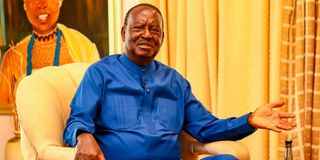
Former Prime Minister and ODM leader Raila Odinga during an interview at his home in Karen, Nairobi on July 19, 2025.
Photo credit: Wilfred Nyangaresi | Nation Media Group
The proposal begins at the polling station level, where citizens including youth, women, the elderly, and persons with disabilities would convene to discuss community issues. Each forum would comprise either 40 or 50 members with at least half drawn from the youth (Gen Zs).
These grassroots groups would then elect representatives to escalate discussions to the ward, sub-county, county and eventually national level. At each stage, delegates would consolidate priority issues and select individuals to carry them forward.
By the time the process culminates at the national level, Mr Odinga envisions a conclave of about 3,000 representatives including delegates from all counties, parliamentarians, faith groups, labour unions, academia, civil society and others.
“This will be the real people’s assembly and not a political rally. And it must be bigger and more inclusive than Nadco. That was an elite dialogue. This one brings grassroots issues to the national table,” he said.
He emphasized that the process must be independent of government funding and be driven by communities themselves.
“Once you bring in money and government, you compromise the process. This is not about allowances or per diems. People are coming to speak about their issues — not to earn,” he asserted.
Former Prime Minister and ODM leader Raila Odinga during an interview at his home in Karen, Nairobi on July 19, 2025.
Photo credit: Wilfred Nyangaresi | Nation Media Group
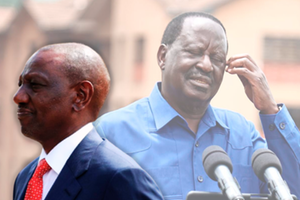
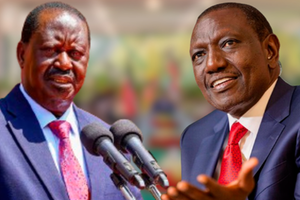
On whether leaders like President William Ruto or himself would attend the national forum, Mr Odinga said it would only be as ordinary citizens.
“Even I may not be a participant unless I start at the grassroots. President Ruto too would attend only as an individual. This is not about Raila or Ruto it’s a Kenyan people’s process.”
“Ruto may go home and you’ll have Gachagua for example. What changes? We must create a culture where elections happen, government works, and campaign seasons have a defined time,” he said, adding that reforming Kenya’s governance system is a better long-term goal than regime change.
He said recommendations from the conclave could lead to a referendum, depending on their substance.
“Once the conclave speaks, the next step is implementation. That could include constitutional changes — and if so, a referendum will be necessary. This time, it will be truly people-driven — unlike the BBI process,” he said, referring to the failed Building Bridges Initiative which he spearheaded with former President Uhuru Kenyatta before the 2022 elections.
Mr Odinga rejected criticism that the opposition has overused the “dialogue card,” saying Kenya’s current crisis demands collective engagement.
“We fought for multiparty democracy through protests and sacrifice — but we also knew when to talk. Today’s crisis is similar. If we don’t talk, the alternative is anarchy. I will always support dialogue at the right time.”
In a surprising development, former Cabinet Secretary Justin Muturi’s Democratic Party (DP) — part of the opposition coalition led by Rigathi Gachagua and Wiper leader Kalonzo Musyoka — has backed Mr Odinga’s call for national dialogue, breaking ranks with others in the opposition who favour continued resistance.
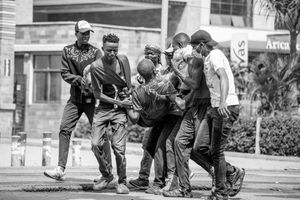
DP Secretary General Jacob Haji expressed support for the grassroots dialogue to address police brutality, youth unemployment, and runaway corruption, even as other opposition leaders insisted on a confrontational approach.
“Kenya must embrace the energy and enthusiasm of its youth and channel it toward nation-building,” said Mr Haji in a July 10 statement.
“We believe in the power of dialogue to resolve conflicts and find common ground. We support a national forum that includes young leaders, civil society, and political stakeholders.”
His remarks echo Mr Odinga’s belief that meaningful reform can only be achieved through widespread engagement and consensus not divisive rhetoric or elite political deals.