A fight over the “Ukombozi” name has exposed growing divisions within the opposition, with allies of Wiper Patriotic Movement leader Kalonzo Musyoka blocking Nairobi Senator Edwin Sifuna’s attempt to use a party widely seen as his vehicle for the 2027 presidential race.
What was expected to be a straightforward rebranding of Azimio La Umoja Coalition as The Ukombozi Alliance (TUA) has instead opened a new front between Mr Musyoka’s allies and the Linda Mwananchi movement led by Mr Sifuna.
A law firm believed to be acting for the coalition has successfully objected to the proposed change of name of the United Democratic Party (UDP), formerly associated with the late Cabinet Minister Cyrus Jirongo, to Ukombozi People’s Party (UPP).
Azimio says it reserved the name “Ukombozi” before Mr Sifuna’s allies began the process of rebranding UDP.
The dispute emerged on Monday hours after Mr Musyoka announced the rebranding of Azimio as The Ukombozi Alliance at a meeting attended by, among others, Siaya Governor James Orengo and Suba South MP Caroli Omondi, both of whom are associated with the Sifuna camp.
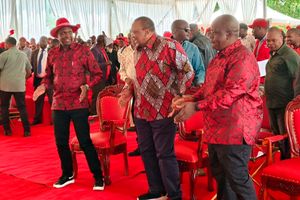
The fight over the political vehicle comes as plans take shape for a restructuring of the opposition ahead of the 2027 General Election, including the expected replacement of former President Uhuru Kenyatta as Azimio chairman.
Mr Kenyatta is today (Tuesday) expected to chair a Jubilee Party National Executive Council meeting before beginning the process of relinquishing his leadership positions in the party. His resignation from Jubilee would pave the way for changes in the leadership of both Jubilee and the Azimio coalition.
Officials told the Nation that the process would begin with Jubilee before the coalition formally proceeds with the change of its chairperson.
The developments have also cast uncertainty over the political party that Mr Sifuna will use when Linda Mwananchi is launched on October 3.
On August 10, lawyers wrote to the Office of the Registrar of Political Parties (ORPP) objecting to the proposed change of name of UDP to Ukombozi People’s Party.
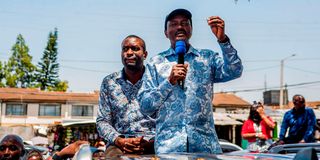
Trans Nzoia Governor George Natembeya, a close ally of Mr Sifuna, has been driving the rebranding of UDP and has publicly indicated that the senator would use the party as his political vehicle.
But in a September 8 response, Registrar of Political Parties John Cox Lorionokou said his office had not approved or authorised the use of the name Ukombozi People’s Party by UDP.
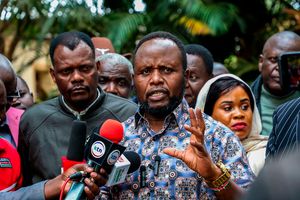
Wiper Party leader Kalonzo Musyoka (centre) addresses journalists, flanked by DAP-K leader Eugene Wamalwa (right), Siaya Governor James Orengo and Democratic Party leader Justin Muturi, among other leaders, at the SKM Command Centre in Nairobi on September 21, 2026.
Photo credit: Lucy Wanjiru | Nation Media Group
“Reference is made to your letter dated August 10, 2026, objecting to the public notice allegedly issued by the United Democratic Party (UDP) regarding its proposed change of name to Ukombozi People’s Party (UPP),” Mr Lorionokou said in a response.
The letter dated September 8, added, “Subsequently, this office has not approved or authorised the use of the name ‘Ukombozi People’s Party (UPP) by the United Democratic Party (UDP).
The registrar said the proposed name resembled The Ukombozi Alliance, which had been reserved by another applicant on July 20, 2026.
On Monday, Democratic Action Party-Kenya (DAP-K) leader Eugene Wamalwa told the Nation that Azimio had reserved the name before Mr Natembeya began the process of rebranding UDP.
“The name has already been approved by the Registrar of Political Parties. We made the request to reserve The Ukombozi Alliance, way before the plan to rebrand Jirongo’s party to Ukombozi People’s Party,” Mr Wamalwa said.
The dispute has therefore complicated what had been presented as a rebranding exercise, with two political projects now seeking to build around the same “Ukombozi” identity.
Mr Wamalwa said the opposition coalition was also undergoing a wider restructuring ahead of the 2027 election.
He said Mr Kenyatta was expected to resign from Jubilee, paving the way for leadership changes in both the party and The Ukombozi Alliance.
Sifuna to unveil new party in October
“He is handing over both Jubilee and Azimio (now TUA). He has to start with Jubilee first. Resolutions made by Jubilee will be forwarded to Azimio council, which is scheduled to meet next week,” Mr Wamalwa explained.
On who would succeed Mr Kenyatta as coalition chairman, Mr Wamalwa said consultations were ongoing.
However, sources at the meeting indicated that Governor Orengo was being considered for the position. The proposed change has political significance because Mr Orengo is also associated with the camp backing Mr Sifuna, while Mr Musyoka is positioning himself in the opposition leadership contest ahead of 2027.
Jubilee co-deputy party leader Jeremiah Kioni confirmed that the party’s NEC meeting would take place today (Tuesday), with Mr Kenyatta expected to chair it.
“I have no clear idea what the agenda is, but we will be there. Uhuru has always wanted to hand over,” Mr Kioni said.
Mr Kenyatta had been widely expected to hand over the Azimio chairmanship Monday, but Mr Wamalwa and Kitui Senator Enoch Wambua said he first needed to resign from Jubilee as a matter of procedure.
The uncertainty comes less than two weeks before the October 15 deadline for aspirants to declare the political parties they intend to use in the 2027 General Election.
Reports had indicated that Mr Sifuna would run on Ukombozi, but interviews with several leaders associated with Linda Mwananchi suggest the movement has yet to settle on a political vehicle.
Funyula MP Wilberforce Oundo told the Nation that no final decision had been made despite the October 3 launch drawing closer.
“Discussions are still ongoing, and the notion that Mr Sifuna, our presidential candidate, has settled on the Ukombozi Party of Kenya is false. There are meetings going on, and we shall soon announce the party before the launch,” Mr Oundo said.
Mr Oundo, the only elected MP in Busia County supporting Mr Sifuna’s presidential bid, said the senator would eventually run on a party with a national outlook.
“The details of the launch will be announced at the right time, but let Kenyans know we shall settle on a party with a national outlook. The issue of the party shouldn’t worry our supporters,” he said.
Former ODM co-deputy party leader Godfrey Osotsi.
Photo credit: Dennis Onsongo | Nation Media Group
Vihiga Senator Godfrey Osotsi accused the government of frustrating Linda Mwananchi’s efforts to secure its preferred political name but said the movement had already secured an alternative party.
“You have been asking which party is ours. They have tried to take the name of our party and planted people, but the case is coming up on September 30. We tried to get a party, but they created obstacles. However, we are clever, and we have the party. Within two weeks, we will announce the party that Edwin Sifuna will use to vie for the presidency,” Mr Osotsi said in Vihiga.
The Political Parties Disputes Tribunal is expected to rule on September 30 on the dispute surrounding the Linda Mwananchi name.
“In the next three weeks, expect a white smoke and nobody will play with us again,” he said.
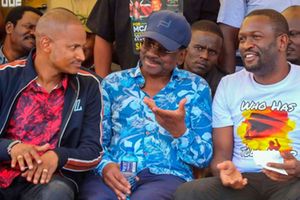
Earlier, speculation had centred on the Mwananchi Party, which is associated with Embakasi East MP Babu Owino. But efforts to persuade Mr Owino to hand over the party leadership to Mr Sifuna reportedly failed.
Kabuchai MP Majimbo Kalasinga, an associate of Mr Sifuna, said he was also unaware of the party the senator would use.
“I don’t know the party and the details of the launch since there is also a budget involved. You can ask Sifuna himself. I don’t want to be seen opposing him or saying what he has not said,” Mr Kalasinga said.
“What you are seeing on social media is a lie, and let me assure you Sifuna wouldn’t use that party. No decision has been made,” Dr Khalwale said.
Saboti MP Caleb Amisi also said Mr Sifuna had yet to secure a political party, claiming that efforts to rebrand Mr Natembeya’s Ukombozi People’s Party had stalled.
“All their attempts to get a party have hit a dead end since there are also government moles revealing every plan they have. If Sifuna can’t plan and organise his camp, how will he lead Kenyans? There is a lot of confusion in Linda Mwananchi,” Mr Amisi said.
The party dispute played out against another significant development affecting Azimio’s leadership transition after Justice Bahati Mwamuye declared unconstitutional the law restricting retired presidents from holding political party office beyond six months after leaving office.
Justice Mwamuye also struck down provisions allowing Parliament to reduce or withdraw the retirement benefits of a former president.
During an Azimio press briefing, Mr Musyoka welcomed the decision, arguing that the restriction preventing Mr Kenyatta from holding political office was unconstitutional.
The ruling has direct implications for Mr Kenyatta, whose continued formal role in Jubilee and Azimio had become the subject of a legal dispute.
Former President Uhuru Kenyatta.
Photo credit: Bonface Bogita | Nation Media Group
The case followed a May 4, 2026 Senate motion seeking a review of Mr Kenyatta’s retirement benefits over his continued political activities.
Sheria Mtaani and lawyer Shadrack Wambui challenged Sections 4 and 6 of the Presidential Retirement Benefits Act. Section 4 allowed Parliament, by a two-thirds vote of the National Assembly, to withhold or reduce a retired president’s benefits in specified circumstances, while Section 6 barred a retired president from holding political party office for more than six months after leaving State House.
Justice Mwamuye declared Sections 4(1), 4(2) and 4(3) unconstitutional and void, while leaving intact Section 4(4), which deals with benefits payable to surviving spouses. He also declared Section 6 unconstitutional and void.
The judge based his decision in part on Article 151(3) of the Constitution, which provides that retirement benefits payable to a former president and former deputy president shall not be varied to their disadvantage during their lifetime.
“The Constitution did not grant a conditional entitlement with protections that are subject to legislation or parliamentary withdrawal. The answer must, therefore, be in the negative,” Justice Mwamuye said.
He rejected the argument that a two-thirds parliamentary majority could make the withdrawal or reduction of benefits lawful.
“A constitutionally prohibited act does not become constitutionally permissible merely because Parliament requires a larger majority before undertaking it,” he said.
On political rights, Justice Mwamuye held that retirement from the presidency did not remove citizenship or constitutional political freedoms.
“Influence is not office. Influence is not executive authority. Influence is not a constitutional disability,” he said.
The judge found Section 6 unconstitutional, removing the statutory restriction on retired presidents holding political party office after six months.
The decision came days after Justice Lawrence Mugambi reached the opposite conclusion on the same provision.
On September 3, Justice Mugambi upheld Section 6 following a petition by activists Peter Odhiambo Agoro, Paul Muiruri Kiguathi and Damon Onyango.
“A reading of Section 6(1) is clear, as was strongly submitted by the respondents and the interested parties, it does not forbid the retired President from being a member of a political party, what it restricts is taking up a leadership role in the political party for more than six months after retiring,” Justice Mugambi said.
Justice Mwamuye’s ruling therefore provides a different legal position on the restriction as the political parties involved prepare for leadership changes.
The two cases arose from different petitions. Justice Mugambi’s ruling followed a petition filed in 2023, while the case before Justice Mwamuye was filed after the May 4, 2026 parliamentary motion.
The respondents had opposed the latter petition, arguing that it was premature because Parliament had not passed a resolution reducing or withdrawing Mr Kenyatta’s benefits.
The court, however, held that Sections 4 and 6 were existing laws whose constitutionality could be challenged even without a completed parliamentary resolution.
The final orders declared Sections 4(1), 4(2) and 4(3) unconstitutional while preserving Section 4(4). Section 6 was voided in full.
The court also barred reliance on the invalidated provisions to reduce protected retirement benefits and barred enforcement of Section 6.
Reporting by Cecil Odongo, Daniel Ogetta and Joseph Wangui