With less than nine months to the 2027 elections, the electoral agency is under pressure as it grapples with multiple hurdles that threaten to derail the August 10 poll.
The development comes at a time when the opposition has turned the heat on the Independent Electoral and Boundaries Commission (IEBC), demanding major electoral reforms, including an audit of the voters’ register and changes to election technology and the decentralisation of presidential results transmission, to be implemented before the August 2027 elections.
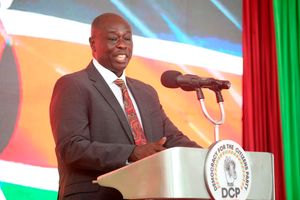
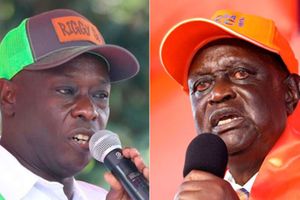
The leaders, led by former Deputy President Rigathi Gachagua, have warned that unresolved questions surrounding the electoral process could undermine confidence in the outcome and trigger disputes after voting.
But laying bare the challenges during a strategic stakeholder engagement forum with political reporters in Nairobi yesterday, the commission cited legal and procurement disputes as some of the major headaches it is grappling with as the clock ticks towards the 2027 General Election.
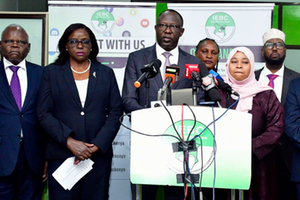
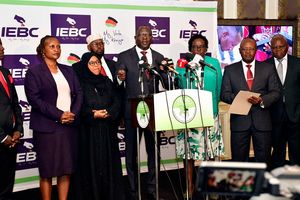
Independent Electoral and Boundaries Commission (IEBC) Chairperson Erastus Edung Ethekon (second left), Vice Chairperson Fahima Araphat Abdallah (second right), and Commissioners Ann Nderitu (right) and Hassan Noor Hassan during an engagement with political reporters at Iconic Plaza.
Photo credit: Dennis Onsongo | Nation
While tabling a report on the status of the 2027 General Election preparedness, Commissioner Ann Nderitu revealed how procurement disputes have derailed the acquisition of key election materials crucial in the delivery of free, fair and credible elections.
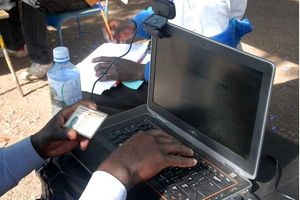
The commissioner pointed out that the agency has encountered setbacks in the procurement of some strategic election materials like ballot papers and election technology, a situation that could leave the country without a functional system for voter registration.
IEBC had already advertised tenders for election technology and ballot papers, but has been unable to proceed with the processes following court interventions.
For instance, there is a petition, certified as urgent, seeking to block the IEBC from awarding a Sh17.6 billion Kenya Integrated Election Management System (KIEMS) tender to Smartmatic International Holding, citing discrepancies in the contract.
Smartmatic’s existing contract with the electoral agency expired yesterday (November 24), but the firm has submitted a bid for an extension.
The opposition had also questioned the readiness of Miru Systems, allegedly identified as the prospective replacement, casting doubts on the timing of the transition to a new technology provider.
“We have, however, already acquired some general election materials while procurement of other items is at different stages,” said Ms Nderitu.
Ms Nderitu warned that the constant legal disputes could lead to uncertainty in the electoral processes, with the agency facing a myriad of cases in the corridors of justice. She added that the technology gaps have the potential to compromise election operations.
In September, a High Court in Nairobi temporarily halted the ongoing tendering process for the supply of ballot papers and other election materials after a bidder challenged the procurement requirements.
Independent Electoral and Boundaries Commission Vice Chairperson Fahima Abdallah (Centre), alongside Commissioners Ann Nderitu (left) and Alutalala Mukhwana, when they appeared before the Justice and Legal Affairs Committee (JLAC) at Bunge Tower in Nairobi on Tuesday, February 24, 2026.
Photo credit: Dennis Onsongo | Nation Media Group
Further, the former Registrar of Political Parties observed that the Commission is also struggling with staff shortages, which could lead to operational inefficiencies.
However, she said the agency is in the process of recruiting personnel to fill vacant positions left by those who attained retirement age, left for greener pastures or separated due to natural attrition.
Another troubling challenge is a funding gap with the Commission facing a Sh12 billion funding shortfall, a situation that could undermine preparations and operations of the August 2027 polls.
The IEBC is also grappling with incomplete voter registration which has resulted in reduced voter coverage.
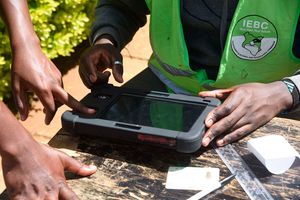
Nonetheless, Ms Nderitu said the Commission is in the final stages of gazettement of voter registration centres ahead of the second enhanced continuous voter registration with the exercise scheduled for January 11, 2027.
She explained that they target to register 3,263,691 additional voters during the exercise, with the 2027 register of voters targeted to hit 28,420,458 voters.
“Acquisition of statutory voter registration data capture forms and acknowledgement slips have been finalised and distributed across the country in readiness for the exercise,” said Ms Nderitu.
But another hurdle that could cause controversy is the admission by the Commission to an incomplete geographic information system (GIS) database, which they said is causing logistical planning challenges.
GIS is crucial in mapping and verifying polling station locations, planning voter registration and election logistics, identifying areas that need additional polling stations, and improving the accuracy of electoral maps and geographical data, among others.
Specifically, it shows exact geographical locations and coordinates of polling stations, voter distribution data, locations of voter registration facilities as well as mapping of polling centres, polling stations and administrative units.
The opposition has been adamant that they want the abolition of a national presidential tallying centre, with the parties insisting that results should be received, processed and made accessible through a decentralised system at constituency level.
They argued that the presidential results should be announced based on figures declared at polling stations and constituencies, with the IEBC chairperson limited to declaring the cumulative results rather than undertaking another verification or tallying process at a central facility.
ndependent Electoral and Boundaries Commission (IEBC) Chairperson Erastus Edung Ethekon (left), Vice Chairperson Fahima Araphat Abdallah (Centre) and Commissioners Ann Nderitu (right) engage with political reporters at Iconic Plaza on Tuesday, November 24, 2026.
Photo credit: Dennis Onsongo | Nation
The leaders want the results transmission system redesigned to allow each of the 290 constituencies and the diaspora vote to have independent servers, with media, political parties and candidates granted read-only access to the results as they are transmitted.
However, IEBC chairperson Erastus Ethekon said the Commission’s results management framework provides for electronic transmission and physical delivery of results, public display of results at the polling station, finality of the polling station results, certification of results declared at constituency as final as well as display of electronic results at constituency, county and national tallying centres.
He added that the national presidential tallying centre shall be in Nairobi at a venue to be gazetted by the IEBC, saying such a centre is a constitutional requirement.
“We will make everything open, including the results. IEBC is not hiding anything and has not stopped anyone from accessing any polling station and so I do not understand the hullabaloo about the final results,” said the IEBC boss.
“All these questions have been settled by the courts. The Supreme Court settled the issue of results management and nobody at the IEBC has said they are going to re-invent anything,” he added.
On the controversial issue of live transmission of election results, Mr Ethekon said there is a clear results path for all six elective positions as prescribed in law with the integrated elections management system catering for biometric registration of voters, biometric identification of voters and electronic transmission of results.
The opposition leaders had also demanded an independent audit of the voters’ register and biometric records, followed by public inspection to identify and weed out dead voters, duplicate entries and other irregularities that could compromise the integrity of the roll.
The Commission said they are in the process of procuring an audit firm to conduct an independent audit of the voter register between February 15 and March 16, 2027.
This will then pave the way for the implementation of the audit report recommendations, an exercise that will be conducted between March 23 and April 6, 2027.
Thereafter, a biometric verification of the voters’ roll will be conducted between April 26 and May 25, 2027. However, the commissioner said the inspection of the register of voters is continuous via the IEBC verification portal.
Further, the Commission is establishing an Election Operation Centre which will serve as a centralised information hub for electoral data management, operational planning, and coordination, among other activities.
Independent Electoral and Boundaries Commission (IEBC) Chairperson Erastus Edung Ethekon address political reporters at Iconic Plaza on Tuesday, November 24, 2026, during an engagement to brief journalists on the commission's preparedness for the upcoming elections.
Photo credit: Dennis Onsongo | Nation
“Elections are not merely about voting on polling day. They are a continuous democratic process involving voter registration, political party activities, candidate nominations, voter education, campaigns, voting, counting, tallying, declaration of results, and the resolution of electoral disputes,” said Mr Ethekon.
At the same time, the Commission laughed off claims of division within the agency, saying they are working as a team.
“We only have one chairperson and not any other and I believe that with this team, we will deliver free, fair and credible elections,” said Vice Chairperson Fahima Abdallah.
Meanwhile, opposition leaders yesterday went on to pile pressure on the commission to urgently address concerns raised by stakeholders about preparations for the 2027 general election.
The Kenya Moja Movement Party leader, Bishop Margaret Wanjiru, decried what she termed waning trust by the public in the electoral body, questioning its preparedness, the system to be used and the accuracy of the electoral register.
Speaking after launching the Kenya Moja Movement Party headquarters on Kiambu Road, Bishop Wanjiru said that the IEBC must assure Kenyans that it will deliver a free, fair and transparent election.
“We therefore call upon IEBC to demonstrate independence, impartiality, and preparedness in delivering a free, fair, credible, and transparent general election. The credibility of our democracy depends on an electoral process that Kenyans can trust. But right now, we have a trust deficit in this country. IEBC must restore that trust to Kenyans,” Bishop Wanjiru said.
The Kenya Moja party leader stated that IEBC can restore trust among Kenyans by ensuring that every vote counts, fairness among the candidates, as well as respecting the will of the people.
“We expect the commission to address concerns surrounding electoral preparedness, transparency, and the integrity of the electoral process well ahead of time.”