The question of who fields candidates where is emerging as a defining fault line in Kenya’s 2027 political race, with zoning disputes complicating alliance-building in President William Ruto’s camp, within the Orange Democratic Movement, and across the Opposition coalition.
A strategy once intended to reduce vote-splitting is instead fuelling internal tensions as parties debate whether to protect traditional strongholds or allow open competition.
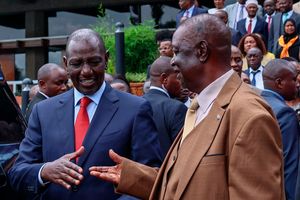
Within President Ruto’s broad-based alliance, friction has surfaced between the ruling United Democratic Alliance and ODM, with the latter pushing for informal safeguards in its perceived strongholds while UDA insists on maintaining a national footprint.
The standoff reflects deeper strategic differences. UDA is pursuing aggressive expansion, while ODM is seeking to protect its political bases.
Opposition divided over open contests
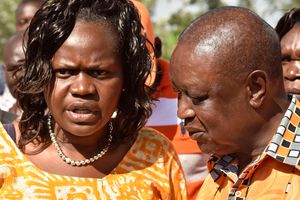
A similar dilemma is confronting the opposition, where several power centres — including Martha Karua of the People’s Liberation Party and Jubilee presidential hopeful Fred Matiang'i — are resisting zoning in favour of open contests.
Jubilee Party Deputy Party leader Fred Matiang'i.
Photo credit: Evans Habil | Nation Media Group
As alliances begin to take shape, the zoning debate is increasingly determining not just who runs where, but the broader architecture of power ahead of 2027.
The once-dominant Jubilee Party is now facing a shrinking political space in Mt Kenya as former Deputy President Rigathi Gachagua moves to consolidate the region under his Democracy for the Citizens Party.
Dr Matiang’i has nevertheless been making inroads into the region, signalling an effort to remain politically relevant. During a visit to Murang’a over the weekend, he struck a conciliatory tone, emphasising unity and shared purpose in what appeared to be a bid to rebuild Jubilee’s grassroots network.
Ms Karua has also toured Mt Kenya extensively, holding rallies in Kirinyaga and Nyeri, where she emerged as one of the strongest voices against zoning.
“We want a process where everyone has the opportunity to present themselves to the people,” she said, signalling resistance to backroom deals.
Mt Kenya becomes key battleground
Supporters of zoning argue it can prevent opposition votes from being split in key battlegrounds. Critics say it risks alienating aspirants and voters who feel excluded.
Ms Karua has pointed to the National Rainbow Coalition model that propelled Mwai Kibaki to power in 2002, arguing that consensus can still be achieved through structured nominations rather than elite-imposed allocations.
People's Liberation Party (PLP) leader Martha Karua speaks to the media in Nairobi on November 2, 2025 about the situation Tanzania following the country's chaotic General Elections.
Photo credit: Evans Habil | Nation Media Group
Devolution created six elective seats at county level, intensifying competition from governor to MCA positions and making blanket zoning arrangements harder to enforce. The rise of independent candidates has further weakened such deals, as disgruntled aspirants increasingly choose to run outside party structures.
Analysts warn that without a clear framework, the opposition risks fragmentation, especially with several presidential hopefuls already in the race.
The region has become a three-way contest involving Mr Gachagua’s DCP, Dr Matiang’i’s Jubilee and President Ruto’s allies.
For Mr Gachagua, consolidating Mt Kenya is central to his bargaining power in the opposition. For Dr Matiang’i, rebuilding support there is critical to any national bid. For President Ruto, retaining influence in the region remains essential to his re-election strategy.
Democracy for the Citizens Party leader Rigathi Gachagua addressing journalists during his 'State of the Nation' briefing at the party offices in Lavington, Nairobi, on February 10, 2026.
Photo credit: Bonface Bogita | Nation Media Group
UDA and ODM rivalry deepens
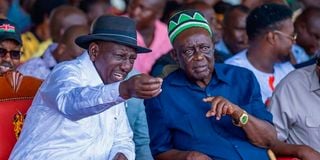
Within the ruling coalition, zoning has also become a source of tension between UDA and the ODM faction linked to Oburu Oginga.
A recent consultative meeting between the two parties exposed disagreements over political territory despite public displays of unity.
ODM wants informal arrangements to protect its bases in Nyanza, Coast and parts of Western Kenya, arguing that unchecked UDA expansion could undermine trust in coalition talks.
“We must respect each other’s zones,” ODM insiders say.
Party Secretary-General Hassan Omar has insisted the party will field candidates across the country, arguing zoning contradicts its ambition to build a dominant national machine.
UDA’s grassroots elections in counties such as Kisumu, Siaya and Migori — long seen as ODM strongholds — have been interpreted as a direct challenge to ODM dominance.
ODM has responded by intensifying youth mobilisation and strengthening party structures to defend its turf.
The result is a growing paradox: cooperation at the top, competition at the bottom.
Smaller parties caught in the middle
For smaller Kenya Kwanza affiliate parties, the dispute has created uncertainty.
Parties such as Ford-Kenya and Pamoja African Alliance are unsure whether they will be allowed to field candidates in their traditional strongholds or step aside for UDA or ODM nominees.
Senate Speaker Amason Kingi has already agreed to support UDA candidates in 2027, while Ford-Kenya leader Moses Wetang'ula is resisting pressure to dissolve his party into UDA.
The recent court-ordered reactivation of the Amani National Congress has further complicated matters by giving its leaders a fresh bargaining chip.
For Prime Cabinet Secretary Musalia Mudavadi, ANC’s return has created an awkward dilemma after many of its officials had already been absorbed into UDA’s leadership structures.
High stakes for both camps
What is emerging is a coalition under strain, with competing interests pulling in different directions.
For President Ruto, the challenge is managing ODM’s demands while holding together his own allies.
For Mr Gachagua’s opposition bloc, the task is even more delicate: building unity without alienating key constituencies.
Analysts warn that mishandling zoning could trigger defections, independent candidacies and damaging internal battles in both camps.
Political analyst Dismas Mokua says Kenya’s youthful and increasingly urban electorate may reward open competition over elite political calculations.
“Legitimacy derived from competitive primaries may ultimately prove more valuable than short-term electoral calculations,” he said.
Committee formed to manage tensions
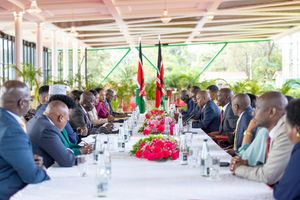
During a recent joint meeting at State House Nairobi, UDA and ODM agreed to establish a broad-based management committee to address the zoning dispute and coordinate legislative priorities.
The committee will include party leaders, selected Cabinet ministers and parliamentary leaders, and is expected to lay the groundwork for what both sides describe as a possible “formal coalition of equals.”