Stephen Kiama, a professor of veterinary anatomy who had spent decades mastering the workings of biological systems, neglected to pay attention to something that returned to haunt him as he directed his energies to rescuing the troubled University of Nairobi: the complex anatomy of power. In the final part of the Nation’s exclusive serialisation of ‘Dancing with the Devil’, he details the dramatic months before his removal as Vice-Chancellor.
They say institutions are made of stone and mortar, but those who lead them know they are built of breath, late-night dreams and a thousand quiet sacrifices. For five years, I laboured to transform the University of Nairobi from the hollow silence of the pandemic era into a vibrant citadel of innovation and hope. By May 2023, the foundation was solid, the spires were rising and the air was thick with the palpable energy of a coming triumph.
However, I had forgotten a bitter truth about power: while one hand works to sow the wheat of progress, another may move in the shadows to plant the tares of discord.
I had operated under the naïve assumption that we were tilling the same soil towards a common harvest. But as any gardener eventually learns, the wheat and the weeds often look identical as they break the surface. It is only when they are fully grown – when the winds of the coming storm begin to blow – that the fruit reveals the true nature of the seed. I realised too late that while I was building a sanctuary, others were quietly cultivating a whirlwind.
I did not hear the footsteps at first. I was too busy working on the blueprints for a five-year transformation agenda and preparing the ribbon-cutting for the Wangari Maathai Institute for Peace and Environmental Studies – a gift to the earth and a testament to our resilience. I did not realise that while I was laying bricks, others were sharpening axes.
I did not know that the new Council appointment would soon whip up a storm so cold it would freeze the very soul of the institution and erase the momentum we had built.
In May 2023, the air at the university didn’t just change; it grew heavy. The appointment of the new University Council felt less like a transition and more like a thunderclap. As was the protocol, I reached out to the new Chair, hoping to build a bridge. We sat through the pleasantries, the briefings, the inductions and the polite smiles, but beneath the surface, a frost was forming.
It was not long before the chill turned into a deep freeze. As the Chair spoke, I realised with a sinking heart that he had been fed a steady diet of whispers and poisonous half-truths. He had not come to lead; he had come to prosecute. Every accusation felt like a sharp jab, ignoring the reality of the institution I had poured my life into.
The unfairness of it stung like salt on a fresh wound. To understand why it hurt, you must understand where we were coming from. I had stood in the trenches during the darkest financial hours, making the hard calls that kept our doors open. I had steered the university through the lonely, silent years of the Covid-19 pandemic, holding the community together when the world was falling apart.
Now, finally, the energy of success was being experienced across the university. You could hear it in the activities of the students, the renewed drive of the faculty and the kind of partnerships we were building.
We were on the verge of something beautiful. We were finalising a five-year blueprint for transforming the university. I had even secured a commitment from the President’s office to inaugurate the Wangari Maathai Institute – an iconic campus that stood as a testament to our resilience and a gift to the people of Kenya. I had spent my nights dreaming of that ribbon-cutting ceremony, a moment that would have signalled to the world that we had not just survived, we had triumphed.
To have all that hard-won progress met with suspicion and cold water was paralysing. I felt a profound numbness. For the first time, the quiet, honest sanctuary of research and teaching did not just feel like an option; it felt like a life raft. I did not just need a break; I needed to find where the soul of the university had vanished.
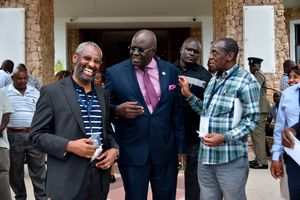
University of Nairobi Chancellor Professor Patrick Verkooijen during an interview in Nairobi on February 10, 2025.
Photo credit: Lucy Wanjiru | Nation Media Group
Just as I was about to let go, a lifeline appeared. Prof Patrick Verkooijen, whom I had appointed the previous year as the Distinguished Chair of the Wangari Maathai Institute, invited me to a meeting at the Serena Hotel, Nairobi.
He was passionate and convincing, reminding me of the critical importance of my continued leadership. Prof Verkooijen was, especially, concerned about the upcoming launch of the Wangari Maathai Institute, a high-profile event to which he had invited dignitaries such as former United Nations Secretary-General Ban Ki-moon and the President of the African Development Bank, Akinwumi Adesina.
The weight of these commitments, coupled with encouragement from my dedicated staff, made me reconsider.
I began to reflect on the immense responsibilities I held and realised that I could not, in all sincerity, abandon ship. Many critical events were on the horizon: finalising the University of Nairobi’s Strategic Plan 2023-28, the September 22 graduation ceremony (our first physical graduation since the pandemic), orientation for the 2023/24 freshers, signing a performance contract with the Council, and a crucial scheduled accreditation by the Commission for University Education. I also had to oversee the implementation of vital initiatives, including the Science and Engineering Complex, the Kantaria Agricultural Innovation and Technology Transfer Centre and a Centre for Land Acquisition and Resettlement.
The list of urgent tasks seemed endless, and I felt a duty to be in the office. Furthermore, after resting for nearly a month, I felt energised and rejuvenated.
My path back to the office was surprisingly simple. I had never received a reply to my leave request, so after my month of rest, I returned. Discussions with the Chair of Council, the Cabinet Secretary for Education, Ezekiel Machogu, the Head of Public Service and Chief of Staff, Deputy President Rigathi Gachagua and a meeting with President William Ruto – who expressed concern about “so much noise” at the university – reinforced my decision to stay put. I dared to hope the storm had passed.
But the peace was an illusion. The Chair began inviting a team of junior administrative staff to attend Council meetings to advise, record minutes and facilitate proceedings – all without a single reference to me, the Vice-Chancellor and Secretary to the Council. I was cut out of the loop. When I asked for the signed minutes after such meetings, the response was always the same: “The Chair is working on them.” That was a direct affront to my role as defined in the university statutes. When I approached him, he simply brushed me off, stating: “The Council is the supreme organ.” I continued under these difficult circumstances, hoping the stalemate would end.
My sense of calm was shattered on Friday, April 19, 2024, about 1800 hours. Without warning, the Chair handed me a letter ordering me to proceed on a 60-day leave. The number 60 was plucked out of thin air. I had not requested any leave. The Chair and I had sat together during the National Wage Conference from April 15 to 17 at Bomas of Kenya, and had even shared tea without any mention of his plans.
To add insult to injury, he appointed a professor to act in my place – a move that brazenly violated university statutes. Seeking counsel, I reached out to the Cabinet Secretary for Education. His advice was reassuringly direct: I was to keep my head high, continue executing my duties and leave the management of the matter to him.
True to his word, Machogu took immediate action, convening a joint meeting with the Council Chair and I. To ensure nothing was left to ambiguity, he followed up by formally communicating his concerns to the Council in a letter, making a point to copy the Chancellor and I.
The climax of his frustration played out publicly on May 28, 2024. While attending a University of Nairobi Partnership forum at Serena Hotel, he delivered a stinging, widely publicised admonishment to the Council, warning the members that they had crossed a red line.
The press, naturally, had a field day with the dramatic pronouncement. The East African Standard seized the moment, running the story under the gripping headline: “Machogu reads riot act to UoN Council over leadership wrangles.” The Nairobi Law Monthly published its coverage with an equally punchy title: “Machogu warns UoN Council over ‘silly’ fights with the VC.”
Unfortunately, this vital buffer of support was abruptly removed. On July 11, 2024, the President dismissed the entire Cabinet, sweeping Machogu out of office. Although the appointment of the Council would eventually be revoked the following year by his successor, an immense amount of water had already passed under the bridge at the university.
Through it all, I kept showing up and doing my work, but the hostility directed towards me only continued to escalate.
The day of reckoning read like a scene from a bad thriller. On August 2, 2024, the Chair – flanked by privately hired and hooded policemen, burly men in civilian clothes, and a few Council members – strode into the University Towers. A man carrying a bag of tools, ostensibly for breaking down doors, led the way.
I walked out of my office to find a situation entirely foreign to our campus: hooded policemen standing guard at the Vice-Chancellor’s door. It was a jarring, cinematic intrusion completely detached from the relatively placid world of academia.
When I asked who had summoned them, the officers were polite, explaining they had been invited to secure a Senate meeting I was supposedly holding. I informed them that there was no such meeting and that I had not requested police presence.
They immediately headed for the lift and left, but the air did not clear. The optics were horrifying. For the first time in the university’s history, the shadow of tactical gear had touched the VC’s office, and the damage to our sense of sanctuary was unlike anything we had ever experienced.
The university had officially lost its innocence, and it hurt me deeply.
Then University of Nairobi Chairman of Council Prof Amukowa Anangwe, Chancellor Prof Patrick V. Verkooijen and Vice Chancellor Prof Stephen Kiama during the Chancellor’s Inaugural Town Hall event at the Chandaria Auditorium on February 1, 2024.
Photo credit: Bonface Bogita | Nation Media Group
Shortly after this bizarre invasion, the Chair arrived at my office with a letter suspending me for three months, pending an investigation. The order was draconian: it barred me from university premises, meaning I needed permission even to seek treatment at the university health services or to enter my residence, which was university property.
When I received the suspension letter, my first instinct was to fight. I was going to tear apart that unfair administrative process in open court. I contacted a lawyer, and we submitted our application online, ready for battle. But before the court could even convene, a city lawyer jumped into the fray with a direct rebuttal of my affidavit, clearly acting on the specific instructions of the Chair of Council. The kicker? This lawyer had not been procured to represent the university, and my legal filing had not even been served yet; we were still waiting for a duty judge to give directions.
Yet there it was – a detailed counter-punch, roughly 24 hours after I had submitted my documents. Impunity was not hiding; it was flashing like a neon sign. I realised I was up against a deck thoroughly and expertly stacked. They were not playing by the rules; they were rewriting them as they went along. I did the only sane thing: I withdrew the case. There is no sense in fighting a ghost that can read your mind.
Reflecting briefly on the unfolding events, I decided to comply with the directive and retreated to my home upcountry.
Less than two months later, on September 27, 2024, the Chair summoned me to appear before the Council. The invitation was dangerously vague, stating that I was to “make presentations in respect to a list of allegations” which he, personally, had originated. My formal requests for an investigation report, witness statements and other discovery documents were ignored.
Upon my appearance, the facade of a “genuine investigation” collapsed. It became shockingly clear that the Chair expected me to assist the Council in investigating his fabricated allegations and to defend myself before the very individual who had concocted them.
He monopolised the proceedings, calling no witnesses and providing no independent report. He acted simultaneously as the accuser, witness and judge. The Council members did not utter a word. To further mock the process, two junior staff members sat silently in the room, looking down most of the time. I could not discern their role.
Within an hour of leaving the room, I received a five-page letter informing me of the Council’s resolution to dismiss me – not only as Vice-Chancellor and Chief Executive Officer of the University of Nairobi but also as an employee of the institution.
The letter directed me to clear from the university by preparing a comprehensive handing-over report and to surrender university property to the Acting Vice-Chancellor by the end of business on Monday, September 30, 2024.
This came as a profound shock. At no time was I ever informed that my contract as Vice-Chancellor or my permanent position as an employee of the university was at stake. Given the speed at which the letter was issued, it was highly likely that the Chair already had the document prepared before the meeting even began.
The level of impunity was staggering. The entire process was a blatant scheme to deny me a well-deserved second term and eject me from the university.
When I woke up on Saturday, September 28, 2024, I reflected on how my stellar academic career, spanning more than 34 years of continuous service, had been brought to such an abrupt end through a blatantly unfair process. I now had no job and no salary. What do I do? I decided to proceed to my home county, Nyeri, where I was brought up.
However, before doing so, I reached out to the Acting Vice-Chancellor to arrange a meeting for the following Monday as ordered. She indicated she was already out of the country and had other scheduled travels the following week.
As I waited for an appointment, I received an order via a letter dated October 1, 2024, from the university to vacate the Vice-Chancellor’s residence within one month. I immediately requested an extension to settle my family, noting that I was appealing my unfair dismissal.
On October 14, the University responded with cold finality: no extension would be granted, and I was to vacate the premises immediately. I was informed that the university was already advertising the Vice-Chancellor position and that the residence required preparation for the next office holder – a clear signal that my appeal was being treated as mere formality.
On October 9, 2024, I was finally invited to a handover meeting scheduled for Friday, October 11. The meeting was chaired by the Acting Vice-Chancellor with all members of the University Executive Board present. It was agreed that the heads of the central departments would facilitate my compilation of the handover report and complete the process within three weeks.
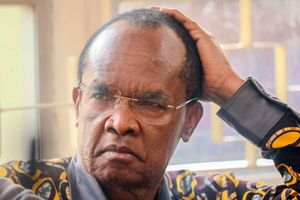
Former Vice-Chancellor of the University of Nairobi Prof Stephen Gitahi Kiama.
Photo credit: File | Nation Media Group
However, before those three weeks had elapsed, I received a call from the Acting Vice-Chancellor. She bluntly informed me that there would be no “handover”, as she had already “taken over”, and that she had received the reports from all the departments.
I was shocked by the desperate haste of the Council. While it was evident they were in a hurry to uproot me, it remained unclear if they were acting of their own volition or at the behest of an external power. However, a series of seemingly unrelated events suggested a coordinated orchestration. On June 24, on the eve of the Gen Z revolution, I was summoned by a senior official in National Security and informed that I was being closely monitored for my alleged role in the uprising. I denied any involvement.
Furthermore, on August 1, the Chair of Council and I were invited by the Public Service Commission to explain how a Deputy Vice-Chancellor position was filled without declaring a vacancy – in direct violation of a court order.
The Chair failed to appear, leaving me to face the commission alone, where I cleared myself of any involvement. It was also occasionally mentioned to me that I was becoming “too close” to Deputy President, Rigathi Gachagua (who was later impeached in October 2024), who hails from my home county, and that this association was not sitting well with the establishment.
While I considered seeking redress through the courts, a wiser path presented itself. I found myself reflecting on the biblical story of King Solomon and the two mothers. Just as the true mother was willing to give up her child to save its life while the false mother agreed to see it split in two, I realised that true stewardship sometimes requires stepping back.
Prioritising my sanity and the institution’s stability, I chose to observe and reflect on the unfolding events rather than join those so eager to dismantle a legacy built through collective sacrifice.
When I first took up the job of Vice Chancellor, the work was demanding but incredibly rewarding. For five years, my performance was exemplary.
Consequently, as my contract’s end date of January 5, 2025 approached, I formally submitted my request for a second term. Based on my track record and the law, I was confident the Council would move forward with my reappointment. But they did not.
Instead of an official response, I was met with silence. My letter requesting another term was ignored. The final year’s evaluation, scheduled for August 27, 2024, never happened. The silence was clear and deliberate. But my story with the university was not supposed to end there.
According to my contract, my employment with the university was supposed to continue even after my tour as Vice-Chancellor concluded. My role was automatic, with no gap in employment.
There is no doubt that the injustice meted out to me injured the soul of the university. My tenure as Vice-Chancellor may have come to an unofficial end, but the experience solidified a part of me that I will carry forever. I am proud of the assignment I carried out and the progress we made. The battle for what is right will continue.
As the new year began, the Cabinet Secretary for Education decided it was time for a change. Through a gazette notice on February 21, 2025, the Chair’s tour was abruptly ended, and the rest of the members’ appointments were revoked on April 11, 2025.