Prof Stephen Kiama was basking in the glory of his appointment as the eighth Vice-Chancellor of the University of Nairobi when the unthinkable happened days later: at midnight January 18, 2020, as he was driving home from an event at Chiromo Campus, he received a message that Education Cabinet Secretary George Magoha had revoked his appointment. In this second installment of our exclusive three-part serialisation of his autobiography, ‘Dancing with the Devil’, he writes about a secret meeting that confirmed President Uhuru Kenyatta’s hand in his woes and the intense battle to get back his job.
On January 18, 2020, at 00:40 – as I drove home from a celebration at Chiromo Club – a WhatsApp message popped up. It was a forwarded bombshell: the Cabinet Secretary had dissolved the entire Council and revoked my appointment.
My phone buzzed with calls and messages from concerned colleagues and friends seeking to confirm the veracity of this unbelievable news.
The rich history, marked by visionary leadership and challenges, has shaped the University of Nairobi into the institution it is today, and it was my privilege to contribute to its ongoing story.
My journey with the university began long before I took over the helm of leadership. I walked these very halls as an undergraduate from 1986 to 1990, a period Prof Philip Muinde Mbithi – a distinguished sociologist – served as the third Vice-Chancellor. Little did I know that I would eventually serve alongside, and learn from, four of his successors as a member of staff.
The University of Nairobi, in its modern form, received its charter in 1970, but its roots stretch back further. It was established initially as the Royal Technical College of East Africa (1952-1957), offering vocational certificates, before evolving into the Royal College Nairobi (1961-1963), which, through a special arrangement with the University of London, began awarding degrees. Finally, it became University College, Nairobi (1964-1970), a constituent college of the University of East Africa, before gaining full university status. This early period was guided by three visionary principals: Major General Colin Bullard (1952-1957), a British soldier who laid the initial groundwork; followed by Dr James Morton Hyslop , a distinguished Scottish mathematician; and Dr Arthur Thomas Porter, a historian from Sierra Leone.
Since the award of the charter, eight Vice-Chancellors have led the university, including myself. These leaders brought unique styles as diverse as their academic backgrounds and faced unique sets of challenges.
The first Vice-Chancellor, Dr Josephat Njuguna Karanja (1970-1979), a historian, set the foundational stones of the newly chartered institution and navigated the university through its formative years.
The second Vice-Chancellor, Prof Joseph Maina Mungai (1979-1985), a human anatomist, navigated the university through turbulent years. It was during his tenure that the first Visitation and Inspection Committee of the University of Nairobi was appointed by President Daniel arap Moi, the Chancellor of the university.
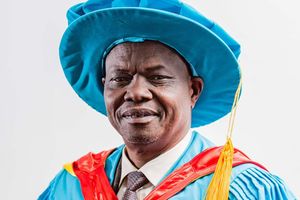
Prof Stephen Gitahi Kiama.
Photo credit: File | Nation Media Group
This committee was chaired by Mr Geoffrey Karekia Kariithi, a former Head of the Public Service, Permanent Secretary in the Office of the President and Secretary to the Cabinet.
The President was apparently unhappy with the way students responded to the coup of August 1982 and the subsequent closure of the university for 14 months.
The primary goal of the inspection committee was to find a way to manage the institution’s growth and curb student activism.
The third Vice-Chancellor, Prof Philip Muinde Mbithi (1985-1991), confronted the contentious issue of student representation, a period that saw the arrest of student leaders and the disbandment of the Student Organisation of Nairobi University (Sonu). This decision would echo through future administrations. I was appointed an Assistant Lecturer in the Department of Veterinary Anatomy during his tenure.
The fourth Vice-Chancellor, Prof Francis Gichaga (1991-2002), a civil engineer, led the university when the country was agitating for multi-party democracy. This, coupled with escalating living costs, brought instability to the university.
Yet, with remarkable calmness under pressure, he pioneered strategies to generate additional revenue, most notably introducing self-sponsored students – a move that would fundamentally reshape the university’s financial landscape. During his tenure, I rose to the position of Lecturer.
The fifth Vice-Chancellor, Prof Crispus Makau Kiamba (2002-2005), a land economist, inherited the persistent student agitation for Sonu’s return, which reached a fever pitch after the 2002 multi-party elections. Ultimately, he had no choice but to facilitate its revival.
Prof Kiamba ushered me into university administration by appointing me the Associate Dean of the Faculty of Veterinary Medicine in 2003, when I was a relatively young scholar. It was during his tenure that I was promoted to the position of Senior Lecturer.
The sixth Vice-Chancellor, Prof George Albert Omore Magoha (2005-2015), a urologist, faced the immediate challenge of managing the reinvigorated student activism. He skilfully employed formal and informal approaches to stabilise the university, capitalising on the exponential increase in revenue, thanks to the initiatives started by Prof Gichaga.
These resources allowed him to revamp and significantly expand the university’s infrastructure and deliberately inculcate a culture of transformative strategic thinking. It was during the tenure of Prof Magoha that the Wangari Maathai Institute was established and he appointed me the founder Director. I was also promoted to the position of Associate Professor during his tenure.
Prof Stephen Kiama, the former Vice-Chancellor of the University of Nairobi.
Photo credit: File | Nation Media Group
The seventh Vice-Chancellor, Prof Peter Mbithi (2015-2020), encountered a new wave of difficulties, largely stemming from the implementation of the Universities Act 2012, particularly the introduction of the Differentiated Unit Cost as the method for determining funding.
The Act was introduced without regard to the university’s unique needs, nor did it factor in the Collective Bargaining Agreement cycles.
This change caused unease among staff members worried about the university’s ability to meet its financial obligations. During Prof Mbithi’s tenure, I rose through two administrative ranks to College Principal and then to Deputy VC, Human Resource and Administration.
The first five Vice-Chancellors were appointed directly by the President, who was also the Chancellor. There were no job postings or interviews – just a presidential appointment. This changed in 2003, starting with the appointments of the sixth and seventh Vice-Chancellors, which were determined through advertising, shortlisting and interviewing by the University Council, which would then recommend for appointment. In 2018, Parliament introduced an amendment to the Universities Act 2012 via the Statute Law (Miscellaneous Amendments) Act, 2018. This amendment ushered in merit-based recruitment spearheaded by the Public Service Commission (PSC), one of the independent commissions created by the Kenyan Constitution of 2010. I had the distinct honour of being the first Vice-Chancellor in Kenya to be appointed under this rigorous new system.
The Public Service Commission announced applications for the soon-to-be-vacant position of Vice-Chancellor, with a deadline of November 19, 2019. I decided to put my hat in the ring. In hindsight, just as my experience of climbing Mt Kenya tested my limits, reaching the pinnacle of academic leadership at the University of Nairobi proved to be a challenging ascent of its own.
The position attracted 14 scholars, but only eight were shortlisted. The list was published in the local dailies on October 29, 2019, with interviews scheduled for December 18, 2019 at the Public Service Commission office.
I prepared thoroughly yet approached the interview with a sense of calm confidence. Having served as Deputy Vice-Chancellor, Principal, Director, Associate Dean and Chairman of a department, I felt well-prepared for the role.
My preparation and composure paid off. I emerged the top candidate. As published in the Sunday Nation on January 19, 2020, I was the best ranked with 80.44 marks, followed by Prof Madara Ogot (79.31), Prof Patricia Mbote (78.44), Prof Isaac Mbeche (77.94), Prof Elijah Omwega (76.13), Prof Solomon Shibairo (70.56) and Prof Bernard Njoroge (70.13).
UoN's eighth Vice-Chancellor
Consequently, I was appointed the eighth Vice-Chancellor of the University of Nairobi. This appointment garnered media attention.
Interestingly, the government of the day at some point seemed overtaken by the new method, despite the fact that the Statute Law (Miscellaneous Amendments) Act, 2018 was sponsored by that same government. An initial attempt to roll out this recruitment at Masinde Muliro University of Science and Technology, Kakamega, had hit a snag because the PSC involved non-commissioners on the panel. Consequently, during my interview, only Public Service Commission members participated.
After the interview, the wait was agonising and filled with trepidation. Then, on Friday, January 3, 2020, a pivotal call came. The Chancellor, Dr Vijoo Rattansi, invited me to her office at Rattansi Building.
There, I met the Chairman of the University of Nairobi Council, Prof Julia Ojiambo. With a warm smile, the Chair informed me that the rigorous selection had been concluded and handed me the official letter of appointment.
I was the eighth Vice-Chancellor of the University of Nairobi. The letter was copied to the Executive Office of the President, the Head of Public Service, the Cabinet Secretary for Education, the Chancellor and the Secretary of the State Corporations Advisory Committee.
Congratulations flowed, photos were taken and I received a quick briefing on the Council’s Strategic Plan launch, slated for January 6, 2020 – my first day in office.
The news was officially disseminated by Prof Ojiambo on January 5, 2020, confirming my five-year term.
The launch of the Council’s Strategic Plan proceeded on January 6, with Prof Margaret Kobia, the Cabinet Secretary for Public Service, Youth and Gender Affairs, the guest of honour.
The Chancellor proudly introduced me to the assembly. I deliberately chose not to deliver a speech or address the media that day, as I did not want to steal the thunder from the Council as they launched a document they held dear. That afternoon, I hosted a delegation from the University of Newcastle, Australia, led by Prof Timothy Roberts.
My first University Executive Board meeting was convened on Monday, January 13, 2020. The agenda included preparations for my official installation scheduled for January 21, 2020. On January 16, I formally requested a courtesy call with Prof George Magoha, the Cabinet Secretary for Education. Then, the unthinkable happened. The midnight message.
Prof Stephen Kiama, the former Vice-Chancellor of the University of Nairobi.
Photo credit: File | Nation Media Group
Initially, there was a mix of disbelief; many dismissed it as a malicious rumour. Messages on social media groups read: “This must be extremely fake, and no one should take it seriously,” and “Let us be careful to authenticate government documents before we forward them. We are taking the gutter press of fake news too far.”
However, by morning, the reality was stark. National print and electronic media confirmed the minister’s statement.
As I reflected on this stunning turn of events, I made a firm decision after urgent consultations: I would challenge the decision in court. To let it stand would set a dangerous precedent.
I had been in office for nearly two weeks, and not a single complaint had been raised. Prof Magoha knew me well; we had served in the University Senate together, and he had appointed me to several key roles during his time as Vice-Chancellor. Furthermore, the recruitment had been transparent and in the public domain for four months.
My decision to move to court was an act of saving the soul of the institution. To allow such an action to stand after a rigorous merit-based process would entrench a philosophy of “might is right”. I felt a duty to ensure that merit and due process still counted for something. I explained my position to the public through the media. My brother, Dr Githinji Gitahi, called me early that Saturday morning and sent a message to our family to manage the anxiety:
“Dear family members, you will have received news that Magoha has dissolved the University of Nairobi Council and revoked the appointment of Prof Kiama as VC. This is impunity and corruption fighting the light of God. I have talked to Prof Kiama and there are meetings being held to determine a way forward. He requests that you remain calm and pray... I leave you with James 1:12 – Blessed is the man who remains steadfast under trial, for when he has stood the test he will receive the crown of life, which God has promised to those who love him.”
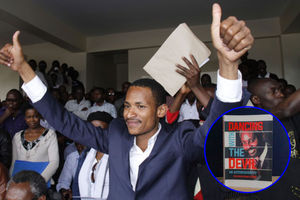
The court, recognising the validity of my claim, issued an order for me to continue in office while the dispute went to a full hearing.
On Tuesday, January 21, 2020, I reported back to my office. However, I could not access it for days because the locks had been changed. I decided to operate from a makeshift office on the 19th floor of the University of Nairobi Towers, explaining that the Office of the Vice-Chancellor is not merely a physical space, but a legal entity.
On Thursday morning, January 23, Prof Magoha invited me to his office at Jogoo House with instructions to come alone. I took a taxi from the Fairmont Norfolk Hotel and was ushered into his office.
After pleasantries, Prof Magoha stated clearly that he recognised me as his Vice-Chancellor. He explained that the action he had taken was not entirely his own. Indeed, he had stated in the Daily Nation on January 20 that he had acted on “(President Uhuru) Kenyatta’s orders”. Later, on January 27, through his lawyer Evans Monari, he informed the court of his willingness to negotiate.
About a month later, on February 27, 2020, Prof Magoha formally withdrew the letter revoking my appointment. Before he did, he informed me that the Principal Secretary for Internal Security, Karanja Kibicho, would be calling me. Dr Kibicho subsequently called, conveying the government’s desire to conclude the dispute. I felt an immense sense of relief.
Prof Magoha later gave a warm speech during my virtual installation as the eighth Vice-Chancellor on June 20, 2020. During the struggle, Chancellor Vijoo Rattansi and Prof Ojiambo stood by me steadfastly. My nuclear and extended family also gave me immense moral support. My brother, Dr Githinji Gitahi, was always available for consultation. I did not walk alone.
Looking back, the media firestorm was a blessing in disguise. Suddenly thrust into the spotlight, the daily interviews across print and electronic media served as a high-stakes “boot camp”.
This prepared me to navigate the 2020 Covid-19 pandemic and the 2021 university reform backlash. My upbringing, veterinary training and spiritual journey were the anchors that allowed me to weather the storm.
Looking back on those tempestuous weeks of early 2020, I realise that my ascent to the Vice-Chancellorship was never merely about attaining a title; it was a final exam in resilience.
The climb did not end when I was ranked first by the commission; in many ways, that was just the base camp. The true “summit” required every ounce of grit I had gathered from the frozen slopes of Mt Kenya, the political fires of Sonu and the clinical precision of the laboratories in Bern.
To be the first Vice-Chancellor appointed through a purely merit-based system was a professional honour. To learn of the revocation of my appointment through a midnight text was a trial by fire.
My decision to seek the intervention of the court was not born of a personal thirst for power, nor a defiance of authority for defiance’s sake. It was the instinct of an anatomist.
When you understand the skeletal structure of an institution, you know that if you allow the spine of due process to be snapped, the entire body politic collapses into a heap of “might is right”.
I went to court to protect the moral integrity of the University of Nairobi, ensuring that the “shoulders of giants” I stood upon would remain a stable foundation for those who would follow me.
The subsequent reconciliation with Prof Magoha and the “media boot camp” that followed were unexpected graces.
They taught me a fundamental truth of high-level leadership: conflict is often the crucible of legitimacy.
By the time I was officially installed, I was no longer just a Vice-Chancellor on paper. I was a leader who had been tested by the state, sustained by my family and validated by the law.
I emerged from that storm not just ready to lead, but forged for the global pandemic that, unbeknownst to us all, was already waiting at the gates.
Tomorrow in the Saturday Nation: Hooded policemen, false accusations and underhand deals in intrigues to remove me from Vice Chancellor’s office.