As a researcher, I made several trips both locally and abroad, but my most unforgettable, and perhaps most terrifying, travel experience unfolded closer to home in 2008.
I was driving to Maralal to supervise my PhD student, Dr Irene Kamanja, who had convened a focus group discussion with the Samburu community. My co-supervisors—Professors Peter Gathumbi, Daniel Gakuya, and James Mbaria—joined me on this early morning journey.
A man requested a lift just as we were starting off from Nyahururu town after a quick lunch. He was a delightful companion, making the journey enjoyable with his commentary on every significant landmark.
However, as we ventured further from Rumuruti, he shared sobering tales of the road ahead, which was known for its risks and bandit attacks.
We were driving through a particularly rough section when, ahead and to the right, I spotted two men with rifles in hand, aiming directly at our vehicle. My instinct kicked in, and I floored the accelerator. The road was unforgiving, and within seconds, the car overturned, landing on its roof. It happened so fast.
Dazed, I released my seat belt and tried to brace myself with my right hand as I got out. A gush of blood streamed from my arm just below the elbow joint, and my hand buckled.
I crawled out of the car and lay flat on my back. Almost immediately, a team member shouted, "Here they come. They are running towards us." I closed my eyes; certain it was my last moment. But then came the follow-up: "They have run into the bush." A Toyota Land Cruiser, likely mistaken for our security escort, was approaching. It was a team from Equity Bank on official duties. They stopped, assessed the chaotic scene, and rescued us from the roadside.
I lay flat on the floor of their car as they drove us away from the site of the accident. They later transferred us to a public transport vehicle (matatu) en route to Maralal. A kind lady in the front seat held me steady all the way to a dispensary, where my fracture was temporarily bandaged, and then on to Maralal Hospital. I was in a lot of pain, and any movement of the arm made it worse.
At Maralal Hospital, I was received by two young doctors who examined my injured hand and determined that I needed a medical procedure to properly set the fracture. I called my younger brother, Githinji Gitahi, also a medical doctor, so they could explain the procedure to him. His reassurance was all I needed for them to proceed.
The next day, I was driven to the Maralal airstrip and transferred to Nairobi Hospital by an AMREF Flying Doctors flight. The late Drs Otieno and Kichari were facilitated by Prof Peter Mbithi, the DVC AF at the time, to pick me up from Maralal Hospital. Interestingly, in 2015, Githinji was appointed the Global Chief Executive Officer of AMREF Health Africa.
Before my release from Maralal, the accountant presented the bill. The young doctors who had attended to me without a moment's hesitation simply told the accountant to release me, assuring him they would settle the bill. Their generosity was overwhelming.
Cover of the book ‘Dancing with the Devil’, an autobiography by Prof Stephen Kiama Gitahi.
Photo credit: Lucy Wanjiru | Nation
Later, while recovering at Nairobi Hospital, I was shocked to see the news on Nation TV showing the police, who had responded immediately to the site, fighting off the bandits. I remained in the hospital for three weeks. I was very uncomfortable; each day blurred into the next with no work to do.
However, it was comforting to have many friends and colleagues from work visit me, wishing me a quick recovery. Prof Wangari Maathai also visited me; I narrated the incident and its drama, and she was happy to find me in high spirits.
My release (from hospital) felt like a fresh start, though there was a difficult road ahead. For weeks, my right hand was not fully functional, trapped in a cast and a wrist splint.
Writing, driving, and anything requiring a firm grip was impossible because of a wrist drop caused by my injured radial nerve. I was anxious, especially during visits to the orthopaedic surgeon. "Will my hand ever be the same?" I would ask, but his silence was deafening—a non-answer that only amplified my fears.
To get myself back on track, I started teaching my left hand to write. It was clumsy at first, but with practice, I improved. The steering wheel had also brutally sheared the skin from the tissues below my elbow (closed degloving), an injury that seemed to take forever to heal, eventually leaving a scar. My brother, Dr Githinji (Gitahi), let me use his driver for my weekly clinic trips and errands, which was a huge help. But I missed my independence. Eventually, I took a risk and started driving with my left hand, slowly and carefully.
After a while, my right hand began to come back to life; my fingers regained their strength, and I progressively started to use it again—a small victory that felt monumental at the time.
That brush with mortality and the gruelling physical recovery forged a grit within me that I would soon need. I served as a member of the Senate of the University of Nairobi from 2003 to 2014. By the time I exited, I was the longest-serving member.
My time as a Senator and a member of the University Management Board led to appointments on numerous committees, each offering a unique window into the complexities of university management. I chaired committees on alleged police brutality, student council affairs, staff contracts, and student biometric registration systems. I also served on the SONU (Student Organisation of Nairobi University) Electoral Commission, the technical committee for the establishment of Nyandarua University, and committees governing student discipline and staff post-retirement contracts.
Some of these roles were more challenging than others but serving in the SONU elections was a uniquely multifaceted trial by fire. The high-pressure environment tested my limits while offering unparalleled insights into complex organisational dynamics and crisis management. This was never more evident than during the unexpected collapse of the student body elections in 2010—an occurrence that threatened to paralyse the university.
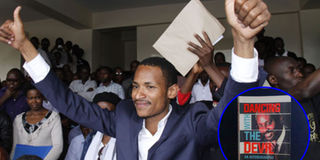
Newly elected SONU chairman Babu Owino (centre) after he was sworn-in on April 2, 2016. Mr Owino's re-election was marred by students protests.
Photo credit: File | Nation
On Monday, November 29, 2010, the Vice-Chancellor called an urgent meeting of the Senate. The Dean of Students, Father Dr Dominic Wamugunda, dropped a bombshell: the Interim Independent Electoral Commission (IIEC), tasked with conducting the elections, had withdrawn.
Students had violently evicted election officials at Kenya Science Campus and marched into Anniversary Towers, where the IIEC commission offices were located. Their grievance? The exclusion of "Module II" (self-sponsored) students as candidates and a lack of student participation in electoral official roles.
After some deliberations, the Senate resolved to form a commission to review the conduct of SONU elections. To my surprise, I was appointed to chair the commission, whose membership was drawn from staff and student leaders. I convened a meeting of the committee in the Council Chamber immediately after the Senate meeting and decided to hold a workshop in Naivasha to expedite the report.
On December 7, 2010, I drove to Naivasha, accompanied by the Special Student Advisor, Prof Godfrey Muriuki, and the Chief Legal Officer, Ms Rebecca Ngondo. The drive was good, save for getting slightly lost at the end, but we eventually found our way to the venue.
The next morning, when I went in to start the meeting, I found the meeting room empty of students. Only the staff members of the committee were present. I announced that we would proceed with the meeting with those present, but Ms Ngondo, ever the voice of reason, gently reminded us that we could not discuss student welfare without students being present. A quick glance at the other committee members confirmed her sentiment.
I went out to find the students. I found some of them drinking alcohol at 09:00; the "Mututho law" of 2010 (regulating the sale and consumption of alcohol) had not yet been fully enforced. After some pleading, they agreed to join the meeting on two conditions: equivalent accommodation for all those attending, and the opportunity to present their case first. Some of the students had been allocated accommodation in makeshift tents, and they were also displeased with the programme, which had allocated almost a whole day to presentations from members of staff. I readily agreed to both conditions, and with that, the meeting began and surprisingly progressed smoothly.
The students, a bit tipsy and uninhibited, revealed the rot: poor ballot paper management, organised violence, and "student security"—bullies and goons who were recruited to intimidate voters and candidates. Armed with crude weapons, they seemingly wielded more power than the university's own staff. Listening to them was the best decision we made; it allowed us to propose transformative solutions.
I forwarded the report to the Vice-Chancellor on December 20, 2010. In January 2011, Mr Ben Waweru, the Academic Registrar, called: “Prepare to present your report to the Senate tomorrow morning. It is the first agenda item." When the meeting began, the Vice-Chancellor was absent. Prof Jacob Kaimenyi, the then Deputy Vice-Chancellor of Academic Affairs, informed the Senate that the Vice-Chancellor had requested the tabling of the report to be deferred until he arrived. The Vice-Chancellor walked in later, seemingly in a hurry. He introduced the agenda by declaring that my committee had "gone beyond its mandate" and that the recommendations were "not implementable."
He then asked the Senate to decide if there was a need for the report to be presented given his remarks. The Senate, however, confirmed that the report should be tabled and a decision made after the presentation. "Masharubu," he said (Prof Magoha often referred to me as Masharubu because of my beard, even though I was not the only Senator who wore one), "present your report and be brief."
I began to present the executive summary, but the Vice-Chancellor interrupted me repeatedly, insisting that my recommendations were not implementable. I was unsure whether to continue or stop. Then Prof Jacob Kaimenyi interjected, “Dr Kiama, continue to present the report and do not accept to be intimidated.” The Vice-Chancellor retorted, "I am not intimidating him, I am preparing him to be a vice chancellor in future!" The Senate erupted in laughter, and the tension eased.
I presented the report to the end. The Vice-Chancellor was particularly opposed to electronic voting, convinced that ICT staff lacked the capacity. I countered that I had consulted the ICT Director, Dr Elijah Omwenga, who assured me it was possible. The Vice-Chancellor pressed Dr Omwenga on the cost and timeline.
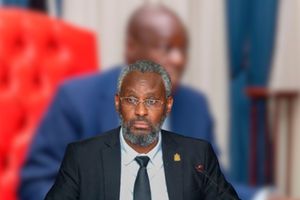
Prof Stephen Gitahi Kiama is pictured at the University of Nairobi during the launch of its council's strategic plan for 2019-2024.
Photo credit: File | Nation
When Dr Omwenga said that information on timeline and cost would follow approval, the Vice-Chancellor said, “Look, I told you! They cannot do it.” Some Senators, always keen to align with the Vice-Chancellor, chimed in, arguing that electronic voting would be prone to cheating, with the possibility of "multiplication factors" for favoured candidates being introduced into the algorithm. The motion for electronic voting was defeated, though it was agreed it could be considered in the future. (I brought this agenda back to the Senate in 2020 when I became Vice-Chancellor, and it was supported overwhelmingly; the COVID-19 pandemic control measures of social distancing worked in my favour).
The rest of the recommendations in the report were adopted by the Senate. A new commission, chaired by Prof Godfrey Muriuki, was formed to review the SONU constitution, taking into consideration the recommendations of the report and ensuring that the process was in tandem with the Constitution of Kenya, 2010. We finalised the report and revised the SONU constitution, which was then tabled and approved by the Senate.
After the approval of the constitution by the Senate, I was appointed a commissioner in the first independent electoral commission to conduct SONU elections. The commission was chaired by Prof Mohamed Jama, and I deputised him. Prof Jama and I met with Mr Issack Hassan, then the national chair of the Interim Independent Electoral Commission (IIEC), to glean critical insights into election processes. Hassan stressed the importance of secure ballot paper printing. After exploring options, we discovered that the Kenya College of Communication Technology (KCCT) in Mbagathi had a printing press.
As this was a government entity, it seemed procurement would be straightforward. Prof Jama and I visited the KCCT and were satisfied with the explanations we received from the manager of the printing press.
The SONU constitution outlined numerous positions: university-wide executive officers and representatives for campuses, non-residents, halls, and faculties/schools/institutes. One voter would receive up to 14 ballot papers to cast in individual ballot boxes, which was a logistical nightmare. But our biggest hurdle was getting the ballot papers ready on time.
On Thursday, May 19, 2011, I woke up at 05:00, as per my usual practice, and drove to the office immediately after taking breakfast. I had meticulously simulated the number of ballot papers needed per polling station for every contested position and spent most of the day doing my office work. The polling stations were spread across the 10 campuses as well as the Main Campus student hostels and Dental School.
Around 20:00 that evening, I stopped by Chiromo Club to socialise before heading home. Just as I settled down, Prof Jama called asking to meet. He expressed his anxiety about confirming that the ballot printing was on track and ensuring the ballots were ready before going to bed. I left my car parked at the Chiromo Club compound and drove with Jama to Mbagathi.
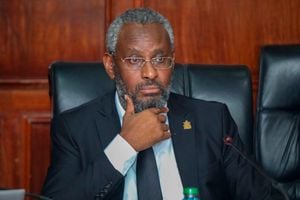
Prof Stephen Gitahi Kiama.
Photo credit: File | Nation Media Group
What we saw when we arrived at Mbagathi was horrifying. Only a handful of ballots were printed, and none were serialised.
We were informed that serialisation was to be done manually after all the ballots were printed. There were also very few workers, clearly inadequate for the task. Jama and I immediately began organising and serialising the ballot papers.
Mr Simeon Odera, a member of the secretariat, left to find extra people to help us with the work. At about 03:30, Prof Isaac Mbeche, the then-Deputy Vice-Chancellor in charge of student affairs—whose responsibilities included the student elections—arrived, clearly agitated. He had been trying to reach us for hours for an update on the status of preparedness; both Jama's mobile phone and mine were dead, as we had left our chargers behind. The thought of SONU elections failing was unimaginable; it would mean student unrest and most likely a university closure, especially if preceded by a riot. Prof Mbeche joined us in supervising the printing and packing of the ballot papers.
The returning officers were due to congregate at the Central Police Station at 06:00 on Friday; this was the designated collection point for the election materials, and we were fully guarded by police officers. We packed whatever was ready by 05:30 and left, though the printing continued. Prof Mbeche carried some ballots in the boot of his car, and I accompanied him.
We made it to Central Police Station on time to issue the available materials so that voting could begin as scheduled. Prof Jama and I stuck together all day, occasionally returning to the printing press for more voting papers and delivering them to stations facing shortages. The driver of the car we were using was our only link to anyone who needed to reach us, as our phones remained off. Fortunately, the student community trusted us, and the process continued smoothly.
Polling stations closed around 17:00, after the last voter had cast their ballot. The tallying centre, located at Kenya Science Campus and manned by the commission, began its work as soon as the results began arriving.
We tallied results until Saturday morning. I compiled the results with the help of the commissioners and the secretariat, and the Chair announced them around 10:00. Babu Owino was elected Chairman, and Alex Matere the Secretary-General. The swearing-in ceremony took place at 14:00 the same day at the Chancellor's Court.
After the ceremony, I briefly met with Prof Peter Mbithi and Father Dominic Wamugunda at Westlands, where I briefed them about the process, and then proceeded home. When I finally went to bed that night, I lay comatose. I had been awake and active since 05:00 on Thursday; it had been three days—roughly 62 hours—without sleep.
Following this experience, however, I ended up being part of the team managing the SONU elections for a total of five years. I deputised Prof Mohamed Jama for the 2011, 2012, and 2013 elections, and I was elected by the Senate to run the 2014 and 2015 elections. Each election presented its own set of challenges, but none quite matched the magnitude of that epic 2011 experience. Whether surviving an overturned car on the road to Maralal or staying awake for three days to pull a university election back from the brink of collapse, the lesson remained the same.
These trenches built the grit required for the future. They also taught me to never take tomorrow for granted, and to pour my absolute best into today.
Tomorrow in the Daily Nation: Midnight WhatsApp message on my revoked appointment as Vice Chancellor, secret meeting with Education Minister George Magoha and the fight to save University of Nairobi.