Russia has not stopped deploying Kenyans to the battlefield in Ukraine, in spite of assurances given to Kenya’s top diplomat, Musalia Mudavadi, in March when he visited Moscow.
The revelations are contained in documents shared by the Ukrainian military intelligence service, showing that more Kenyans were, in fact, deployed and killed after Mudavadi returned from Russia.
According to Ukrainian authorities, more Kenyans were killed on the battlefield in April, and authorities found they had been deployed to the war after undergoing training.
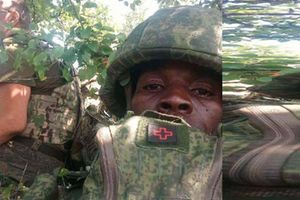
Details released on Thursday night revealed the identities of three Kenyans and a photo of one, whom they said had been killed on the battlefield in April. The four men had arrived in Russia in October last year but were scheduled for gradual deployment after signing a military service contract, the documents show.
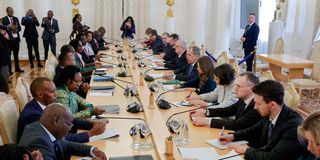
Russian Foreign Minister Sergei Lavrov shakes hands with Kenyan Foreign Minister Musalia Mudavadi during a press conference following their talks in Moscow, Russia, March 16, 2026.
Photo credit: Reuters
One of the Kenyans who was working for Russia in the assault operations was identified through a project dubbed “I Want to Live”. The project is a Ukrainian state-run initiative launched in September 2022 to facilitate the voluntary surrender of Russian servicemen. It provides a 24/7 hotline, chatbot, and Telegram channel, guaranteeing safe captivity in accordance with the Geneva Conventions, promising humane treatment, and offering an escape from the war.
One of the fighters killed was identified as Mwangi, who was born in 2003, and arrived in the Russian city of Yaroslavl on October 24, 2025. The Nation is withholding full identities because families have not been formally notified.
The Kenyans were first identified in a letter addressed to the Director of the Russian Federal Security Service (FSB) of the Ministry of Defence in Russia, which also identified three other Kenyans who arrived alongside Mwangi to be sent to fight in the same troop.
The others were named Wanjiru, born on February 3, 1997; Ngure, who was born on February 27, 1995; and Kipkirui, who was born on July 7, 2001.
“We inform you that in October of this year, for the purpose of signing a contract, the following foreign citizens are scheduled to arrive at the military recruitment point for military service under contract (2nd rank) in Yaroslavl (Yaroslavl, Dobrinina Street, 31),” the letter sent to the Ministry of Defence read.
Once they arrived in Russia, they were sent for testing and military-professional orientation.
Mwangi was to work as a radio operator and be deployed to the frontline, but when he arrived, he was reassigned to an assault unit, the Ukrainian agency said.
Russian forces deployed him to combat near the settlement of Borova in Kharkiv Oblast earlier this year. He arrived during the same period as two other Kenyans who have since been confirmed dead: Denis Ombwori Bagaka and Simon Wahome Gititu.
The revelations mean Russia continued to utilise all Kenyans already on contract to serve in the military, even after Prime Cabinet Secretary and Foreign and Diaspora Affairs CS, Musalia Mudavadi, said Russia had agreed to end the engagement of Kenyans.
During a joint press conference with his Russian counterpart Sergey Lavrov in Moscow, Mudavadi had said most Kenyans had agreed voluntarily to join the Russian army. Lavrov added that those on contract would continue to serve as per the terms of service.
“They will no longer be eligible to be enlisted,” Mudavadi said on March 16 in Moscow. He also promised that Kenya would work on a labour mobility deal with Russia to ensure that Kenyans enter only genuine vacancies.
“We do not want, for any reason, our partnership with Russia to be defined through the lens of the special operation agenda only. The relationship between Kenya and Russia is broader than that.”
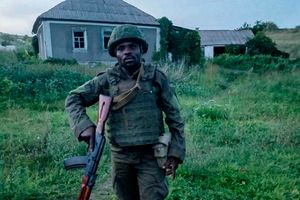
Clinton Nyapara Mogesa who has been fighting in the Russia-Ukraine war.
Photo credit: Pool
Some 47 Kenyans have since been rescued from Russia, but the actual number of those recruited remains unknown. Mudavadi said some 252 Kenyans had been recruited into Russia’s military operations, with 47 already rescued and repatriated, but warned that the actual number could be higher, as verification is still ongoing.
Meanwhile, families in Kenya continue to raise concerns about the whereabouts of their kin.
In Homa Bay, the family of Richard Omondi, who disappeared on August 7, 2025, is worried and suspects he went to Russia to fight in Ukraine. His last conversation with a family member was on Facebook, when he informed them that things were bad at the front line.
A few months later, his photo appeared in a newspaper report, accompanying a story in which Kenyans explained how they had been subjected to suffering. The headline read: “Help. We are dying… Mr President, don’t turn your back.”
The Ukrainian military intelligence agency said that Kenya had the highest number of fighters among those who had been recruited in Africa. It said that Russia had 3,000 mercenaries fighting for it from Africa. Other reports, however, said Ukraine, too, was involving foreign fighters in the war.
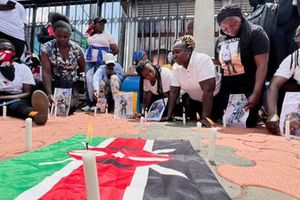
Some Kenyans have been recruited to fight for Russia in Ukraine.
Photo credit: Pool
The top ten countries providing the largest number of mercenaries include Kenya, Egypt, Cameroon, Ghana, Nigeria, Uganda, Algeria, Mali, South Sudan, and South Africa, which recently rescued 11 nationals who had been on the battlefield.
At least 316 African mercenaries have been confirmed dead on the battlefield. Actual losses are likely higher.
Mudavadi spent days in Russia trying to negotiate an exit plan for Kenyans who had already joined the army, but he later revealed that they did not reach a deal. Ukraine, too, is holding captured foreign fighters, considering them political prisoners.
“The process of getting them back is not an instant one. They are involved in the battlefield, and extracting them is not simply a matter of going to a place, picking them up, and putting them on a plane,” he said.