The number of farmers accessing subsidised fertiliser dropped by more than 425,000 in the year ended June, marking the first decline in the reach of President William Ruto’s flagship farm input cushion since he took office.
Draft budget documents show that 949,951 farmers accessed fertiliser through the National Cereals and Produce Board’s subsidy scheme in the year to June.
This was 425,586 fewer farmers than the 1,375,537 who accessed subsidised fertiliser a year earlier, reflecting a 30.9 per cent decline.
The drop ended two consecutive years of growth in farmer access under Dr Ruto’s administration and pushed access to its lowest level since FY2022/23.
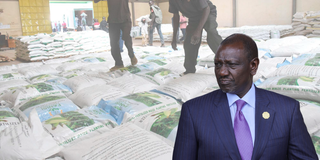
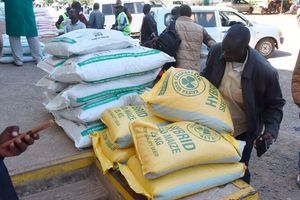
President William Ruto during the ground-breaking ceremony for the construction of the Olkaria Green Fertiliser Plant in Naivasha, Nakuru County, on November 3, 2025.
Photo credit: PCS
In the first year under Dr Ruto, 512,111 farmers accessed subsidised fertiliser in FY2022/23, before the number more than doubled to 1,268,438 in FY2023/24 and reached a record 1,375,537 in FY2024/25.
The drop came despite the government setting its most ambitious annual target yet, seeking to reach 1,492,350 farmers during the financial year ended June 2026.
The subsidy fell 542,399 farmers short of its target, reaching only 63.7 per cent of the planned beneficiaries, according to the State Department for Agriculture’s draft Programme Based Budget report for 2027/28 to 2029/30.
The performance marks a setback for one of Dr Ruto’s flagship interventions, which has been central to his administration’s bid to lower farming costs, raise food production and shield households from high food prices.
The government is preparing to cut the price of a 50-kilogramme bag of subsidised fertiliser to Sh2,000 from Sh2,500 in a fresh effort to make the key farm input more affordable.
Dr Ruto announced the price reduction earlier this month, saying his administration was keen to ease the burden on farmers suffering losses from poor weather.
The new prices are set to take effect in September and will apply at designated outlets, including those operated by the National Cereals and Produce Board.
“My administration moved from subsidising consumption to subsidising production through lowering the cost of inputs,” Dr Ruto said during a visit to Taita Taveta County.
Agriculture Cabinet Secretary Mutahi Kagwe says approximately 33.5 million bags of subsidised fertiliser have been distributed since 2022, reaching about 1.98 million farmers and attracting government support of about Sh78.79 billion.
Agriculture and Livestock Development Cabinet Secretary Mutahi Kagwe.
Photo credit: File | Nation Media Group
Mr Kagwe said the intervention was intended to ensure farmers recovering from drought and other weather-related losses were not locked out of the next planting season by expensive fertiliser and seeds.
“The government will continue supporting farmers to recover from drought, lower their cost of production and return to their farms, while investing in irrigation, water harvesting and other climate-smart interventions to strengthen Kenya’s resilience to changing weather patterns,” Mr Kagwe said in August.
The first decline in farmer access under Dr Ruto also comes as a renewed global fertiliser price shock threatens to make the subsidy increasingly expensive for taxpayers.
In July, the World Trade Organisation warned that the unresolved Middle East war could disrupt supplies of key crop nutrients, pushing up fertiliser costs and threatening food production and inflation.
The WTO said conflict around the Strait of Hormuz had severely disrupted trade in urea and phosphate fertilisers, with consequences extending well beyond the Middle East.
About 30 per cent of globally traded fertilisers normally transit the strategic maritime corridor, exposing import-dependent countries such as Kenya to supply disruptions and higher prices.
The pressure has already started reflecting in Kenya’s import data, with the Kenya National Bureau of Statistics figures showing that the average landed cost of chemical fertiliser imports rose 19.5 per cent to Sh73,747 per tonne in the first three months of 2026.
This was up from Sh61,713 per tonne a year earlier and represented the highest average import cost since the first quarter of 2023.
The increase reversed two consecutive years of falling import prices that had provided relief to farmers and supported the government’s expansion of the fertiliser subsidy programme.
Kenya also increased purchases ahead of this year’s planting season, with chemical fertiliser imports rising nearly 73 per cent to 407,325 tonnes from 234,917 tonnes a year earlier.
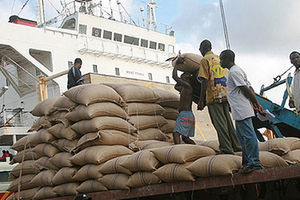
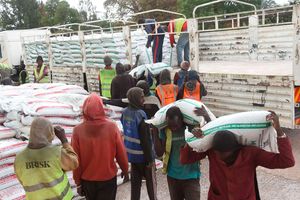
Workers offload bags of fertiliser at the National Cereals and Produce Board depot in Eldoret, Uasin Gishu County.
Photo credit: File I Nation Media Group
The higher volumes and prices pushed the country’s fertiliser import bill to Sh30.04 billion during the three months to March, more than double the Sh14.50 billion spent a year earlier.
The rising international prices now present the government with a difficult choice as it prepares to implement the lower Sh2,000 subsidised price from September.