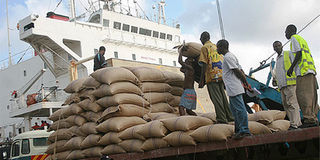
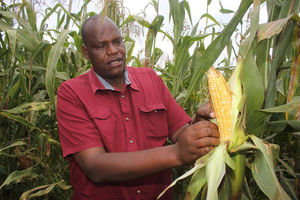
Kenya is opening its market to private traders to import up to 25 million bags of maize, Agriculture and Livestock Development Cabinet Secretary Mutahi Kagwe told the Nation , a reversal that comes months after the government said the country had brought in a record 71 million bags the previous season.
Going by these figures, Kenya should be sitting on a surplus.
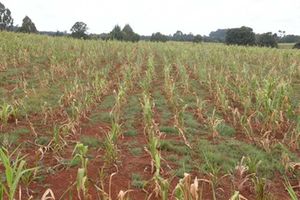
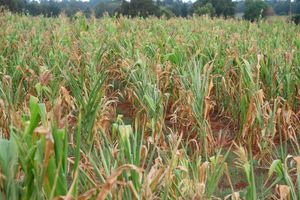
Instead, drought in Uasin Gishu and Trans Nzoia, two of the country's key maize belts, has pushed the government to turn to imports to meet the roughly 70 to 75 million bags Kenya consumes annually.
"It is the private sector that will purchase the maize. The money does not come from the government exchequer," CS Kagwe said in a phone interview, stressing that the state itself will not be the buyer.
CS Kagwe: Government to import 25 million bags of maize due to massive crop failure
Instead, the ministry will open normal commercial channels for private traders while continuing to buy through the National Cereals and Produce Board (NCPB) to top up strategic reserves.
That reserve-building effort has struggled. The government asked farmers holding stock to deliver to NCPB earlier this year. It received just 180,000 bags, against the 2 million bags targeted for the National Strategic Food Reserve. NCPB was offering Sh4,000 per 90kg bag. Private millers and traders offered more, as much as Sh5,400 in some cases, and farmers took the better price.
"I had 300 bags of maize but I sold the produce to millers and other traders who offered better prices. The cost of maize seed, fuel, herbicides, labour and transport have gone up and releasing the produce to NCPB at such low prices meant incurring heavy losses," said James Songok, a large-scale farmer in Kerita, Uasin Gishu County.
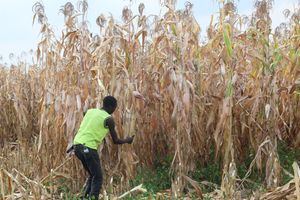
Labourers thresh maize at Salgaa trading Centre in Nakuru City on September 21, 2025 before drying it under the sun.
Photo credit: Boniface Mwangi | Nation Media Group
"We will import maize. We have already made arrangements for that. It is not a big deal. We will manage. The country is not going to go hungry," he said, pointing out that Kenya routinely imports wheat and sugar as well.
Mr Kagwe told the Nation the country harvested about 71 million 90kg bags last year, revised upward from an earlier estimate of 60 million, crediting the government's subsidised fertiliser programme and good rainfall.
Separately, President Ruto, in his State of the Nation address, cited a target of 70 million bags this season, up from 44 million in 2022 and 67 million in 2024.
A third set of figures cited in agricultural reports puts production at 44 million bags, declining to 33 million and then 21 million bags before climbing back to roughly 70 million. It is not clear yet which one reflects the true picture.
Robert Kemboi, an Eldoret-based agricultural expert, said the real harvest likely fell well short of the government's 70-million-bag estimate.
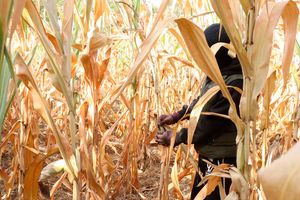
Farmers inspect their failed maize crop in Mirera, Naivasha, Nakuru County, on July 12, 2026.
Photo credit: Boniface Mwangi| Nation Media Group
"What is emerging is that the maize harvest was much below the anticipated 70 million bags by the government. This can be attributed to supply of substandard fertiliser and fake seed during planting season. The repeated disease outbreak and heavy rains during harvest period contributed to declined yield," he said.
Kagwe linked the shortage to Kenya's continued dependence on rain-fed agriculture, speaking separately at the Fifth Joint Consultative Meeting of County Executive Committee Members, where the ministry launched consultations on the AgriConnect Compact Programme. He pointed to the Galana-Kulalu irrigation project as a model and named Baringo, Garissa and Tana River as counties with land that could expand national food production if irrigation infrastructure improved.
Bungoma Governor Kenneth Lusaka, who chairs the Council of Governors' Agriculture, Livestock and Cooperatives Committee, said county-level agricultural programmes had improved farmer access to inputs, markets and financial services, and pointed to digital profiling and e-vouchers as gains worth building on.
The timing adds another layer of pressure. The government is bracing for a possible El Niño, which Kagwe said could replenish dams and boost vegetation in some areas but also risks flooding, road damage and livestock losses elsewhere.
President Ruto has credited the fertiliser subsidy programme with dropping the price of a 2kg flour packet from Sh250 in 2022 to as low as Sh130 today. Whether that gain holds through an import cycle, with private traders setting prices rather than NCPB, is not yet known.