The 2026 Budget Policy Statement (BPS) and the consideration of Sessional Paper No. 3 of 2025 on the partial divestiture of Safaricom by the government are among the key business items that the House will give priority as MPs resume sittings on Tuesday next week.
According to the law, the Budget Policy Statement and the Debt Management Strategy (DMS) are supposed to be submitted to the National Assembly by the National Treasury by February 15 of each year.
The BPS provides an assessment of the current state of the economy and the financial outlook over the medium term.
It also sets out the priorities and proposed expenditure limits for the national government and transfers to county governments.
The document also outlines the total resources to be allocated to programmes and projects within a sector, ministry or department for the upcoming financial year, including the criteria to be used in this allocation.
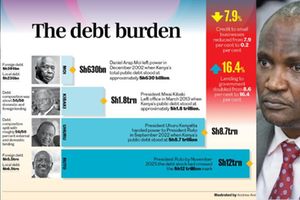
On the other hand, the Debt Management Strategy outlines the total stock of debt held by the national government, including the source of loans made to the national government, the nature of guarantees given by the national government and the associated risks, the strategy for debt management, and an analysis of the sustainability of the actual and potential debt.
MPs take a group photo during day one of the four-day 2026 Legislative Retreat for Members of the National Assembly, at Lake Naivasha Resort in Naivasha, Nakuru County, on January 27, 2026.
Photo credit: Boniface Mwangi | Nation Media Group
These documents, once passed by the House, lay the foundation for the introduction of the Division of Revenue Bill, which provides for the allocation of revenues raised by the national government to the national and county levels of government.
The lawmakers will also later, during the fifth session, consider Sessional Paper No. 3, through which the government seeks to generate approximately Sh204 billion in gross proceeds through the divestiture of a 15 percent stake in Safaricom at a premium of 23.6 percent to the six-month volume-weighted average price ended December 2, 2025.
The National Treasury is seeking to sell six million shares in Safaricom to South African telecommunications firm Vodacom at Sh34 per share.
The government currently owns 35 percent of Safaricom shares, whose current market value is estimated to be between Sh280 billion and Sh300 billion. Vodacom owns 40 percent of Safaricom shares, and the transaction will take effect from March 26, 2026.
The Sessional Paper was introduced in the National Assembly on December 4, 2025, and committed to the Departmental Committee on Finance and National Planning and the Committee on Public Debt and Privatisation.
The two committees are currently undertaking a joint public participation exercise on the proposal, which has been ongoing since December 8, 2025.
Also lined up for consideration by MPs are the proposed National Infrastructure Fund and the Sovereign Wealth Fund.
Upon introduction to the House by the National Executive, the lawmakers will consider the legislative framework for the proposed creation of the Sh5 trillion National Infrastructure Fund and the Sovereign Wealth Fund.
The two funds aim to unlock large-scale private sector capital and reduce the government’s reliance on borrowing and taxation.
During the recent Naivasha retreat, MPs expressed fears that the passage of the Sessional Paper on partial divestiture of shares in Safaricom without Parliament approving the Infrastructure Fund Act will expose the proceeds to misallocation.
Photo credit: Nation Media Group
The lawmakers will also consider the field development plan and production-sharing contracts between the government of Kenya and Gulf Energy relating to Blocks T6 and T7 – South Lokichar Basin within Turkana County.
The documents, submitted by the Cabinet Secretary for Energy and tabled by the Leader of the Majority, Kimani Ichung’wah, relate to the extraction of natural resources in Turkana and, as provided in law, such action requires ratification.
The lawmakers will also consider a report of the Committee on Agriculture and Livestock on its enquiry into the pricing of tea in Kenya, following concerns raised over disparities in payments to tea farmers in different regions.
The House will also conclude debate on the report of the Committee on Defence, Intelligence and Foreign Relations relating to its enquiry into the conduct of the British Army Training Unit in Kenya (Batuk), specifically with regard to allegations of human rights violations, environmental degradation and accountability failures associated with BATUK’s operations and activities in Kenya.
National Treasury Cabinet Secretary John Mbadi.
Photo credit: Billy Ogada | Nation Media Group
The House will also give priority to the National Dialogue Committee (Nadco) Bills, such as the Draft Constitution of Kenya (Amendment) Bill, 2024, the Election Offences (Amendment) Bill, 2024, and the Leader of Opposition Bill, 2024, which seeks to create the Office of the Leader of Opposition.
Other Bills that will be given priority include the Public Participation Bill, 2025, the Local Content Bill, 2025, the Forest Conservation and Management (Amendment) Bill, 2025, the Tea (Amendment) Bill, 2023, and the Creative Economy Support Bill, 2024, which seeks to formalise and bolster the country’s artistic and innovation sector.