The National Assembly’s Finance and National Planning Committee says only Sh29.8 billion will be available for development expenditure in the 2025/26 financial year, underscoring the urgent need for divestiture of State-Owned Enterprises (SOEs) to ease pressure on public finances.
The committee, chaired by Molo MP Kuria Kimani, noted that out of projected ordinary revenue of Sh3.321 trillion, Sh1.097 trillion will go towards interest payments on the country’s ballooning debt, while Sh960 billion will be spent on the public wage bill.
Kenya’s public debt currently stands at Sh12 trillion, according to recent figures from the Parliamentary Budget Office, an independent think tank that advises MPs on fiscal and budget matters.
In a position paper supporting the proposed partial sale of government shares in Safaricom PLC to raise Sh204.3 billion for critical infrastructure development, the committee said that of the total revenue collected nationally, Sh415 billion will be allocated to the 47 county governments, while Sh205.2 billion will go towards pension payments and Consolidated Fund Services (CFS).
Mr Kimani said civil servants’ pensions alone will consume Sh34.4 billion, while the Equalisation Fund has been allocated Sh10.6 billion.
“The truth is that we have been living a lie all this time. There is no way we can build our country with Sh29.8 billion,” Mr Kimani told a public participation forum held in Nairobi on Tuesday on the proposed sale of 15 percent of the government’s shares in Safaricom.
“The 2025/26 fiscal framework offers a real-world example that shows the urgent need for divestiture to ease pressure on public finances,” he added.
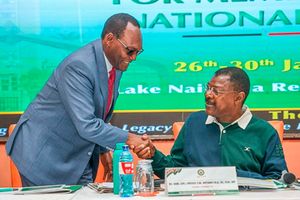
Chairperson of the National Assembly Finance and National Planning Committee Kimani Kuria during public participation on the proposed partial divestiture of the State’s shareholding in Safaricom PLC on February 3, 2026.
Mr Kimani further revealed that the government had a guaranteed debt stock of Sh83.236 billion in the 2024/25 financial year.
This includes Sh46.156 billion owed by the Kenya Ports Authority (KPA), Sh27.39 billion by KenGen and Sh9.69 billion by Kenya Airways.
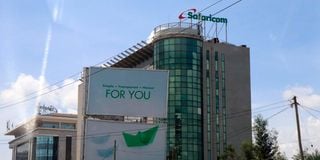
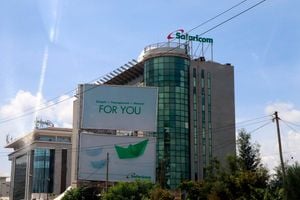
The National Assembly’s joint committees on Finance and National Planning and Privatisation and Public Debt are currently conducting public participation forums in 30 counties on Sessional Paper No. 3, which proposes the partial divestiture of government shares in Safaricom PLC.
Through the sessional paper, the government seeks to generate approximately Sh204.3 billion ($1.57 billion) in gross proceeds by selling a 15 per cent stake in Safaricom at a premium of 23.6 per cent above the six-month volume-weighted average price as of December 2, 2025.
Currently, the government owns 35 per cent of Safaricom, Vodacom Group holds 40 per cent while public shareholders, including ordinary Kenyans, own the remaining 25 per cent.
Parliament had 28 days from December 2025 to approve, reject or amend the sessional paper, failing which it will automatically take effect on March 26, 2026.
Acquisition-related job losses
The sale will be conducted through a negotiated transaction at Sh34 per share, above the recent market average. As of January 30, 2026, Safaricom shares were trading at about Sh29.50 on the Nairobi Securities Exchange (NSE).
The sale is expected to raise about Sh204 billion in immediate cash. In addition, the government will receive an advance payment of Sh40 billion against future dividends from the remaining 20 per cent stake.
The government will repay about Sh55 billion over six years using dividends from the unsold shares. After this period, it will continue to receive full dividends.
Vodacom has committed that the transaction will not result in acquisition-related job losses for at least three years.
Safaricom will retain a Kenyan chairperson and independent directors, while Vodacom has pledged continued support for the Safaricom Foundation.
If the deal proceeds, the government will retain two seats on Safaricom’s board to safeguard national interests, ensure continuity in governance, and preserve Kenya’s digital heritage and leadership in innovation.
The committee said the proposed sale will not affect Safaricom services such as calls, internet connectivity, or M-Pesa, and that ordinary Kenyans who own Safaricom shares will retain them.
The funds raised are expected to finance infrastructure projects including roads, transport, energy, water, airports, and other developments that benefit citizens.
The recently enacted Government Owned Enterprises Act, 2025, requires that the proposal be approved by the National Assembly and comply with all legal requirements.
Under the Privatisation Act of 2023, the government had targeted 35 state-owned enterprises for privatisation.
The initial 11 parastatals identified by the National Treasury included the Kenyatta International Convention Centre, Kenya Pipeline Company, New Kenya Cooperative Creameries, Kenya Literature Bureau, and the National Oil Corporation.
In February 2024, the Cabinet approved seven additional SOEs, raising the total number of state enterprises earmarked for privatisation to 18.
These include the Development Bank of Kenya, Golf Hotel Limited, Kabarnet Hotel Limited, Sunset Hotel Limited, Mt Elgon Lodge Limited, Mombasa Beach Hotel, and Ngulia Safari Lodge.