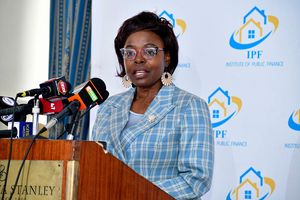
The Controller of Budget (CoB) Margaret Nyakang’o has revealed shocking details of how the government bled Sh20.1 billion in avoidable commitment fees over 10 years for external loans that remained undrawn despite facing cash flow challenges.
The avoidable commitment fees, averaging Sh1.82 billion annually, is enough to finance the capitation fees for 9,950,495 learners in public primary schools at Sh2,020 per learner per term, using data from the Ministry of Education.
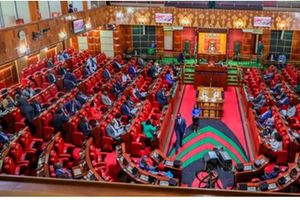
Dr Nyakang’o made the revelations before the National Assembly Committee on Public Debt and Privatization as it emerged that in the fiscal year 2025/26, Sh764.8 billion of the procured external loans was disbursed, as Sh1.3 trillion remained undrawn, attracting commitment fees.
Intriguingly, as the loans lie idle in banks, the government continues to borrow more funds whose expenditure remains doubtful, an indication that the pileup of the commitment fees will continue to be witnessed.
According to Dr Nyakang’o, the commitment fees, incurred on external loan financing between 2015/16 and 2025/26, “are not just an avoidable cost but should be viewed as a symptom of inefficiencies that need to be addressed.”
The avoidable payments, Dr Nyakang’o says, impacted negatively on the country’s public expenditure financing, constituting an additional charge to the exchequer, “without directly financing project activities.”
This as the projects that were meant to be financed stalled after they were abandoned due to a cash crunch.
“Recurring commitment fees consume scarce public resources that could otherwise be allocated to priority programmes and services,” says Dr Nyakang’o, adding, “we do not know why these loans have not been drawn down.”
When he was appointed National Treasury Cabinet Secretary, Mr John Mbadi promised to institute reforms including fiscal discipline to guide prudent expenditure of public funds.
But more than two years down the line, the country continues to cry for reforms to promote prudent use of public resources.
To maximize the development impact of borrowing, the CoB wants the government to strengthen project planning, procurement and implementation frameworks, “particularly for externally financed projects to improve absorption rates and ensure that borrowed funds translate into productive investments.”
Commitment fees are costs incurred by the government on external loan facilities that have been committed by creditors but continue to lie idle in banks, constituting expenditure without corresponding flow of loan resources to finance projects.
Even more puzzling is Dr Nyakang’o’s admission before the committee of a mismatch between the revenue mobilizers at the National Treasury and the respective implementing agencies.
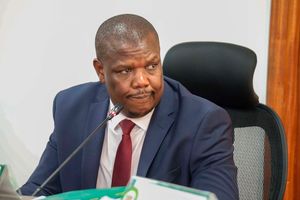
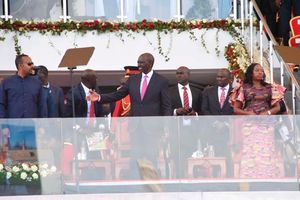
National Treasury and Economic Planning Cabinet Secretary John Mbadi.
Photo credit: File | Nation Media Group
According to Dr Nyakang’o, commitment fees have escalated because some of the government agencies for which the billions were borrowed to undertake projects are not even aware, putting the country in a difficult position.
The CoB documents show that between 2015/16, Sh2.3 billion was paid, 2016/17 Sh1.8 billion, 2017/18 Sh3.23 billion, being the highest, 2018/19 Sh2.4 billion, 2019/20 Sh1.72 billion and 2020/21 Sh1.9 billion.
During the fiscal year 2021/22, Sh1.5 billion was paid, in 2022/23 Sh1.4 billion was paid, 2023/24 Sh1.6 billion, 2024/25 Sh1.1 billion and Sh2025/26 Sh1.3 billion.
The continued incurrence of the commitment fees, says Dr Nyakang’o, reflects a combination of persistent undisbursed external financing, fiscal constraints, weaknesses in loan and project planning and operational delays in project implementation.
The CoB further revealed that delays in project preparation, procurement, fulfilment of loan conditions, contract award and project implementation “can delay loan drawdowns and consequently prolong the period during which commitment fees are payable.”
“The commitment fees are requisitioned together with the interest payment on loans through my office,” says the CoB, noting that while the National Treasury through the Public Debt Management Office (PDMO) is supposed to negotiate government loans, “this is usually not the case.”
“At times the top top people in government sign loans, committing the government even before the technical people have undertaken assessment,” noted Dr Nyakang’o.
The commitment fees continue to get paid at a time the country is experiencing shortfalls in resource mobilization to finance critical expenditures like releasing capitation amounts in time to public primary, Junior school, secondary school and university education, as well as health facilities for public-funded insurance card holders.
National Treasury Cabinet Secretary John Mbadi.
Photo credit: File | Nation Media Group
The resource shortfalls have also crowded out other development priorities like infrastructure, as it locks out cheap credit to local investors.Section 12 (2) of the Public Finance Management (PFM) Act provides that the National Treasury shall promote transparency, effective management and accountability of public finances in the national government.
“The National Treasury shall ensure proper management and control of, and accounting for, the finances of the national government and its entities to promote the efficient and effective use of budgetary resources at the national level,” the PFM Act states.
The committee, in a previous report to the House, noted that the continued accumulation of commitment fees on undrawn loans indicates low project readiness, slow disbursements and inefficiencies in loan execution.
To reduce the accumulation of the commitment fees, the committee wants the National Treasury to adopt and enforce performance-based benchmarks and disbursement readiness protocols.
“The government must ensure project readiness before contracting loans and actively track undisbursed funds to cancel idle loan tranches promptly. This will prevent accumulation of undrawn external loans, which continue to attract costly commitment fees,” reads the committee’s report.