Individuals conducting private prosecutions do not have an automatic right to appeal if a subordinate court acquits the suspects, the Supreme Court has ruled in a landmark decision.
The apex court held that the right to lodge an appeal to the High Court is exclusively conferred on the Director of Public Prosecutions (DPP). Private prosecutors, it said, do not enjoy such a right.
The ruling is a blow to persons pursuing private prosecutions due to perceived inaction by the DPP. However, the Supreme Court urged the Kenya Law Reform Commission to review the legal framework and address the gap.
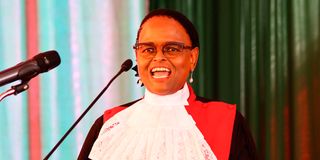
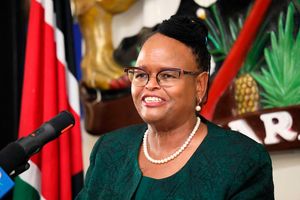
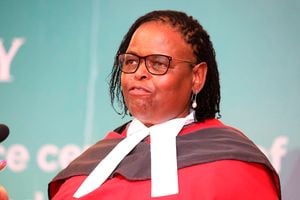
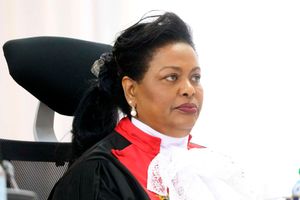
“We are of the considered view that it is time to re-examine the role and scope of private prosecutions in Kenya, particularly in relation to the right of a private prosecutor to institute an appeal,” said Chief Justice Martha Koome, who led the five-judge bench alongside Deputy Chief Justice Philomena Mwilu and Justices Smokin Wanjala, Njoki Ndung’u, and Isaac Lenaola.
“We, for that reason, signal the Kenya Law Reform Commission to consider a comprehensive review of the legal framework governing private prosecutions, with a view to addressing these gaps,” the judges said.
The declaration arose from a petition by Australian church leader Mr Wade Cox, who had initiated private prosecution against a Kenyan church official, George Odhiambo, over alleged misappropriation of Sh10 million nearly 14 years ago.
Mr Cox, Global Coordinator General of the Christian Churches of God (CCG), had hired lawyer Nicholas Ngumbi in 2018 to privately prosecute Mr Odhiambo after police failed to initiate criminal proceedings. The funds, allegedly diverted between 2009 and 2011, were meant to support orphans, deaf children, and charity programmes.
However, on October 24, 2019, a magistrate dismissed the case for want of prosecution, citing repeated absence of the complainants and their lawyer.
Mr Cox, together with CCG-Kenya chairman Mr George Nathan Onyango, attempted to overturn the acquittal, but the High Court dismissed the application for lack of jurisdiction. The Court of Appeal upheld the decision in November 2024, prompting escalation to the Supreme Court.
The appellants argued that Section 364(1)(b) of the Criminal Procedure Code (CPC) had been wrongly interpreted to deny the High Court powers to set aside the acquittal. Mr. Odhiambo, however, maintained that supervisory powers of the High Court do not extend to acquittals, adding that a civil case on the same allegations was pending.
In its judgment, the Supreme Court said the appellants’ only viable recourse was to request the DPP to exercise his constitutional mandate and appeal.
“While a private prosecutor is granted permission to conduct a prosecution under Section 88 of the CPC, this does not automatically grant him the right to appeal. Section 348 vests such right in the DPP,” the judges ruled, adding that Article 50 rights of the appellants had not been infringed.
The court reiterated that private prosecution is a limited mechanism, largely excluded from serious criminal matters, and only permitted where narrow private interests are at stake.
“Additionally, in the interest of safeguarding the public, the DPP retains a continuing and overriding interest in all criminal proceedings, including those commenced privately,” the court said.
Even so, the Supreme Court backed a previous High Court finding that private prosecutors should be granted a limited right of appeal to prevent what it termed “judicial dictatorship in the lower courts.”