April 8, 2025 was a rather ordinary Tuesday in Kenya. But in the Moroccan city of Marrakesh, more than 5,600 kilometres away, 44-year-old Kenyan Elisha Odhiambo Asumo was having a far-from-ordinary Tuesday. That morning at around 10.30am local time, which was 12.30pm in Kenya, he was arrested by Moroccan authorities in his hotel room.
An urgent “wanted man” document, known as a diffusion in International Criminal Police Organisation (Interpol) terminology, had been sent from the US to Morocco that Monday and authorities wasted no time in pouncing on him.
If the dossier that the US government has prepared about Mr Asumo’s alleged involvement in transnational arms and drug trafficking is accepted in court, Mr Asumo will have to face a legal battle against a life sentence.
The US has linked him to allegations involving the activities of a Mexican grouping called Cartel Jalisco Nueva Generación (CJNG). In February, it was among the six cartels designated as terrorist organisations by US President Donald Trump.
Information gleaned from Interpol and court records in Morocco, is that Mr Asumo identifies as a businessman who resides in Nairobi. He is married with three children.
The records further say that in his hotel room, Mr Asumo was found in possession of an iPhone and cash: 70 UAE dirhams, 32 US dollars, and 20 Swiss francs.
Found in his wallet were four ATM cards that included two from a Kenyan bank and another from a Kenyan microfinance institution, all bearing his name.
The phone, cash and ATM cards were seized by the police in the northern Africa kingdom.
That very Tuesday, the records indicate, Kenya’s honorary consul to Morocco, Mr Ali Bajaber, was informed of the arrest.
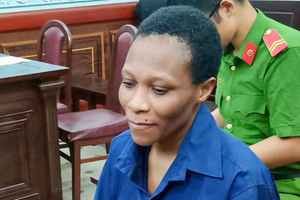
After his arrest, Mr Asumo was taken to court. He was then detained temporarily awaiting his deportation to the US.
The document from the US that was sent to Morocco, seen by the Sunday Nation, alleges Mr Asumo took part in daring cross-border arms acquisition deals.
That document, sent via email from Washington to Rabat, had in its subject Mr Asumo’s full name, date of birth (March 15, 1981), and its main headline read “wanted person diffusion”. It also contained Mr Asumo’s photos.
The US has linked Kenyan Elisha Odhiambo Asumo to involvement in transnational arms and drug trafficking Mexican grouping called Cartel Jalisco Nueva Generación.
Photo credit: Shutterstock
The information in that document had earlier been tabled before a US court. Using that information, Lindsey R Vaala, a magistrate judge in the US, issued a warrant of arrest against Mr Asumo and his associates. The warrant was first issued on December 20, 2024.
The court was told that there are two charges that the US authorities will be pressing against Mr Asumo — and each of them attracts life imprisonment if proven.
The second is “conspiracy to aid and abet possession of firearms in furtherance of drug importation conspiracy”.
To fully understand what the US has on Mr Asumo, let us break down the document according to the dates provided.
September 2022-December 2024: This is the period that the US authorities allege that Mr Asumo “conspired with others to provide firearms, including machineguns and destructive devices, to Mexico-based drug cartels for the purpose of protecting cocaine shipments into the US”.
50 rifles of the AK47 type
October 6, 2022: On this date, Mr Asumo is alleged to have received a payment of $5,000 (Sh648,293) from someone in the US. American authorities told the district court in the Eastern District of Virginia that prior to this payment, Mr Asumo and his “co-conspirators” had prepared a “fraudulent end-user certificate from the country of Tanzania”.
This certificate, they alleged, was used by another person in Bulgaria to facilitate a “test” shipment of 50 rifles of the AK47 type. The authorities say this consignment was destined for the Cartel Jalisco Nueva Generación in Mexico.
An end-user certificate (EUC), the document explains, is a document provided by an arms purchaser to an arms seller. Through it, the purchaser affirms that any arms purchased are for the purchaser’s sole use and are not intended to be transferred to another user.
“EUCs are required by many governments, including the government of Bulgaria, in order to export arms. Mr Asumo agreed to provide a fraudulent EUC in reference to the ‘test’ shipment in exchange for [money],” the document alleges.
The “wanted man” document goes on to allege that Mr Asumo, as the person buying guns on behalf of the CJNG Cartel, had some communications with a contact person for the cartel, considered one of Mexico’s most powerful criminal groups.
“Mr Asumo told the individual that [he] and his co-conspirators wanted a deal for more arms than what the buyer was proposing,” the document notes.
December 15, 2022: This is the day when another sum was alleged to have been sent to Mr Asumo’s account from a US account. This was towards creating another EUC.
March 27, 2023: On this date, Mr Asumo is believed to have met with the cartel’s contact person in South Africa. Here, in a meeting of four, the subject of discussion was setting up a weapons business in Central America.
“The four of them then discussed the issues they had in obtaining the fraudulent EUC for the planned ‘test’ transaction,” it says.
“Throughout the conversation, Mr Asumo and his co-conspirator continued to press the individual and his associate for a larger arms purchase. Mr Asumo and his co-conspirator also discussed with the individual and his associate the possibility of using East Africa as a transhipment point for cocaine. At the conclusion of the meeting, the individual allegedly paid $6,000 (Sh777,952) to Mr Asumo, and $5,000 (Sh648,293) to Mr Asumo’s co-conspirator for their help in obtaining the fraudulent EUC and for their travel expenses,” it adds.
November 8-9, 2023: When the Bulgarian arms company received two wire transfers worth $37,978 (Sh4.9 million) for an arms deal. Mr Asumo, the US alleges, was involved in the generation of a falsified EUC that eventually led to the release of 50 AK-47 rifles.
“On about July 27, 2024, the purchased arms were transported to Greece, where they were seized by law enforcement authorities, unbeknownst to Mr Asumo and his co-conspirators,” the document indicates.
However, the document claims, Mr Asumo somehow managed to create a document that convinced the Bulgaria-based contact person that the weapons had been delivered to Tanzania. This convinced the Bulgarian contact that the test was a success and a bigger shipment was organised.
“Following the ‘test’ shipment, the Bulgaria-based co-conspirator began coordinating a larger arms deal, totalling over 104 million Euros worth of weapons and ammunition, including large quantities of AK-47M rifles, PKM machineguns, RPG7 launchers, grenade launchers, anti-personnel mines, sniper rifles, SPG-9 anti-tank weapons, an anti-aircraft weapons system, ammunition for these weapons, and several drones of various designs,” says the document.
“Mr Asumo and his co-conspirators were involved in discussions regarding the upcoming arms deal. Mr Asumo and his co-conspirators participated in extensive communications with the buyers of the firearms regarding the intended users of the firearms that their Bulgaria-based co-conspirator was selling, and that Mr Asumo and his co-conspirators were creating a paper trail for, that is, the CJNG [Cartel] and its involvement in large-scale cocaine trafficking to the US.”
It further states: “Despite their extensive knowledge of the intended use of these weapons, Mr Asumo and his co-conspirators each performed crucial roles in conspiring to supply the CJNG with military-grade weaponry and create a fraudulent paper trail to obfuscate their actions from law enforcement detection.”
“Under US law, a person charged with an offence begun or committed upon the high seas, or elsewhere outside of the jurisdiction of any particular State or district of the US, shall be tried in the US District Court in which the offender or any one of two or more joint offenders, is arrested or is first brought,” it said.
The Sunday Nation could not immediately establish whether the extradition process from Morocco had been completed. At the time of his arrest, Mr Asumo was given a translator who explained to him his right to representation, to remain silent and to notify his country’s embassy.
Our translated records further say that Mr Asumo indicated that he did not mind being extradited to the US.