The process of rationalising hardship zones across Kenya’s public sector is set to conclude after the Employment and Labour Relations Court dismissed a petition challenging the 2019 Inter-Agency Technical Committee on Hardship Areas report.
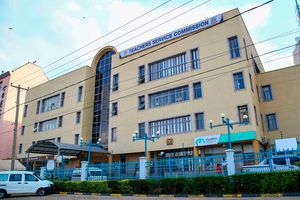
The court ruled the petition by the Kenya Teachers in Hardship and Arid Areas Welfare Association (Kethawa) was premature and failed to show specific violations by the Teachers Service Commission (TSC), Public Service Commission (PSC) and Salaries and Remuneration Commission (SRC).
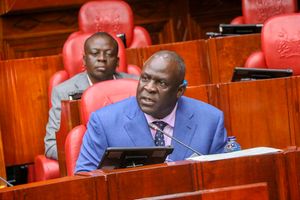
Public Service Principal Secretary Jane Kere Imbunya told Parliament that the ruling allows government to fast-track finalisation and submission to Cabinet for gazettement.
‘‘Now that the case has been dismissed, the remaining process shall be fast-tracked and submission to Cabinet done as soon as possible for consideration and direction leading to final gazettement,’’ she told the National Assembly Committee on Education.
Currently, the civil service, county governments and state corporations categorise 16 hardship areas, the Judiciary 21, and the teaching service 44.
Prime Cabinet Secretary and Cabinet Secretary for Foreign and Diaspora Affairs Musalia Mudavadi addresses the media during a press briefing with Germany’s Federal Minister.
Photo credit: Bonface Bogita| Nation Media Group
The government said the review is based on field data from agencies such as the Kenya National Bureau of Statistics (KNBS) and the Commission on Revenue Allocation.
Public Service ministry also submitted a Cabinet brief proposing review of the report to reflect current conditions, she said.
The court said the petition failed to outline roles or specific breaches and lacked evidence of constitutional violations.
It also found no evidence that the report had been tabled in Parliament or that hardship allowances had been reduced or implemented.
There was no gazette notice, circular or payslip evidence showing enforcement, the court added.
SRC proposed revised hardship rates varying by job grade, including increases for extreme and moderate areas.
For instance, job grade T earners would rise from Sh60,000 to Sh63,000 in moderate hardship and Sh66,150 in extreme areas, while grade A would rise from Sh2,800 to Sh3,360 and Sh4,320, respectively.
Once gazetted, SRC will issue advice to the public service on new rates.
Kethawa had sued TSC, PSC, SRC, Musalia Mudavadi and the Attorney General. It sought to stop implementation, citing lack of public participation, violation of equality, fair labour, social security and fair administrative action rights, and demanded disclosure of criteria and county hearings.
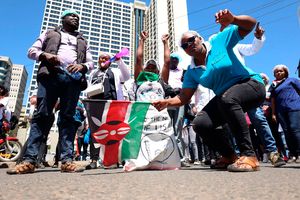
Kethawa said reclassification affected over 35 counties with poor infrastructure, insecurity and under-resourced schools.
It argued removal of hardship status ignored realities and risked worsening conditions for public servants.
TSC opposed the petition, calling it baseless and speculative, saying no unlawful act was shown.
The Commission said the petition was driven by fear and lacked evidence, and urged dismissal.
Officials said the process will align all public service hardship designations under one framework, ending historical inconsistencies and paving the way for gazettement once Cabinet approval is granted, with implementation expected to follow across all sectors in a phased manner across the country.