In Rabat
The Africa Cup of Nations Morocco 2025 officially ended yesterday, and as the dust settles in Rabat, the verdict is unanimous: Africa has witnessed a shift in the standard of continental football.
For the first time in the competition's history, a host nation provided nine world-class stadiums, effectively setting a bar so high it may not be cleared for decades. From the cavernous Ibn Batouta Stadium in Tangier to the ultra-modern Prince Moulay Abdellah in Rabat, the facilities were nothing short of first class.
The investment extended beyond the floodlights. Training pitches and hotel accommodations mirrored European standards, transforming Morocco into a footballing paradise.
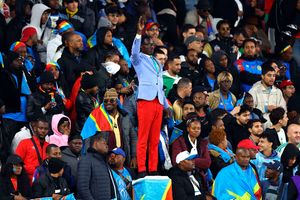
Fans outside Prince Moulay Abdellah Stadium in Rabat before the final match of the 2025 Africa Cup of Nations between Morocco and Senegal on January 18, 2026.
Photo credit: Reuters
Egypt coach Hossam Hassan said the high-level tournament was “primarily attributable to the involvement of world-class African players, such as Sadio Mane, Mohamed Salah, and Achraf Hakimi, alongside the evolving mentality and tactical prowess of the teams, and the growing experience of the coaches.”
He further added: “The elevated standard is also a result of the extensive capabilities and top-tier infrastructure available in the Kingdom of Morocco.
This has intensified the competition among national teams and boosted the continental cup's market value.”
And former Kaizer Chiefs defender Thomas Sweswe noted that the timing was perfect for the diaspora community. For the first time, the 24-team tournament was held over Christmas into the New Year.
“I live in Northern Ireland now and saw this as an opportunity to witness a great Afcon while taking a break from work during the festive season. I had the best time in Morocco,” the former Zimbabwe international told Nation Sport, highlighting how the tournament doubled as a luxury holiday destination for thousands of visiting European fans.
On the pitch, milestones were reached. This edition shattered the record for the most goals scored in a single Afcon surpassing the 119-goal mark set in 2023.
The so called “big teams” did not just show up; they dominated, with the likes of Brahim Diaz, who scored in five consecutive matches going into the final, and Victor Osimhen lighting up the scorers’ chart.
Mourad Addou, a football fan from Rabat, believes the competition was a success because the continent’s top teams lived up to the hype and stayed in the hunt until the end.
“In Cote d’Ivoire (previous edition of the Afcon), you had the big guns drop early in the competition. Senegal, Morocco, Cameroon, Algeria, Egypt, Tunisia and Ghana all went home early. All those teams I mentioned, except for Ghana, made it to the knock-out stage this time, and five were in the last eight,” Addou said.
Morocco fans inside Prince Moulay Abdellah Stadium in Rabat before the final match of the 2025 Africa Cup of Nations between Morocco and Senegal on January 18, 2026.
Photo credit: Reuters
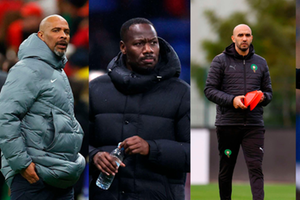
Perhaps the most significant narrative, however, was the “decolonisation” of the touchline. The tactical masterclasses weren’t delivered by imported European nomads, but by sons of the soil. Six of the final eight teams were led by African coaches. The semi-finals and the final were strictly All-African coaching affairs, a powerful statement on the growth of homegrown technical expertise.
Hassan was very vocal about this shift. “The African national coach must be given his chance with his country’s national teams. I am pleased with Walid Regragui's experience and his results with the Moroccan national team,” said the three-time Afcon winner.
South African journalist Tokelo Mokhesi added: “The interesting thing is that African coaches have reclaimed the touchline, and it’s fairly young coaches. That is good for African football.”
Young talents such as Senegal’s 17-year-old Ibrahim Mbaye and Mamadou Sarr, Algeria’s Ibrahim Maza, Mbekezeli Mbokazi of South Africa and Cameroon’s Christian Kofane proved that the continent’s talent conveyor belt is moving faster than ever.
Cameroon's Christian Kofane (centre) tussles for the ball with Nkosinathi Sibisi and Siyabonga Ngezana of South Africa during their Round of 16 Africa Cup of Nations match at Al Medina Stadium in Rabat on January 4, 2026.
The tournament’s prestige was validated by its VIP guest list. The sight of Zinedine Zidane watching his son Luca guard the net for Algeria, Kylian Mbappé, and Aurélien Tchouaméni in the stands wasn't just a PR stunt; it was a testament to Afcons status as a top-tier global event.
Their presence, alongside record-breaking commercial revenues, up by 90 per cent from previous editions, confirmed that CAF has finally turned the Afcon into a massive financial juggernaut.
“This was accompanied by a 95 per cent increase in CAF ticketing revenue, growing from $11 million (Sh1.4bn) in Côte d'Ivoire to $55 million (Sh7.1bn) in Morocco. The number of sponsors has also grown from five when the President (Patrice Motsepe) took office to 23 sponsors currently supporting this competition,” said Luxolo September, CAF’s head of TV and communications.
Despite the glitz, the path was not without its thorns. The tournament faced significant logistical hurdles. Many fans and journalists struggled with entry requirements. “I struggled to get my visa, and I think my struggles are a testament to what a lot of people faced,” added Mokhesi.
A Senegal fan inside Prince Moulay Abdellah Stadium in Rabat before the final match of the 2025 Africa Cup of Nations between Morocco and Senegal on January 18, 2026.
Photo credit: Reuters
The Bafana Bafana camp complained about the distance between their hotel and training venues, which was about 45 minutes, while Senegal and Nigeria raised concerns about substandard accommodation and security lapses.
Officiating remained a lightning rod for criticism. Despite the presence of VAR, several nations felt hard done by the inconsistent disciplinary calls.
Nonetheless, the challenges, while real, felt like footnotes to a larger story of success. Morocco 2025 was a masterclass in African capability. With world-class stadiums, record-breaking goals, and a new generation of African coaches leading the charge, the beautiful game on the continent has never looked more professional.