Something about Dakar stays with you long after the sporting action.
Perhaps it is the friendliness of the people, the music that gives the city its character, the colourful traditional outfits, or the delicious food, often served with a generous helping of pepper.
Senegal makes its culture felt. Its people are proud of their identity, and during the 2026 Youth Olympic Games, they have had an opportunity to share it with the world.
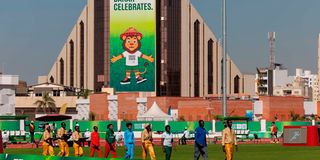
The Games have been conspicuous in Dakar. From the airport to major roads and public spaces, the branding is everywhere. Dakar has dressed itself for the occasion, giving the impression that the entire city is part of this historic moment.
More than 2,600 athletes from 204 National Olympic Committees, alongside the Refugee Olympic Team, have competed in 25 sports across Dakar, Diamniadio and Saly.
But beyond the medals and performances, Dakar has offered a practical lesson in hosting a major international sporting event while showcasing national identity, involving local communities, and ensuring that infrastructure serves beyond the Games.
For Kenya, which is preparing to co-host the 2027 Africa Cup of Nations with Uganda and Tanzania, and host the 2029 World Athletics Championships, there is plenty to learn.
Rather than concentrate all sports in one venue, events were spread across several locations.
Saly Beach West hosted beach games, including handball, volleyball, wrestling and triathlon.
The Dakar Expo Centre in Diamniadio provided facilities for indoor sports such as boxing, fencing, gymnastics, judo, table tennis and wushu.
Closer to the capital, Complexe Iba Mar Diop hosted athletics and rugby sevens, while Complexe Tour de l’Oeuf staged baseball5, swimming and 3x3 basketball. Other competitions took place at Dakar Arena, Abdoulaye Wade Stadium and the equestrian centre.
Importantly, Senegal did not have to construct an entirely new sporting city. It made use of existing facilities, upgrading venues where necessary and installing temporary infrastructure for selected competitions.
The Youth Olympic Village at Amadou Mahtar Mbow University in Diamniadio was another example of planning beyond the event. The accommodation will return to its university purpose after the Games.
It is a model worth considering for countries seeking to host major competitions without leaving behind expensive facilities with limited use.
Senegal’s famous concept of Teranga, a Wolof word associated with hospitality, generosity and warmth towards visitors, is deeply rooted in its identity.
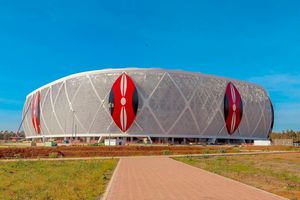
An exterior view of the under-construction 60,000-seater Raila Odinga Talanta Stadium in Nairobi.
Photo credit: File | Nation Media Group
You experience it beyond the official ceremonies. The people are friendly, the food is tasty, even if the pepper can be a challenge for visitors unaccustomed to it, while the music and traditions give the city a character of its own.
The opening ceremony captured this identity, bringing together more than 1,100 performers in a celebration of Senegalese and African culture.
The cultural connection was also evident in beach wrestling. Known locally as laamb, wrestling is deeply embedded in Senegalese sporting and cultural life. It is more than another competition on the programme; it is part of the country’s heritage.
The enthusiasm surrounding the discipline, particularly the performances of Senegalese athletes, demonstrated how a major sporting event can celebrate local identity rather than simply import an international sporting spectacle.
Beyond football and athletics, the events should provide a platform for Kenyan music, food, traditional dances, fashion and the diversity of its communities. A visitor arriving in Nairobi, Mombasa or Kisumu should leave with memories of more than a stadium and a hotel.
Sport may bring people together, but culture gives them a reason to remember where they have been. With competitions spread across Dakar, Diamniadio and Saly, transporting athletes, officials, spectators and media personnel was one of the biggest organisational tests.
The organisers responded with a dedicated transport network combining shuttle buses and the Regional Express Train (TER).
The railway was particularly important for the Diamniadio cluster, where the Olympic Village and several competition facilities were located.
Ahead of the Games, a 19-kilometre extension linking Diamniadio to Blaise Diagne International Airport was opened on September 28. The original Dakar-Diamniadio railway service had been operating since 2021, but the extension strengthened the connection between the airport and the Games facilities.
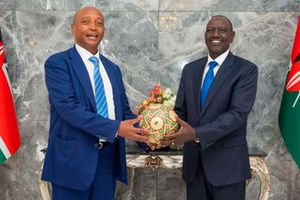
President William Ruto at the Raila Odinga International Stadium at Talanta Sports City Stadium on October 28, 2026.
Photo credit: PCS
During the competition period, athletes, media personnel and volunteers all had access to the train. Special passes were provided for accredited groups, with designated seating areas, while dedicated buses connected competition venues and official accommodation facilities.
For Kenya, transport planning will be critical during 2027 Afcon, with matches spread across three countries. Airport connections, hotels, road networks, public transport and stadium access will have to be seamless.
At the Olympic Village and competition venues, access is controlled through accreditation checks. Tags are scanned at entry points, with screening carried out whenever people enter the facilities.
Although the process requires visitors to allow time for checks, the consistency across venues has helped manage access at an event involving thousands of young athletes, officials, volunteers and visitors.
Ticketing has also been well organised around the different competitions. Some events required paid session tickets, others offered day passes, while selected competitions and fan zones provided free access, subject to reservation arrangements.
Through the Jambaar26 volunteer programme, 23,000 people registered for 6,000 Games-time roles covering areas such as accreditation, transport, logistics, ceremonies and spectator services.
Exhibitions and public activities have also provided opportunities for local businesses and entrepreneurs to benefit from the event.
This is an important part of the hosting legacy. A major sporting event should not benefit only athletes and organisers. It should also create opportunities for young people to acquire skills, businesses to find customers and communities to participate in the economic activity that comes with hosting.
Kenya’s upcoming events can provide similar opportunities in hospitality, event management, transport, media, technology and sports administration.
In Dakar to mentor upcoming athletes, Kipchoge said Senegal’s achievement should give Africa confidence in its ability to organise and manage major international sporting competitions.
“I am really impressed by what Senegal has showcased in these Youth Games. It shows that Africa is capable of organising and managing such big sporting events. I think Kenya is better placed compared to Senegal in as far as hosting such events is concerned. We have all it takes to stage such championships and more,” Kipchoge said.
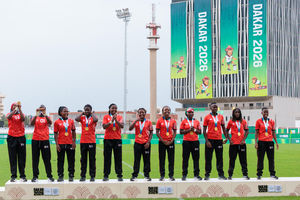
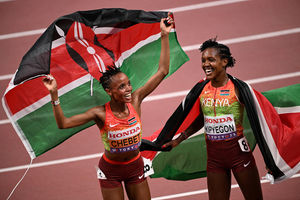
Team Kenya, made up of 51 athletes, won six medals - four gold and two silver.
Gold medals came via the women’s rugby sevens team, Faith Rono in the women’s 3,000m, Enock Tuitoek in the men’s 3,000m and Abigael Kosgei in the women’s 2,000m steeplechase.
Wesley Kiplagat claimed silver in the men’s 2,000m steeplechase, while Abigael Chepkirui took silver in the women’s 1,500m.
The six-medal haul equalled Kenya’s best outing, at the inaugural Youth Olympics in Singapore in 2010.
Kenya has established itself as one of the world’s leading sporting nations. The next challenge is to match that reputation with the infrastructure, organisation, hospitality and planning needed to deliver major international events.
The success of the 2027 Afcon and the 2029 World Athletics Championships should not be measured only by the number of visitors who arrive or how smoothly the competitions run, but also by what remains for the country and its people after the final whistle and the last race.
That is perhaps Dakar’s greatest lesson: the real value of hosting the world lies not just in the event itself, but in its legacy.