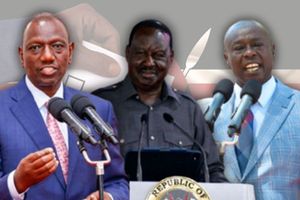
As the clock ticks towards the August 10, 2027 General Election, politicians are quietly positioning themselves for the next contest, triggering an unofficial season of party hopping and shifting allegiances.
In Kenya, a year or two before a general election has often been marked by politicians changing their search for parties they believe offer the best chance of survival at the ballot.
But the current wave is taking a different shape. Some politicians have publicly announced their new homes, while others are appearing at rallies, wearing the colours of rival parties and taking photographs with their leaders without formally resigning from the parties that sponsored them to Parliament.
The strategy allows elected politicians to signal where they stand while avoiding the immediate consequences of formally crossing the floor.
The Independent Electoral and Boundaries Commission (IEBC) has set clear timelines for the 2027 election, including party nominations and submission of candidates. With party primaries expected to take place next year, politicians are weighing whether to make their moves now or wait until the political mood on the ground becomes clearer.
The timing is particularly important for incumbents. Under the law, an elected politician who formally resigns from the party that sponsored them risks losing their seat. This has created a grey area in which politicians can associate with new parties without completing the legal process of switching allegiance.
While deputising President Uhuru Kenyatta , Dr Ruto rode on the United Democratic Alliance (UDA), campaigning across the country and bringing on board scores of MPs.
His Karen residence became a beehive of UDA activities, where defectors and political allies were regularly received following his fallout with President Kenyatta, who had backed former Prime Minister Raila Odinga for the presidency.
Yet many of those politicians did not formally switch parties until shortly before the April 4, 2022 UDA primaries. They technically remained Jubilee politicians, limiting the ruling party's ability to discipline them because of their numbers and proximity to the election.
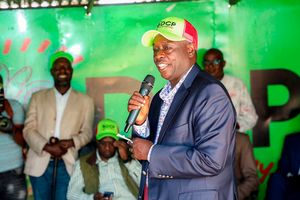
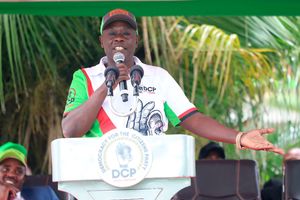
A similar pattern is emerging, particularly in Mount Kenya, where several leaders have openly aligned themselves with former Deputy President Rigathi Gachagua’s Democracy for Citizens Party (DCP) while remaining members of UDA.
Some politicians announce their decisions through social media, while others seek elaborate photo opportunities with their new political hosts.
Leaders who have ditched the ruling UDA from left: Gatundu South MP Gabriel Kagombe, Kiambu Governor Kimani Wamatangi, Lamu Woman Rep Muthoni Marube, Murang’a Governor Irungu Kang’ata and Nyandarua Governor Kiarie Badilisha.
Photo credit: Nation
At Mr Gachagua’s Wamunyoro home, defectors are often welcomed with DCP caps and party colours, in a ritual reminiscent of Dr Ruto's Karen meetings with politicians who crossed over to his camp ahead of the 2022 election.
Nyandarua Senator John Methu, for example, has been appointed acting DCP secretary-general after openly associating with the party. However, he has not formally written to the Registrar of Political Parties to quit UDA, which could trigger the loss of his Senate seat.
“Most politicians change parties at will for political survival, joining those regarded as popular on the ground at the time—but their hearts are not necessarily in the manifestos of their new political vehicles,” said Mr Bett Sigey, a Nairobi-based advocate.
The lawyer said the movement of politicians between parties is driven largely by calculations about political survival rather than ideology.
In Mount Kenya, DCP has emerged as the main alternative political home for leaders disenchanted with UDA and the Ruto administration. In Ukambani, there are signs of pressure on Wiper Patriotic Front leader Kalonzo Musyoka , while in Western Kenya, the fallout between Trans Nzoia Governor George Natembeya and DAP-K leader Eugene Wamalwa has created another political realignment.
In Nyanza, divisions within ODM have seen senior politicians gravitate towards the Linda Mwananchi movement, while some Kanu politicians have increasingly worked with Dr Ruto's administration.
Professor Prestone Chitere, a social scientist at the University of Nairobi, said defections are a normal feature of election seasons and often reflect dissatisfaction with the government of the day.
“The political groupings mushrooming in the country, from Linda Mwananchi to DCP, for example, are in a bid to form parties and coalitions that have the potential to remove those in power who have failed to deliver on pre-election promises to the people, especially on fixing the economy,” Professor Chitere said.
He said emerging political formations were regional outfits that would eventually have to form coalitions if they were serious about challenging President Ruto.
“Save for a few, most of the political formations which leaders are joining are regional outfits that must, in the end, form coalitions if they are serious with their agenda of handing President Ruto a defeat in the election,” he said.
Kamau Ngotho of DCP won the seat with 35,440 votes against UDA's Samuel Muchina Nyagah, who garnered 5,460 votes. The result jolted politicians in the region and prompted several leaders to reconsider their political allegiances.
Nyandarua Governor Kiarie Badilisha subsequently crossed from UDA to DCP, saying the move reflected the wishes of voters.
“I was waiting for an opportune moment to jump ship as per the wish of the people on the ground. We have decided as a people to cross the floor to DCP, which is the most popular party in the Mount Kenya region,” Dr Badilisha said.
Former Deputy President Rigathi Gachagua (left) welcomes Murang'a Governor Irungu Kang'ata to the DCP party at his Wamunyoro home in Nyeri County on July 24, 2026.
Photo credit: Courtesy
Murang’a Governor Irungu Kang’ata, Kiharu MP Ndindi Nyoro and Gatundu South MP George Kagombe have also severed ties with UDA amid growing dissent in parts of the region.
“With my colleagues who are here, others who are not here—governors, senators, members of the National Assembly and members of the County Assembly from this region—we are going to make a major political decision…” Mr Wamumbi said.
But the moves have also exposed the anxiety among politicians about who belongs in the new political homes.
Mr Gachagua has said politicians crossing to DCP will be vetted to eliminate what he calls “moles” from rival parties.
That prospect illustrates how defections are no longer simply about joining a party. The new political homes are also trying to establish loyalty and prevent infiltration by politicians who may be seeking temporary shelter ahead of the election.
In Ukambani, Kibwezi MP Mwengi Mutuse has announced plans to lead a group of leaders away from Wiper and towards UDA.
Elsewhere, politicians are keeping their options open.
Trans Nzoia Governor George Natembeya has quit DAP-K following what he described as irreconcilable differences with Mr Wamalwa. His next political move is being closely watched because of its potential impact on the political equation in Trans Nzoia, the Rift Valley and Western Kenya.
East African Legislative Assembly legislator Kanini Kega, a former Kieni MP, has also cut ties with former President Uhuru Kenyatta’s Jubilee party and joined DCP.
Kanu has emerged as one of the biggest casualties of the realignment, with former Secretary-General Nick Salat joining UDA and several of the party's MPs increasingly working with Dr Ruto.
They include William Kamket of Tiaty, Julius Sunkuli of Kilgoris and Naisula Lesuuda of Samburu West.
Former Kirinyaga Woman Representative Purity Ngirici, who left UDA for DCP after being removed as Kenya Seed Company chairperson following her criticism of the government, has argued that Deputy President Kithure Kindiki remains one of the factors keeping some Mount Kenya leaders within UDA.
People’s Renaissance Movement (PRM) party leader and Saboti Member of Parliament Caleb Amisi at the ASK Showgrounds, Jamhuri Park, on Tuesday, August 11, 2026, during the launch of the People’s Renaissance Movement.
Photo credit: Dennis Onsongo| Nation Media Group
Saboti MP Caleb Amisi has registered The People’s Renaissance Movement (PRM), leaving the ODM party that sponsored him to Parliament. The party is expected to provide a political home for some of the politicians associated with Linda Mwananchi after attempts to register the movement as a political party failed.
Nairobi Senator Edwin Sifuna, Siaya Governor James Orengo, Vihiga Senator Godfrey Osotsi and Embakasi East MP Babu Owino are among the leading figures in the movement.
From left: Suba South MP Caroli Omondi, Embakasi East MP Babu Owino, Nairobi Senator Edwin Sifuna, Siaya Governor James Orengo and Vihiga Senator Godfrey Osotsi during the People’s Delegate Convention organized by the Linda Mwananchi faction of the ODM at Ufungamano House in Nairobi on March 27, 2026.
Photo credit: Wilfred Nyangaresi | Nation Media Group
But as the 2027 election approaches, the symbolism will eventually have to give way to formal choices.
And for politicians seeking new political homes, the question will not only be which party is popular today, but whether it will still be the right vehicle when voters finally enter the polling booth.
“Even ODM, which is one of the oldest and most established parties in the country, is under threat, with senior members being pushed out for political expediency by those in charge of running the outfit founded by former Prime Minister Raila Odinga,” he said.
“If ODM leadership is not careful with the coalition being crafted with UDA, it runs the risk of being swallowed and made insignificant, like Kanu has been dealt with in the political scene,” Mr Sigey stated.
For politicians, moving too early can expose them to political isolation if the party they join loses momentum. Moving too late, however, can leave them without enough time to build networks, secure nominations and convince voters that they belong in their new political homes.
“Unfortunately, party leaders make promises to the people that they cannot deliver once they are in power, leading to disappointment and anger towards the subsequent election. There are a lot of expectations from the voters,” he said.
The IEBC has set the campaign period for the 2027 General Election, to be held on August 10, from May 29 to August 7 next year.
Political parties are expected to submit their lists to the IEBC by March 26, 2027, while nominations and the resolution of disputes will precede the formal campaign period.
That leaves politicians with several months to test the waters before they are forced to make legally consequential decisions.
For now, many appear content to send signals rather than formally cross the floor.
The result is a political season in which party caps, rallies, photographs, social media announcements and public endorsements can be almost as significant as the legal paperwork.