There is simmering disquiet within Democracy for the Citizens Party (DCP), led by former deputy president Rigathi Gachagua especially in its Mt Kenya stronghold among aspirants who fear that some of their opponents may have an edge over them ahead of the primaries.
At the heart of the tension lies concern over what they say is preferential treatment of certain candidates, with aspirants worried that the contest for party tickets may already be decided.
They are uneasy about what they perceive as mixed cues from the party leader, whose public endorsements of preferred candidates have raised fears that nominations for key positions could favour members of his inner circle.
For a party seeking to consolidate its support in the Mt Kenya region while expanding nationally, selecting candidates for county and constituency-level positions could be as important as the presidential contest itself.
According to party insiders and aspirants, the disquiet cuts across Nyeri, Kirinyaga, Kiambu and Nakuru, where politicians are positioning themselves for gubernatorial, senatorial, parliamentary and women representative seats.
Some fear that their grassroots mobilisation, financial contributions and political networks could count for little if the party leader has already chosen his preferred candidates.
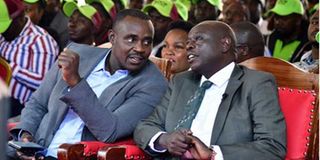
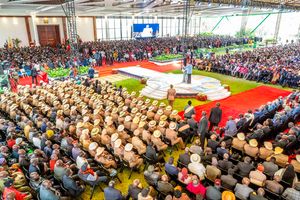
DCP Party Leader Rigathi Gachagua addresses the media at the party’s Nakuru offices in Milimani on August 15, 2026.
Photo credit: Boniface Mwangi | Nation
Others fret that politicians close to Mr Gachagua are influencing candidate selection further down the political ladder, potentially creating rival camps within the party.
In a media interview, former nominated MP Maina Kamanda suggested that the DCP could settle on specific candidates in particular regions. He also indicated that Mr Gachagua might reject politicians suspected of joining the party as moles from the ruling camp.
Mr Kamanda claimed that some politicians who had defected from President William Ruto’s camp had approached Mr Gachagua with money in the hope of securing a place in the DCP.
He said, however, that Mr Gachagua spends considerable resources assessing prospective candidates’ performance to avoid rewarding those who have lost touch with voters.
The DCP party leader has repeatedly assured aspirants and the electorate that the party will conduct free and fair nominations.
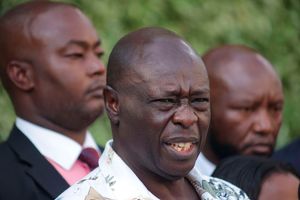
Former nominated MP Maina Kamanda.
Photo credit: File | Nation Media Group
“All DCP candidates will fight it out in the nominations and the winners will fly the party’s flag during the elections,” Mr Gachagua said while addressing a rally in Kagumo town, Kirinyaga Central Constituency, in the past.
He said no candidate seeking an elective seat would be given a direct party ticket. In August, during another rally in Laikipia, he again promised free and fair nominations.
Yet, at one of his rallies in DCP’s political stronghold, he publicly endorsed Kirinyaga Senator Kamau Murango for the gubernatorial seat, appearing to depart from his promise of open nominations.
“Tuko na senator wa Kirinyaga ambaye ndiye atakuwa governor next year wa county ya Kirinyaga (We’re here with Kirinyaga Senator who’s poised to be the next governor),” he told the crowd before handing Mr Murango the microphone.
Mr Gachagua has previously faced accusations of overbearing leadership, including among the grounds advanced during his impeachment. The emerging disquiet suggests that some aspirants fear centralised decision-making could shape DCP’s nominations and undermine confidence in the process.
Political analyst, Prof Macharia Munene, argues that the tensions must be understood against the circumstances in which DCP emerged and its subsequent growth in popularity.
“And because the party has become fairly popular, people who want to have a position or think that the only way they can make it is to be associated with the party, they're now all running to it, even if they don't believe in it,” Prof Munene said. In his assessment, the influx presents a dilemma for those who supported the party when its political fortunes were less certain.
Some early supporters may feel their sacrifices and loyalty entitle them to a greater say in its direction, particularly as newcomers arrive seeking tickets.
“So, in essence, they built it to the point where it is now fairly popular. So, they have an acclaimed ownership to that party,” the Prof said.
That sense of ownership, however, creates its own complications. Observers say a party cannot easily expand nationally while maintaining the exclusivity of a political club whose founding members determine who belongs and who gets to compete.
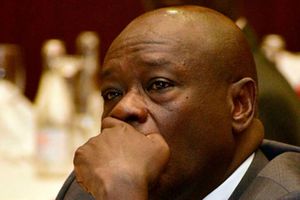
Nyandarua Senator John Methu addresses journalists at the DCP headquarters in Nairobi on May 25, 2026.
Photo credit: Billy Ogada | Nation Media Group
Prof Munene argues that established members have reason to be cautious about newcomers whose commitment may be driven primarily by electoral calculations.
“As the owners of the party, they have to be careful they don't get undercut from below in the name of popularity,” he warned. He acknowledged, however, that some newcomers may be genuine supporters while others could simply be seeking a convenient route to office.
“And I think that's where the fear is, within the party hierarchy, that they should not be infiltrated by people who are dubious,” he said.
The concern, he said is not necessarily that DCP is attracting too many politicians, but whether it can accommodate them without alienating those who helped establish it. For Mr Gachagua, this presents a tough balancing act. Too much accommodation of newcomers could upset founding members, while excessive protection of established allies may discourage aspirants who believe their grassroots support should count for something.
Prof Munene cautions against interpreting every concern as evidence that nominations have already been predetermined.
Another source of tension is the reported preference for former MPs who served alongside Mr Gachagua in Parliament and are now seeking political comebacks in 2027.
Their potential return raises a broader question about the leadership DCP wants to portray to voters. It remains to be seen whether the party will prioritise experienced politicians with established networks or create space for a new generation seeking to build its own political identity.
Some aspirants also fear that politicians close to Mr Gachagua are promoting preferred candidates for parliamentary and ward positions.
Disgruntled aspirants have also complained about appointments to party branch positions, alleging that the leadership favours particular camps.
Such positions may lack the visibility of parliamentary seats, but they can be politically consequential. Party officials organise grassroots mobilisation, build relationships with supporters and influence access to the leadership.
The complaints have reportedly also surfaced during Mr Gachagua’s county visits and meet-the-people tours.
Some aspirants say they contribute to mobilising or financing the visits but receive less recognition than rivals. Others claim they have been denied microphones to address supporters.
In Kirinyaga, other than Mr Murango, the DCP party leader is reportedly backing Ms Njeri Maina for women representative and Baragwi MCA David Mathenge for senator.
Ms Wangui Ngirici and lawyer Ndegwa Njiru are said to be some of the strong contenders for governor and senator, respectively.
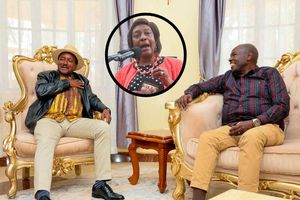
Kirinyaga politician Wangui Ngirici at St Thomas Kerugoya Anglican Cathedral.
Photo credit: File I Nation Media Group
Tension became apparent during Mr Gachagua’s county visit on August 16, 2026, when DCP Secretary-General designate John Methu intervened to calm crowds amid friction surrounding Ms Ngirici’s presence.
The Nation understands that Gichugu parliamentary aspirant Njeri Mbogo was “disciplined” by the party after publicly expressing dissatisfaction with her treatment during the Kirinyaga visit. She had alleged that she was denied an opportunity to address supporters.
The emerging uneasiness could create an opportunity for other parties led by leaders from the region such as Kiharu MP Ndindi Nyoro, whose political standing and future ambitions have attracted attention in Mt Kenya.
Mr Nyoro and his People’s Party of Kenya could benefit if disgruntled aspirants begin looking beyond DCP for alternative political homes.
Former Justice minister Martha Karua’s People’s Liberation Party and other home-grown parties could also attract politicians seeking tickets elsewhere.
The struggle within DCP is unfolding against a wider contest for influence in Mt Kenya. Former President Uhuru Kenyatta remains a potentially significant figure in the region’s political calculations, while President William Ruto retains avenues of influence through government appointments, political alliances and ties with business leaders.
For Mr Gachagua, a strong bloc of elected DCP politicians would strengthen his hand in future coalition negotiations, help mobilise support and sustain his political ambitions beyond the election.
But the same strategy could backfire if aspirants conclude that personal loyalty to the party leader matters more than their popularity with voters.
Prof Munene argues that candidates who believe they can win on their own have alternatives if they fail to secure their preferred party’s ticket.
“Because if the person is popular anyway, and he's short-changing the party, and he vies on another party, he can win,” he said.
His observation points to a limitation of party leadership: a popular party can attract candidates, but cannot dictate voters’ choices or guarantee that every aspirant will remain within its ranks.
Prof Munene nevertheless maintains that the influx itself reflects DCP’s growing appeal. That is the larger test facing the party. It may attract aspirants because it is popular, but sustaining that popularity requires more than the promise of an electoral vehicle.
“It's credit to the party that you have people fighting to get in, even if they don't believe in the party,” he said. “But otherwise, people vote for whom they think is the best for them at that particular time.”