For years, Ruth Odinga operated in the shadow of her brother Raila Odinga, a veteran opposition leader and Kenya’s former Prime Minister, who died in October 2025. Yet Ruth, the Kisumu Woman Representative, has been an enduring figure within the Orange Democratic Movement (ODM) from its founding years two decades ago.
Before entering elective politics in 2013 as Kisumu Deputy Governor, she headed Spectre International, an Odinga family-owned regional gas cylinder manufacturer.
The ODM Deputy Organizing Secretary now finds herself at the centre of the growing wrangles threatening the Orange party’s very existence in the post-Raila era. In recent months, the party has been rocked by factional battles and sharp public exchanges directly attributed to the void Raila left seven months ago.
The party is at a crossroads with rival camps loyal to party leader Dr Oburu Oginga with his group that was until recently branded “Linda Ground” on the one hand and Secretary General Edwin Sifuna’s “Linda Mwananchi” on the other hand.
In a candid interview with the Sunday Nation’s Steve Otieno , she spoke about the ODM factions, recent attacks against her by National Treasury Cabinet Secretary John Mbadi for supposedly being a fence-sitter, the future of the Odinga family in politics, and why she believes ODM must be saved from falling apart by all means. Excerpts:
Honestly, I do not know why there appears to be a fallout. In the (Mombasa) meeting where the issue arose, all I said was that ODM needs to remain united and strong enough to either field its own presidential candidate or negotiate from a position of strength in future political arrangements.
That was always Raila Odinga’s approach. He believed party unity was critical because ODM was never meant to be about individuals; it was meant to represent the aspirations of ordinary people.
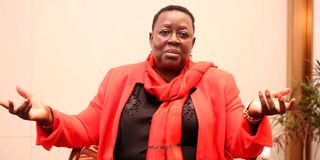
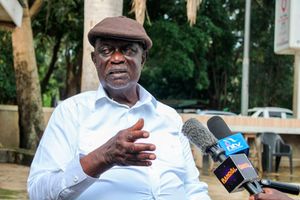
Kisumu County Woman Representative Ruth Odinga during an interview with the Daily Nation in Nairobi on May 22, 2026
Photo credit: Sila Kiplagat | Nation Media Group
What surprised me is that when I speak about unity, it suddenly becomes controversial. Yet today, everyone is talking about unity. I feel I am being criticised simply because I come from the Odinga family.
Mbadi said that being Raila’s sister does not give you authority over the party and later criticised Winnie Odinga (EALA MP and Raila’s daughter) after she told him off. What was your reaction?
I felt the attacks were unnecessary because I was only advocating for dialogue and cohesion within ODM. There was no need to personalise the matter.
As for Winnie, I believe young people must be given space to express themselves politically. ODM has always prided itself on involving the youth and listening to different voices. Winnie only expressed concerns that many young people share regarding leadership and governance.
Since Mbadi often says Raila mentored him politically, I expected him to mentor Raila’s daughter as well, instead of dismissing her views. We cannot build a strong political party by silencing younger generations.
I would rather not discuss his performance because my concern is more about the relationship between government and party politics. Former ODM officials who joined government in professional or Cabinet positions should avoid interfering directly in internal party disputes after relinquishing their party responsibilities.
Otherwise, it creates confusion between state roles and party affairs. (Mr Mbadi was ODM chairman and Nominated MP before he resigned following his 2024 appointment as Treasury Cabinet Secretary in the broad-based government. He was previously Suba South MP and leader of Minority in the National Assembly)
My issue remains straightforward: where exactly was I disrespectful in asking leaders (of the ODM factions) to unite?
I do not want to frame it that way because politics should not become personal. I respect Mbadi and many other ODM leaders. In the past we have had political disagreements, such as during contests over parliamentary leadership positions, but those were normal democratic contests.
However, I do believe women in politics are sometimes judged more harshly. When a woman speaks firmly about political matters, people quickly interpret it differently.
Being Raila’s sister does not mean I am above criticism, but it should also not mean I am automatically viewed with suspicion whenever I speak.
At times the intensity of the reactions makes one wonder whether there are other interests involved. If we truly care about ODM, then all factions — Linda Mwananchi, Linda Ground and others — should be encouraged to return to one table.
Kisumu County Woman Representative Ruth Odinga during an interview with the Daily Nation in Nairobi on May 22, 2026.
Photo credit: Sila Kiplagat | Nation Media Group
The slogan should remain “Chungwa moja, maisha bora.” ODM became successful because it united different communities, generations and opinions under one movement.
When people become angry simply because someone calls for dialogue, then you begin questioning whether everyone genuinely wants unity.
Many people assume the Odinga name comes with privilege, but they forget the sacrifices the family has made over decades.
From childhood we lived through political persecution because of the role our father Jaramogi Oginga Odinga (Kenya’s first post-independence vice president and later veteran opposition leader) played in the country’s struggle for democracy and multiparty politics. We experienced harassment, surveillance and restrictions.
After the 1982 attempted coup, I went into exile and lived in Uganda, Tanzania and Zimbabwe before eventually studying in Norway. Those experiences taught me resilience and deepened my belief in democracy and justice.
The family paid a price for standing for democratic ideals, and many Kenyans sometimes overlook that history.
Some critics argue ODM has become personality-driven rather than ideological and institutional. Do you agree?
ODM is much bigger than one individual. It is a movement born out of struggle and public participation.
From FORD to NDP, NARC and eventually ODM, the movement evolved because Kenyans wanted a platform that reflected their aspirations.
During the 2005 referendum, people embraced the Orange symbol because they felt represented by it. (in reference to the vote on a new constitution during the Mwai Kibaki administration where the “No” side symbolised by the Orange beat the “Yes” camp represented by a Banana).
ODM succeeded because it involved ordinary citizens, women, youth and grassroots supporters. Even Raila himself consulted widely before making major political decisions, including discussions involving cooperation with UDA.
That is why I say ODM should never become a party of chest-thumping or exclusion. Its strength has always been inclusivity.
That decision should come from the people and the party membership. ODM should consult widely before deciding whether to field its own candidate or support another arrangement.
The party must allow members and supporters to feel they have ownership over major decisions. That is what ODM stood for from the beginning.
You often speak about reconciliation. Do you believe reconciliation between the ODM factions is still possible?
After the 2007 post-election violence, I participated in diplomatic engagements in Tanzania alongside leaders such as Jakaya Kikwete, Benjamin Mkapa and Graca Machel during peace discussions. ODM itself also supported reconciliation efforts in other African countries facing instability.
Kisumu County Woman Representative Ruth Odinga addresses ODM delegates during a party meeting at Jomo Kenyatta International Stadium in Mamboleo, Kisumu on March 13, 2026.
Photo credit: Alex Odhiambo | Nation Media Group
Compared to those situations, the disagreements within ODM today are manageable. What is required is humility, patience and willingness to listen.
Raila himself often prioritised peace and national unity even when he personally believed he had been wronged politically. That is a lesson many leaders should remember.
Some people now describe you as sympathetic to the Linda Mwananchi faction or accuse you of sitting on the fence. What is your response?
Politics naturally involves differences of opinion. But mature parties resolve those disagreements internally rather than through public hostility.
I see myself more as someone trying to bring people together. Listening to opposing views does not mean you support one faction over another.
ODM must also create room for younger leaders such as Edwin Sifuna (Secretary General and Nairobi Senator), Babu Owino (Embakasi East MP) and Winnie Odinga. They represent an important generation within the party and should not be alienated simply because they speak differently.
What did you think about the parallel meetings held during the (Special) National Delegates Convention in March (2026)?
What matters is that all these groups eventually come back together. There are now so many “Lindas” that we risk forgetting the original Orange movement itself.
The encouraging thing is that many of these factions still say they want to remain within ODM. That means reconciliation is still possible.
Politics is about negotiation and dialogue. No one should be treated as permanently outside the party simply because disagreements arose.
Kenyans should remember that Oburu and Raila were extremely close throughout their lives. Raila’s passing (in October 2025) happened suddenly and Oburu had to assume responsibility during a very emotional period for both the family and the party.
Given those circumstances, I think he has done well. He has experience in Parliament, government and regional politics, and he is trying to manage competing interests within ODM while facing challenges such as limited party funding. Leadership under such circumstances is never easy.
I find it strange when people try to create conflict between us because we have known each other for many years.
When I was living in exile in Zimbabwe, Orengo also spent time there and we even stayed in the same house at one point. We have a long political history together.
Politics should not destroy personal relationships. People can disagree politically and still maintain respect for one another. That is part of the political culture ODM should protect.
Raila did a lot for Kenya and for democracy. His contribution should not simply be forgotten because he is no longer with us.
There are lessons he taught about inclusivity, resilience and fighting for justice that should continue guiding the country.
Kisumu County Woman Representative Ruth Odinga during an interview with the Daily Nation in Nairobi on May 22, 2026.
Photo credit: Sila Kiplagat | Nation Media Group
Even after great leaders pass on, their ideas continue shaping society. People still speak about leaders like Kwame Nkrumah because of the values they represented. Raila’s legacy should also be preserved in that way.
You also lost your sister Beryl (Achieng) within a short period (in November 2025) after Raila’s death. How did you cope with those losses?
It has been extremely painful. I am the last-born in the family and I have always felt responsible for looking after everyone.
To be honest, I have not fully processed the losses yet. Family has always been important to me.
Even recently, when Oburu was unwell abroad, I travelled with him to ensure he was okay. That is simply who I am within the family.
Before politics, you were in business. How did that experience shape your leadership style?
Before entering politics in 2013, I was running Spectre International and managing one of the largest factories in Kenya with more than 700 employees.
That experience influenced how I approached governance because I understood systems, accountability and management.
As Deputy Governor of Kisumu, I helped establish the county’s Performance Management System, which was later adopted elsewhere. I also worked on strengthening revenue collection and exposing corruption that was costing the county millions. Many of the governance systems we introduced focused on efficiency and accountability.
My interest has always been service delivery and improving governance systems. Kisumu has enormous potential, but development requires accountability, planning and inclusion. I still believe those principles can transform the county if leaders remain committed to them.