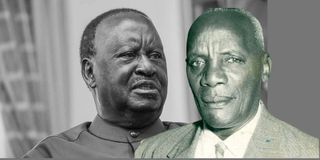
Will history relegate Raila Odinga to the margins as it did Harry Thuku—his legacy stained by the compromises of his later years?
In the long and winding story of Kenya’s struggle for justice and democratic freedom, few figures loom as large—or as complex—as Harry Thuku and Raila Odinga. Though separated by a century and shaped by different adversaries—colonialism in Thuku’s era, post-independence authoritarianism in Raila’s—their political journeys now seem strikingly parallel.
Both rose as revolutionary icons. Both defied powerful regimes. And yet, both were eventually drawn into the very systems they once vowed to overthrow. Their legacies are marked not just by the power of their defiance, but by the tragedy of their retreat.
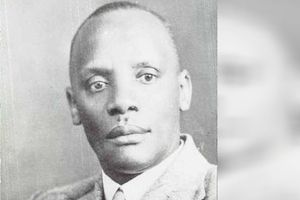
Harry Thuku’s political life is a study in the tragic arc of revolutionary compromise. In the 1920s, he emerged as a formidable force—sharp, articulate, and unafraid. At just 27, he confronted the colonial state head-on, decrying the indignities of forced labour, the oppressive Kipande system, and the brutalisation of African women on settler farms.
Harry Thuku. He started the Young Kikuyu Association, the first African Political Party in Kenya.
Photo credit: File | Nation Media Group
His arrest in 1922 ignited mass protests that ended in gunfire, but the blood spilled that day was not in vain. It marked the awakening of African political resistance in Kenya. For a moment, Harry Thuku embodied the spirit of a people stirring into political consciousness—one that was young, cross-ethnic, uncompromising, and unyielding in its challenge to power.
After his release from exile in Kismayu, Thuku returned a changed man—cautious, calculating, and increasingly aligned with the very system he once opposed. The sharp edges of his early radicalism were dulled by time, and perhaps by the allure of stability and personal gain.
By the 1950s, as Kenya’s nationalist movement escalated into the armed rebellion of the Mau Mau, Thuku positioned himself not with the fighters in the forest, or in detention camps, but with colonial administrators in Nairobi. He denounced the uprising, shamed its leaders on colonial radio, and took up appointments to settler-dominated bodies such as the Kenya Planters Coffee Union. The same man who had once been jailed for speaking out now lent his voice to the silencing of others.
Second liberation struggle
His journey was not uncommon in colonial histories. Thuku’s reward for loyalty was economic comfort—he expanded his coffee holdings—and political insulation. But the cost was clear: what he gained in personal security, he lost in historical stature. Finally, he could not gather the courage to attend the independence day celebrations.
Raila Odinga’s political career bears a striking resemblance to Thuku’s arc. The son of Kenya’s first vice president, Raila emerged in the 1980s as a defiant figure against the Moi regime. He was detained without trial, tortured, and exiled. His name became synonymous with the second liberation struggle—a fight for multi-party democracy and constitutional reform. He was fearless in confronting state repression and inspired a generation that longed for a new political order. For years, Raila Odinga was the unrelenting outsider—a political enigma who embodied resistance and carried the hopes of many who saw in him not just a politician, but a moral force, a living symbol of defiance. Yet over the past two decades, that image has slowly begun to fray. The contours of the original hardliner have grown increasingly difficult to trace.
After polling 660,000 votes in the 1997 presidential race, Raila abandoned the opposition of Mwai Kibaki, Wamalwa Kijana and Charity Ngilu and decided to bolster Moi’s Kanu in parliament.
Raila’s controversial decision to merge his National Development Party (NDP) with KANU—the very party that had once imprisoned him – came as a surprise. To some, it was strategic pragmatism; to others, it was a betrayal. Even his allies were uneasy. Wamalwa, with characteristic bluntness, once remarked that Raila was “wallowing in the miasma of deceit.”
During his brief but consequential stint in Kanu, Raila’s business fortunes rose conspicuously like those of Harry Thuku. He entrenched himself in the petroleum sector, acquired the Kisumu Molasses Plant for a fraction of its value, and brought in the controversial company Energem as a partner. Energem Resources Inc.—formerly DiamondWorks Inc.—entered Kenya in 2004 after purchasing a 55 percent stake in Raila's Spectre International. The company had previously been linked to the murky world of blood diamonds, and the rest is history.
Why, then, would Raila risk tarnishing his legacy by aligning with such questionable entities? Your guess is as good as mine.
Mudavadi, Wetangula label Raila a traitor as Nasa leaders disagree on handshake viability
Within Kanu, Raila had anticipated a smooth transition into State House following President Moi’s final term in office. However, Moi bypassed him in favour of Uhuru Kenyatta as his chosen successor. Disappointed, Raila returned to the opposition he had earlier left and threw his support behind Kibaki’s presidential bid in 2002. Their alliance, however, soon disintegrated after Raila accused Kibaki of reneging on a Memorandum of Understanding (MoU) that had promised him a stronger role in government.
Feeling betrayed, Raila became a formidable opposition leader, consistently challenging, some say sabotaging, Kibaki’s administration from within throughout his first term. By the time of the 2007 general election, Raila had mobilised a significant support base, positioning himself as Kibaki’s main challenger.
The election was hotly contested and ultimately marred by allegations of rigging, leading to widespread violence. The resulting political crisis culminated in a power-sharing agreement brokered by international mediators, which saw Raila appointed as Prime Minister in a coalition government.
From then, each phase of Raila’s political evolution carried with it a pattern: fiery defiance followed by strategic rapprochement. But the most consequential of these came in 2018, with the now-famous “handshake” between Raila and President Uhuru Kenyatta. Overnight, Raila transformed from the leader of the resistance to a pillar of the establishment.
The man who once called Uhuru’s presidency illegitimate was now photographed at State House, smiling, and championing the Building Bridges Initiative (BBI)—a constitutional project widely seen as a backdoor attempt to entrench the political elite. He worked with Kenyatta against William Ruto who was building his presidential networks.
By the time Raila was endorsed by the state as the preferred presidential candidate, against Dr Ruto in the 2022 election—only to lose again—his distance from the ground-level struggles of ordinary Kenyans had become palpable.
But it was the recent Gen Z-led protests of 2024, against President Ruto, that truly revealed how much the landscape had changed—and how much Raila had been left behind.
This youth-led movement against the punitive Finance Bill was spontaneous, leaderless, and born on social media. It had no political party, no tribal allegiance, no clear figurehead. It was unlike any protest movement Kenya had seen before—and for the first time Raila was not at its centre. For once, the thunder of resistance came not from him, but from a new generation that didn’t see him as a liberator, but as part of the establishment they were fighting.
Former Prime Minister and ODM leader Raila Odinga during an interview at his home in Karen, Nairobi on July 19, 2025.
Photo credit: Wilfred Nyangaresi | Nation Media Group
This was not his revolution. It wasn’t his fire. And many young Kenyans were quick to say as much: that Raila Odinga, once a roaring lion, was now little more than a tamed elder watching from the sidelines. Rather than side with the Gen-Z, Raila decided to join President Ruto’s government in yet another “broad-based” deal. He was awarded with a nomination to chair the African Union Commission, backed by President Ruto. That failed, though his nominees joined the Cabinet.
Just as Harry Thuku’s retreat into colonial boardrooms—and his public condemnation of the Mau Mau—transformed him from hero to relic, Raila Odinga now appears to be treading a similar path.
His party leaders have reaped political capital from the Gen Z uprisings, leaving many young activists feeling betrayed, as though Raila is benefiting from their wounds without sharing in their struggle.
The tragedy of both men is not that they changed. Political evolution is inevitable. The tragedy is in how they were absorbed—how their symbolic power was diluted through calculated alliances, and how their grassroots credibility eroded with each compromise.
But perhaps the larger story here is not about Raila or Thuku. It is about the system. Kenya’s political architecture has shown itself to be expert at co-optation. It doesn’t destroy revolutionaries. It promotes them. Gives them offices. Titles. Platforms. Until they no longer threaten it.
In the end, Harry Thuku was remembered only by the name of a street—his early brilliance overshadowed by his later collaboration with the colonial regime. When he died in 1970, the independent nation he had once dared to imagine barely noticed.
Raila Odinga’s story is still unfolding, but time is catching up with him. His place in Kenya’s history is undeniable, etched in decades of struggle and sacrifice. Yet the tone of that legacy is shifting. Once the unyielding voice of the people, he now risks fading into the background—a name in the credits, no longer central to the script.
I am not sure he realises that the stage has changed. Today’s youth are not waiting for heroes. They are building movements that are leaderless but not directionless—organic, decentralised, and fiercely independent. They resist co-optation, interrogate icons, and answer only to each other. Their fire spreads in WhatsApp chats, TikTok timelines, viral hashtags, and impromptu protests. Their revolution asks for no permission—and needs no permission—to begin.
Today, Raila’s true legacy may not lie in the battles he once fought, but in the generation that no longer waits for someone like him to fight on their behalf. It is a generation that honours him—not by following in his footsteps, but by forging ahead without him, just as Thuku was ultimately left behind.
In the end, both Thuku and Raila may have roads named after them. But if Raila is not careful, the street sign may outlive the substance. Legacy is not just what is remembered—it is what is carried forward. And history is rarely kind to those who mistake applause for permanence.
Kamau is a PhD candidate at the Department of History, University of Toronto, Canada. Email: [email protected] @Johnkamau1