Less than a year to the 2027 General Election, presidential hopefuls and political outfits are shifting their strategies from large urban rallies to intensive grassroots campaigns targeting voters in remote areas.
Even before official campaigns begin, politicians are already turning their attention to the “ground”, where they have intensified grassroots mobilisation and outreach, engaging directly with ordinary people as the country approaches next year’s polls.
President William Ruto and key opposition figures appear to be changing their political strategies, shifting from reliance on regional political kingpins to build support, to face-to-face interactions with the electorate at the villages.
Some have been photographed eating at roadside kiosks, entering manyattas and grass-thatched houses in rural areas, and attending functions that may be regarded as “too local”, in a move calculated to endear themselves to ordinary wananchi.
Although door-to-door campaigns existed in the past, ahead of the next year’s election, politicians are increasingly taking their campaigns directly to the people, including those in the tiniest hamlets.
Kisii Governor and ODM Deputy party leader Simba Arati speaks during President William Ruto’s visit to Nyamasaria, where residents gathered to hear about Government development projects on September 14, 2026.
Photo credit: Alex Odhiambo | Nation Media Group
President Ruto, who is seeking a second term, has, for instance, recently launched a high-stakes “rural offensive”, visiting remote villages and rural outposts where he has been keen to be seen delivering on promises and engaging face-to-face with voters.
He appears to be recalibrating his re-election strategy, shifting from reliance on regional political kingpins to direct engagement.
During the 2022 General Election campaigns and the early years of his presidency, Ruto often leaned on regional big names to mobilise support and negotiate with the electorate on his behalf.
However, Dr Ruto and his lieutenants have in recent months taken their campaigns to rural areas, in what political analysts and observers describe as a change in his re-election strategy.
In just three months, President Ruto has visited more than 20 counties, where he has held more than 50 rallies and grassroots meetings in remote outposts.
In August and September 2026, for instance, President Ruto held a three-day tour of Narok and Kajiado counties.
In Narok, Ruto visited remote areas including Olokurto in Narok North, Olpusimoru, Ololulung’a and Ewaso Ng’iro, where he inspected, commissioned and launched projects before holding roadside rallies.
In Kajiado, the President toured Rombo, Loitokitok, Namanga and Kimana.
During 10-day tour of his North Rift political stronghold, Ruto toured various far-flung areas, including Sigor, Kacheliba and Kapenguria in West Pokot, where he launched projects and held a series of roadside rallies, urging his supporters to register en masse and deliver more votes next year.
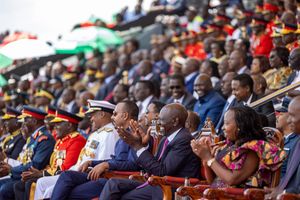
President William Ruto hosted over 5,000 Kalenjin elders and regional leaders at the Eldoret State Lodge to consolidate political support ahead of the 2027 General Election.
Photo credit: PCS
During his four-day tour of Ukambani last week, President Ruto visited various places, including Mwingi Central, Kitui West, Kibwezi East, Matuu and Mwala, where he held a series of roadside rallies and inspected development projects.
In Mwingi North, the rural home of Kalonzo Musyoka, President Ruto inspected the Tseikuru Affordable Housing Project, launched the Twimiwa-Tseikuru-Usweni Road and issued title deeds.
Under his new slogan, Usawa ni Sawa, his tours across different parts of the country, including his Rift Valley political stronghold, Eastern, Coast, North Eastern and Western regions, point to a man keen to engage face-to-face with the electorate, consolidate support beyond his traditional political strongholds and demonstrate that his administration has a national reach.
Ruto to Ukambani residents: I once campaigned for Kalonzo and he won, tell him to return the favour
Although urban centres such as Nairobi, Mombasa, Kisumu and other towns remain important in his political equation because they bring together young voters, informal-sector workers, professionals and small-business owners, his concentration on rural areas ensures that he expands his reach into new areas and consolidates support in regions where his political position may be vulnerable.
At the Coast, during an eight-day development tour in September and October, Ruto visited counties in the region, including Taita Taveta, Mombasa, Kwale, Kilifi, Lamu and Tana River, where he held engagements with locals, launched and commissioned projects, and inspected several development works.
Ruto and his lieutenants have also intensified engagements in Western and Nyanza regions, holding rallies and reaching out to rural populations.
Political observers say the Head of State is keen to win over the two regions, which were strongholds of the late former Prime Minister Raila Odinga.
In September, for instance, President Ruto toured the four counties in the Nyanza region — Kisumu, Migori, Siaya and Homa Bay — where he inspected projects while promoting investments in markets, water, electricity, education and public utilities.
The President has also visited North Eastern Kenya, where he held a series of rallies and grassroots engagements.
The approach marks a sharp departure from the Ruto’s earlier strategy, when his political advances into regions largely depended on influential local power brokers, governors, MPs and established party networks.
Key opposition figures have also stepped up grassroots voter mobilisation campaigns to consolidate their support ahead of next year’s polls.
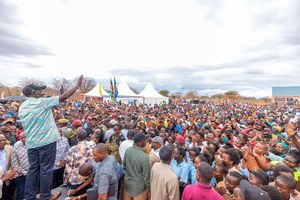
Wiper Party leader Kalonzo Musyoka addresses residents at Bumala, on Saturday, September 27. He recalled his long political association with the late Raila Odinga and urged supporters to back the opposition ahead of the 2027 General Election.
Photo credit: Alex Odhiambo | Nation
Even as opposition political factions navigate coalition-building talks and zoning strategies, leaders of the outfits have been touring remote villages and rural areas to strengthen their support.
Wiper leader Kalonzo Musyoka has, in the past three months, visited 15 counties, where he has held 36 rallies and grassroots meetings.
For instance, on August 10, Mr Musyoka held a grassroots leaders’ meeting at Kithimani Farm in Machakos.
On August 28, Musyoka held rallies in Kimana and Oloitoktok in Kajiado County.
He later visited Taita Taveta County the following day, where he addressed residents at Njukini, Eldoro, Taveta and Voi.
On September 29, Mr Musyoka held a grassroots meeting in Nakuru.
The Linda Mwananchi Movement, led by Nairobi Senator Edwin Sifuna, alongside figures such as Embakasi East MP Babu Owino and Vihiga Senator Godfrey Osotsi, has also held six rallies in Western, Nyanza and Coastal regions as it seeks to expand its footprint into a national outfit.
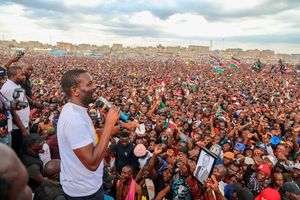
Nairobi Senator Edwin Sifuna addresses a Linda Mwananchi rally at Shianda in Mumias on August 9, 2026.
Photo credit: Alex Odhiambo | Nation Media Group
Rigathi Gachagua’s Democracy for the Citizens Party (DCP) has held 24 rallies and several grassroots meetings in various counties, including Nakuru, Nyandarua, Laikipia, Kiambu, Kajiado, Nyeri and Murang’a.
The People’s Renaissance Movement, led by Caleb Amisi, has also visited at least six counties, where it held a series of rallies and grassroots engagements.
According to political analyst Prof XN Iraki, the grassroots strategy will work in favour of President Ruto, who has made numerous visits to nearly all the counties in recent months.
“In Africa, the familiarity of a candidate is a key factor, and that is what Ruto is doing. The face-to-face interactions with people will work in his favour,” Prof Iraki said.
“Ruto has constantly organised visits, especially in areas where he is deemed ‘unwanted’, so that he can create familiarity and forge a relationship with the people. For instance, recently he was in Ukambani — Kalonzo Musyoka’s home turf — where he dangled the carrot of dozens of development projects,” he added.
Kakamega Deputy Governor Ayub Savula, who is among the figures spearheading President Ruto’s campaigns in Western Kenya, agrees with the sentiments, saying Ruto’s many trips and interactions with the electorate in remote villages and shopping centres will translate into votes.
“The difference between President Ruto’s tours and those of his rivals is that while the opposition is preaching Wantam, the Head of State is preaching development. Remember, in 2022, William Ruto’s presidential campaigns succeeded largely through a mix of grassroots organisation and the bottom-up economic model, which framed him as the champion of the ‘hustlers’ against political dynasties, resonating with the masses,” Mr Savula explained.
However, rival political players remain sceptical that President Ruto’s strategy of engaging face-to-face with the electorate at the grassroots will significantly reduce the hostility facing his administration in some regions.
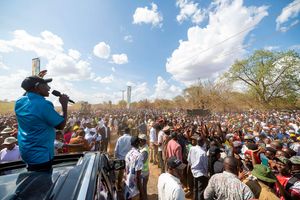
Democracy for the Citizens Party leader Rigathi Gachagua addresses his supporters during in Luanda, Vihiga County on June 12, 2026.
Photo credit: Alex Odhiambo | Nation Media Group
“The political discontent in various regions is not necessarily about lack of access to the President, but rather frustration over the high cost of living, taxation and unmet campaign promises. The new approach will do little to rescue the President’s deteriorating re-election prospects ahead of the 2027 polls,” argues DCP Secretary for Economic Planning, Dr Peter Mbae.
“The political rallies and grassroots engagements cannot reverse the political hostility currently facing President Ruto’s administration. The public mood against the government is largely driven by economic hardships. Mt Kenya has already made its political position clear, and no amount of grassroots tours will take the region back to him,” added Dr Mbae.
For Prof Tom Nyamache, a political analyst and Turkana University don, regions such as the Coast, Western Kenya, the Maa nation and Turkana will remain key political battlegrounds despite the new strategy by key political players.
“The regions were strongholds of former prime minister the late Raila Odinga. As we head to the 2027 polls, the areas remain politically fluid and highly competitive. Both the opposition and President Ruto have a chance of getting a fair share of votes from the regions,” he explained.
“Youth unemployment could leave Kenyans vulnerable to political manipulation, especially in the grassroots areas. Next year, voters, including those in rural areas, should scrutinise candidates’ policies, development plans and ability to address community needs, rather than political affiliations and personalities,” warned governance expert David Ngugi.
Already, key political figures, including those eyeing the presidency, have turned to social media platforms such as TikTok, X (formerly Twitter), Facebook and WhatsApp to engage and mobilise grassroots support, as well as expand their influence in areas controlled by rival formations.
“Social media will not merely influence the political conversation; it will help define it. Politics has always been a game of numbers. The modern voter is no longer reached solely through public gatherings or mainstream media. TikTok, X, Facebook, Instagram and other digital platforms will be where opinions are formed, narratives contested and political loyalties cultivated,” explains lawyer and policy analyst Steve Kabita.