If Kenya’s young political firebrands want a masterclass on how to talk back to power, they should return to Harry Thuku.
Not the softened Harry Thuku of textbook summaries. Not the later Thuku, who withdrew into caution. I mean the Harry Thuku of 1922: the one who terrified the colonial state, unsettled chiefs, angered missionaries, and forced the British administration to write nervous memoranda to Winston Churchill to justify removing him.
That Thuku understood something many loud young politicians still do not fully get today: speaking against power is not merely about noise. It is about clarity. It is about naming the system. It is about finding the words that make authority suddenly look smaller than it wants to appear.
He was dangerous not because he shouted. He was dangerous because he made people think. He did not simply complain that life was hard under colonial rule. He gave Africans a language with which to understand their suffering. He called lies what they really were. He termed labour exploitation as exploitation. He named chiefs as collaborators. He named the empire as slavery. That is why the colonial reports on him tremble with fear. They were not reacting to a hot-headed man. They were reacting to a man who had begun to reorganise the mind of the oppressed.
Harry Thuku understood that domination survives through language as much as through force. Colonialism wanted to be seen as order, civilisation, Christianity and progress. Thuku stripped off the costume. He showed the people that beneath the official language was coercion, extraction and contempt. Once he did that, the colonial state became vulnerable. Power can survive criticism. It can survive petitions. It can even survive insults. But it struggles when someone explains it too well to the people it is ruling.
Too many of today’s young radicals mistake defiance for rhetoric. They think speaking back means being dramatic, abusive, or endlessly angry. But Thuku’s power did not lie in temper. It lay in diagnosis. He was telling people not merely that the colonial state was unjust, but how it worked. He linked Europeans, District Commissioners, missionaries and chiefs in one system. He made it plain that Africans were not suffering from isolated bad men. They were living under an architecture of domination.
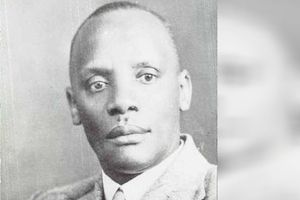
Mr Harry Thuku and his wife in Nairobi.
Photo credit: File | Nation Media Group
Young Kenyans who want to challenge power must learn this: the sharpest political speech is not the speech that makes your supporters cheer. It is the speech that makes the system feel seen.
Thuku also understood the importance of attacking fear itself. Colonial rule depended on the image of invincibility. The European administrator had to appear untouchable. The government had to appear too powerful to challenge. The missionary had to appear morally superior. The chief had to appear unavoidable. Thuku took that psychological fortress and put a crack through it. When he declared that the Europeans, the District Commissioners, the missionaries and the chiefs had lied to the people, he did more than accuse them. He dethroned them. He invited Africans to stop fearing official power and start examining it.
That is the second lesson: if you want to weaken power, shrink its aura.
This is something many young activists and politicians still miss. They speak of power as if it is gigantic and permanent, and in doing so, they help preserve its mystique. Thuku did the opposite. He mocked its pretensions. He unsettled its dignity. He made ordinary people imagine that the white rulers were not gods but men — anxious men, dependent men, men who could be defied. Colonial officials understood what this meant. They reported with alarm that many now believed Harry Thuku was “stronger than the Government.” That sentence alone tells us how deeply he had pierced the colonial imagination.
But Harry Thuku was not only a rhetorician. He was strategic. He understood that the colonial system was held up not only by fear, but by African labour. Roads were built by Africans; camps were maintained by Africans. Food was supplied by Africans. Taxes were paid by Africans, and porters carried the empire on their backs. Thuku recognised that colonial authority did not descend from heaven. It was sustained daily by the obedience and toil of the very people it oppressed. So he told people to refuse.
This is the third lesson: every serious challenge to power must understand the material basis of power. Young firebrands often become trapped in symbolism. They issue statements, trend on social media, perform outrage, and mistake visibility for leverage. Thuku’s speeches remind us that true resistance asks: what keeps this system alive? Where does it draw strength from? Whose labour, silence, and compliance make it possible? He grasped that if Africans withdrew the small daily acts that sustained colonial administration, the empire would begin to wobble.
That is not only a colonial lesson. It remains true in every age. If you wish to challenge any unjust order, learn how it feeds itself. Find its habits. Find its dependencies. Find its weak joints. Then speak in a way that teaches people where their power lies. Thuku also deserves attention for something else that made him brilliant: he did not spare local collaborators. This is where many youthful critics fail. They are willing to attack the obvious enemy, but they are less willing to speak honestly about those among their own people who sustain the system. Thuku was not fooled by the colonial use of chiefs. He saw clearly that local intermediaries were part of the machinery. He did not romanticise them because they were African. He judged them by function, not skin.
That is the fourth lesson: courage is incomplete if it only speaks upward and never sideways. A Kenyan firebrand who cannot criticise the chief, the broker, the fixer, the pious gatekeeper, the ethnic manipulator, the bought intellectual and the smiling collaborator is not yet serious. Thuku understood that domination often enters a people’s life through familiar faces. A movement that refuses to name internal enablers soon becomes performance.
And then there was his attack on the missionaries. That, too, matters for our time. When Thuku said missionaries had not come to preach the word of God but “of the devil only,” he was not merely being provocative. He was exposing the hypocrisy of moral language used to sanctify domination. Colonial power always wanted to look holy. It wanted conquest to appear as salvation. Thuku understood that if you do not challenge the moral language of power, you leave its deepest fraud intact.
In our own time, domination rarely introduces itself as domination. It arrives speaking the language of security, development, patriotism, family values, religion, peace, order, or national unity. A young firebrand must learn to hear the lie beneath the virtue. What is being hidden? Who benefits? Who is silenced? What violence is being justified in the name of stability? Thuku’s brilliance lay in his ability to make the sacred vocabulary of empire sound suspect.
But perhaps the deepest lesson from Thuku is about the purpose of political speech itself. His speeches were not simply self-expression. They were acts of public re-education. He was trying to teach people how to see. He wanted his audience to stop thinking with the categories supplied by the rulers. He wanted them to recover their own political judgment. He wanted them to know that misery imposed by others is not destiny.
This may be the most important lesson of all: the firebrand’s duty is not merely to excite the crowd. It is to awaken the public mind.
That is why so many young politicians disappoint. They confuse heat with light. They know how to provoke, but not how to illuminate. They know how to insult, but not how to explain. They know how to gather applause, but not how to deepen public understanding. Thuku did not just speak against the empire. He made the empire intelligible as a system of lies, theft and humiliation. That is why administrators panicked. They knew the problem was not his volume. It was his clarity.
And yet there is a caution here as well. Harry Thuku’s later withdrawal reminds us that fire is difficult to sustain. Power isolates, punishes, tempts and exhausts those who challenge it. That, too, is a lesson for the young. Do not mistake one brilliant moment for a lifetime of courage guaranteed. Political clarity must be disciplined, nourished and protected. The firebrand must learn not only how to speak, but how to endure.
Ahead of 2027, the task is not merely to denounce bad rulers, but to strip them of the myths that protect them: inevitability, invincibility, tribal indispensability, and the old blackmail that citizens must choose between order and freedom. Young firebrands must speak with moral clarity, but also with programme, patience and nerve. They must make the country imagine that honesty can govern, that public office can still mean service, and that a generation trained to fear the state can yet learn to laugh at it, challenge it and remake it.
Still, the 1922 Thuku remains one of the clearest examples in our history of what it means to talk back effectively. He did not flatter power. He did not fear respectability. He did not beg for approval from those he opposed. He spoke in a way that made the rulers suddenly sound ridiculous, fragile and morally naked. He made the colonised imagine another mental world.
John Kamau is a PhD candidate in History, University of Toronto. Email: [email protected]