Five days into the most consequential Middle East war in a generation, the numbers tell the story. Over a thousand Iranians reported dead. The Strait of Hormuz, through which one-fifth of the world’s oil moves every day, effectively shut.
Every major shipping line has abandoned the Gulf and is rerouting vessels the long way around Africa, adding roughly a million dollars per voyage. Oil is heading for $100 a barrel, with $150 possible. Dubai’s stock markets closed for two days.
Amazon’s data centres in the UAE were struck by Iranian drones and sixty cloud services went dark simultaneously. A Reuters analyst, watching capital begin to stir, wrote it plainly: Dubai’s safe-haven status is “in increasing doubt,” and international capital is “highly mobile.”
While the Middle East tears itself apart, there is a specific argument, covering ports, data, aviation and cities, for why Kenya should be where that mobile capital, those rerouted ships and those rattled Gulf businesses land next. But only if this government moves at a speed it has never historically managed to sustain.
Start with the ports. Those ships rerouting around the Cape do not stop needing fuel, provisions or crew rotation once they clear the Gulf. Freight that used to transship through Dubai’s Jebel Ali still needs somewhere to go. Every vessel passes directly past Kenya’s coastline. Mombasa handles over 30 million tonnes annually and is already East Africa’s dominant port.
Lamu became fully operational last month. Transport CS Davis Chirchir confirmed it in February: three ships offloading simultaneously, Phase I berths running, Post-Suezmax capable, with 1.2 million TEUs projected by 2027. Cape Town and Durban are already being discussed in shipping circles as the obvious beneficiaries of the rerouting.
Kenya Ports Authority needs to be calling Maersk, MSC and Hapag-Lloyd today, not next quarter, with a competitive offer for preferential berthing and transshipment. The pitch South Africa cannot match is the Lapsset corridor behind Lamu, a direct inland gateway to Ethiopia, South Sudan, Uganda and the Congo basin. That is a serious commercial argument. Someone just needs to make it urgently.
The data argument. What happened at AWS in Dubai this week was unprecedented. A major technology company’s physical infrastructure was destroyed by military action, banks were locked out of their own systems, and every technology executive with servers in the Gulf is now asking the same question: where else can our data go? Nairobi’s answer is already under construction.
Microsoft and G42 are building a data centre campus at Olkaria powered by geothermal energy, with a billion dollars committed. IXAfrica has secured up to $200 million for its Nairobi expansion. Airtel Africa’s 44MW hyperscale facility at Tatu City is on track for 2027.
The gap is not infrastructure; it is the pitch. An emergency coordinated push from the ICT ministry, Kenya Investment Authority and private sector targeting Gulf-exposed companies in the next thirty days could secure anchor tenants before Rwanda or South Africa drafts the same proposal.
The argument writes itself: your data is safe here, the power comes from the earth, and we are not anyone’s military target.
Now the cities. Dubai built its safe-haven reputation over forty years of obsessive consistency, clean streets, predictable governance, infrastructure that worked. That reputation just cracked publicly. Wealthy expats are, for the first time, seriously asking whether they should stay. The window is open. But it only opens for a city ready to absorb what Dubai is losing.
In the latest African city attractiveness rankings, Kigali scores 6.64. Nairobi scores 6.28. Cape Town, 6.13. Johannesburg, 5.95. Nairobi leads East Africa but trails Kigali, and anyone who has visited both cities knows exactly why. Kigali is clean, organised, walkable at night.
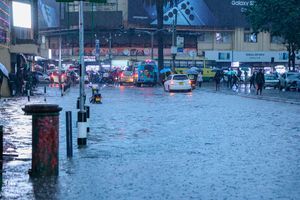
Nairobi remains a city where traffic swallows three hours of your day, where power cuts are still a business planning variable, and where a company setting up a regional headquarters must budget for security costs that should not exist.
Mombasa carries its own version: extraordinary potential sitting behind a reputation for neglect at its entry points. The government should treat urban quality as an economic emergency, not a beautification project. Clean the CBD. Enforce traffic discipline.
Make Mombasa’s port approaches reflect a city that takes itself seriously. None of this requires new legislation. It requires management, the kind Kigali delivers every day, and that Nairobi produces only in the weeks before a major international summit.
The capital leaving Dubai will go to whoever is ready first. The ships will choose the port that picks up the phone. The data centres will follow the fastest pitch. The expat choosing between Nairobi and Kigali will decide based on whether they feel safe walking to dinner.
Mr Amenya is a whistleblower, strategy consultant and startup mentor. www.nelsonamenya.com