What if we stopped seeing our drylands as a problem to manage and started seeing them as an economy to build? That question feels especially urgent at COP17 of the UN Convention to Combat Desertification, underway in Ulaanbaatar, Mongolia, under the banner “Restoring Land.
Restoring Hope”. At COP17, drought, land degradation, pastoralism and financing have moved to the centre of the global conversation, with negotiators weighing more than $12 billion in public commitments against an estimated $2.6 trillion needed globally for land restoration and drought resilience by 2030. The gap makes clear how much is at stake — and the opportunity to close it.
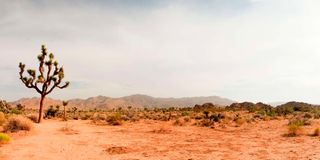
Most climate plans focus on forests, while rangelands, which cover 54 per cent of the world’s land, receive less attention. Across Africa, they stretch from the Sahel to the Horn of Africa and East and Southern Africa. For Kenya, this matters.
More than 80 per cent of our land is arid, semi-arid or desert, yet we often view these landscapes through scarcity and vulnerability. They are national assets, supporting communities, pastoral economies, biodiversity and untapped renewable energy and nature-based livelihoods.
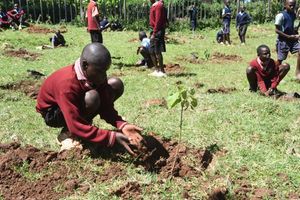
This is the opportunity climate urgency presents: to stop reacting to drought and degradation and start building a genuine restoration economy that invests in healthy soils, resilient rangelands, water, biodiversity and the people who steward them every day. This is why COP17 matters.
It does not just ask how we protect our land from a changing climate. It asks how we restore it, invest in it and unlock its value for generations to come. Rangelands are home to pastoralists whose livelihoods have evolved around livestock movement and the seasonal availability of water and pasture. Because they cover so much of Africa, they are deeply connected to the continent’s social, economic and ecological systems.
The importance of rangelands and pastoralists who depend on them cannot be overstated, particularly in the face of climate change. Climate change has made traditional livestock movement more difficult as pastures shrink, water sources disappear and migration routes are interrupted by conservation areas, farms, settlements, roads and other development. As much as 50 per cent of rangelands are degraded, threatening a sixth of humanity’s food supply and a third of Earth’s carbon reservoir.
However, it would be a mistake to see pastoralists only as victims of climate change. They hold some of its answers, including generations of knowledge about landscapes, weather patterns, vegetation and livestock that modern science is only beginning to appreciate.
They are partners, guardians and custodians of wisdom the world urgently needs as it searches for ways to adapt and restore. Being guided by community wisdom is one of the best-kept secrets.
My colleagues at the World Resources Institute have shown just how much is riding on pastoral stewardship of rangelands. Between 2016 and 2024, the world lost an average of 14 million hectares of rangeland each year to land-use conversion. Yet where Indigenous Peoples and Local Communities (IPLCs) held secure land rights, only 8 per cent of that loss occurred. The other 92 per cent happened where those rights were absent or unprotected.
The lesson is powerful: give pastoralists secure legal rights to their land, and you give the land itself its best chance of survival. Security of tenure is not a side issue in rangeland or forest management. It may be the single most effective strategy we have.
In the end, the story of the drylands is about who gets to decide their future. For too long, we have written that story in the language of loss: shrinking pastures, vanishing water and communities left to cope with a crisis not of their making.
COP17 gives us a chance to write a different story, one where Kenya’s arid and semi-arid lands are not the margins of our economy but where pastoralists are architects of restoration economies. The choice is not whether the drylands will shape Kenya’s future. They already do. They hold more than 80 per cent of our land, along with the livelihoods, biodiversity and possibilities that come with it.
The question is whether we will be visionary about it. Securing land rights for pastoralist communities, investing in healthy soils and resilient rangelands, and building financing architecture to match the scale of the challenge should be seen as nation-building. As delegates gather in Ulaanbaatar under the banner “Restoring Land, Restoring Hope”, Kenya — and any dryland nation — has an opportunity to lead by showing what is possible when a country invests fully in its drylands and trusts the wisdom of the people who have called them home for generations.
Ms Mathai is the MD for Africa & Global Partnerships at the World Resources Institute and Chair of Wangari Maathai Foundation