Happy Mazingira Day! I love that this year’s theme is “Our Environment, Our Responsibility”. It says what we sometimes avoid: protecting nature isn’t someone else’s job. It belongs to every one of us, from the farmer in Trans-Nzoia to the leaders in Nairobi. That is also why we have been standing up for our forests lately. Forests hold our soil in place, feed our rivers and cool our country.
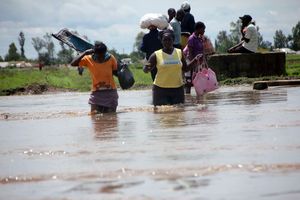
Yet it is painful to see how much of our environment is under attack daily, from degazettement, illegal logging and encroachment to drained wetlands and hillsides stripped bare. The timing makes it more urgent. With a strong El Niño forecast, we are all bracing for heavy rains and flooding. Where forests are gone, floodwater runs off bare slopes, strips away soil and sweeps into homes and farms. The people who suffer first are those with the least: families in low-lying settlements, small-scale farmers and children whose schools are cut off.
Responsibility has two sides. Leaders must protect our forests and enforce the law. This week is Nobel week. Every day, a new prize is announced: Medicine, Physics, Chemistry, Literature and, on Friday, the Peace Prize. For a few days, the world turns its attention to people whose work has made an exceptional contribution to humanity. For Kenyans, and for me in particular, this week carries a special meaning. In 2004, my mother, Professor Wangari Maathai, became the first African woman to receive the Nobel Peace Prize. It was also the first time the Nobel Committee had declared that protecting the environment is peace work.
Twenty-two years ago, that announcement set off a global debate. What does the environment have to do with peace? For most people at the time, peace meant the absence of war. It belonged to diplomats, generals and ceasefires. The environment, in contrast, was seen as secondary, something to care about once the serious business of security had been settled. Many people simply could not see why trees belonged on the same stage as the great peacemakers of history.
My mother’s answer started with people, not trees. She listened to rural women who told her their streams were drying up, their children were hungry and they walked farther every year for firewood. She had seen what happens when land is stripped and water disappears: families are pushed into poverty, communities compete for what is left, and tension grows long before the first shot is fired. For her, peace was never just the silence after a conflict.
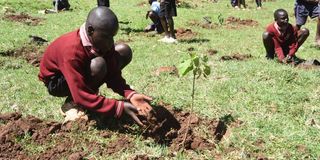
It was people having what they need to live with dignity, security and a voice in the decisions that shape their lives. When people lose the land and water they depend on, they lose all three. Planting trees was a commitment to restore hope. Every seedling was a small act of peace, built from the bottom up and led by women. Few people now question whether environmental destruction fuels displacement, hunger and conflict. But the question she forced the world to answer is still ours to pursue: how do we make sure that people, especially the most vulnerable, are at the centre of everything we do?
This is important because stewardship is not just about what we choose to restore, but also about how it sustains us and builds resilience among the most vulnerable. This is one of the most important lessons from my mother’s work. Environmental action very often means asking questions about power and accountability, and this is why the theme, “Our Environment, Our Responsibility”, speaks directly to the story of the hummingbird she reminded us about. The story centres on a little hummingbird trying to put out a fire in the forest while the larger animals watch, having given up.
Responsibility has two sides. Leaders must protect our forests, enforce the law and answer to the people who bear the cost when they do not. And each of us must act in our homes, farms, schools and neighbourhoods, because the people who lose most when nature is lost are those with the least power to stop it. Today, we celebrate another African woman receiving the 2026 Nobel Peace Prize.
Human rights lawyer Navi Pillay shows what it means to be uncompromising in the pursuit of peace in all its forms. From her years as a lawyer under apartheid to her time as UN High Commissioner for Human Rights, she has refused to look away.
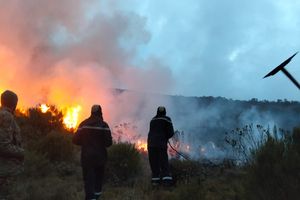
My mother loved to tell the story of the hummingbird. When the forest caught fire, the big animals stood and watched, convinced there was nothing they could do. The little hummingbird kept flying to the river, carrying a single drop of water at a time to pour on the flames. The others laughed at her. She answered, “I am doing the best I can.” On this Mazingira Day, and in this Nobel Prize week, let us be the hummingbirds. Both Wangari Maathai and Navi Pillay remind us of the importance of never giving up. The forests are burning, the rains are coming, and the people who depend on both are counting on us. Congratulations, Navi Pillay.
Ms Mathai is the MD for Africa & Global Partnerships at the World Resources Institute and Chair of Wangari Maathai Foundation