Last week a “Twar” (Twitter war) between Kenyans and South Africans exposed two competing versions of pan-Africanism: one belonging to presidents and the businessmen who travel between their state houses, and the other to ordinary Africans who spent a few chaotic days insulting one another only to discover that they were conducting a shared audit of their governments.
As global power shifts between competing centres, Africa’s place will depend on which of these two can organise its interests and make them count, and for now the presidents lead the convoy.
On September 30, a helicopter crashed near Marondera, Zimbabwe, killing all six aboard, among them Zimbabwean convicted fraudster Wicknell Chivayo and his wife, Lucy Muteke. Chivayo had served a jail term for fraud and money laundering back in 2004. Some Zimbabweans greeted the news with open celebration, and Kenyans joined in because Chivayo had become a familiar visitor to our State House.
A Namibian account took a swipe at Zimbabwe, a Kenyan declared Zimbabwe under Kenyan protection, a South African account accused Kenya of inviting war, and within hours we had improvised a defence pact worthy of NATO’s Article 5. I confess I threw a few jabs at Johannesburg myself, just for the banter.
The ammunition came from the same armoury: what each country has built since independence, its poverty, schools, clinics and the distance between its rich and poor. Beneath the national pride lay a shared understanding of what governments owe citizens. There was something grotesque about turning South Africa’s HIV burden into a Kenyan punchline when our own country lost 21,007 people to AIDS in 2024.
On October 6, Kenya confirmed its first imported Ebola case, a Kenyan who travelled from Congo through Kampala and died in Nairobi, and while we defended our frontiers online, the disease showed why our health systems need to work together.
The presidents found one another long before any Twar, and Chivayo moved through their company with an ease most Africans cannot expect at a neighbouring country’s border. In May, he was present when President Cyril Ramaphosa visited President Emmerson Mnangagwa’s farm, although he was wanted in South Africa in a money-laundering investigation, and Ramaphosa’s spokesperson later said the president had not known who he was.
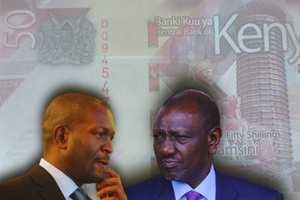
After the crash, President William Ruto mourned a “dear friend”, Mnangagwa called him “consummately philanthropic” and President Samia Suluhu Hassan remembered a visionary entrepreneur.
From Chivayo’s Eswatini diplomatic passport to the Kenyan passport that US sanctions records list for the brother of Hemedti, commander of Sudan’s Rapid Support Forces, these networks enjoy a freedom of movement ordinary Africans can only envy, and their members owe the public an explanation of where legitimate business ended and alleged financial crime began.
Ray Dalio’s Principles for Dealing with the Changing World Order examines how shifts in economic strength, internal conflict and rivalry between powers reshape the international order. For Africa, the question is what bargaining power we can assemble while larger powers compete. Our 54 UN member states, the African Union’s G20 seat, a growing workforce and strategic resources become leverage once we agree on what to demand and pursue it with discipline, whereas negotiating separately lets governments accept deals whose private rewards outweigh their public benefits.
For ordinary Africans, the machinery of unity moves rather slowly. The Mo Ibrahim Foundation’s May report records only four ratifications of the AU’s 2018 Free Movement of Persons Protocol – Mali, Niger, Rwanda and São Tomé and Príncipe – and none of last week’s principal combatants is among them. The same report puts intra-African trade at 18 per cent of Africa’s total, against a possible 53 per cent under full continental free trade. Afrobarometer finds 56 per cent of Africans supporting free movement across regional borders, while only 23 per cent find crossing for work or trade easy.
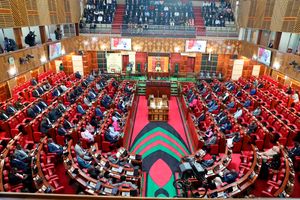
The popular alternative needs more than a common enemy. Kenya’s young people breached Parliament during the Finance Bill protests in 2024, and Madagascar’s youth, drawing inspiration partly from Kenya, brought down their government in 2025, only for the military to take power, which shows how quickly others can seize the opening citizens create. At the OAU’s founding summit in 1963, Kwame Nkrumah warned that governments that preserved colonial conditions would eventually face the resentment that had overthrown colonialism, and last week’s banter carried an echo of that warning as the insults kept returning to the same failures of public power.
So, keep the banter, at which we are plainly gifted, but turn the shared audit into demands we can pursue together: ratify and implement free movement for African collaboration, fix education and the inequality gap. Journalists, civic society, traders and professional associations can compare records across borders, expose the patronage networks connecting them and sustain pressure on governments to act in the public interest.
Our presidents have shown how easily influence travels across Africa when its holders share a common interest, and until citizens organise with comparable purpose, the multipolar world will keep buying Africa one state house at a time.