An early 2026 phone call broke my heart. It came from my community in Kibera, a call requesting for a referral to an oncologist who could take Jane*. Jane was in her 20s. By the time she called me, cervical cancer had been found on stage IIIA.
Cervical cancer is among the leading causes of death for women in Kenya. In 2023 alone, an estimated 5,845 women were diagnosed with cervical cancer for the first time and 3,591 of them died of the disease. That means that the age-standardised rate for new cervical cancer diagnoses is 32.8 per 100,000 women and the age-standardised death rate is 21.4 per 100,000 women. If nothing changes, we expect that cervical cancer will kill more than 611,000 women in Kenya between 2020 and 2070. Projected over the next century, these numbers soar well into the millions.
By the time they reach adulthood, most people will have been infected with the virus that causes cervical cancer: human papillomavirus, or HPV. It’s usually harmless, and nearly always goes away on its own. There are vaccines to prevent the infection that leads to cervical cancer. And when caught early through screening, cervical cancer can be prevented before it even begins.
We often talk about preventing cervical cancer as though it were the sole purview of government: public health delivered via clinics and public policy and funded by government budgets. This is true, to an extent. But eliminating cervical cancer in Kenya will take more than just policies from the Ministry of Health. It will take communities leaders, faith leaders, teachers, parents, traditional authorities, and local celebrities speaking up and normalizing HPV vaccines and cervical cancer screening.
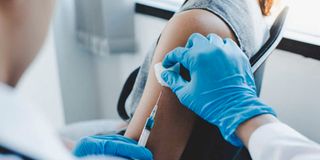
Access to vaccines is only part science, it’s also about trust. Myths about HPV vaccines that it leads to promiscuity, infertility or is otherwise dangerous are widespread throughout Kenya’s communities, and too often leaders within these communities say nothing in the face of these myths. When a parent is presented with the decision to vaccinate their daughter and aren’t sure what to believe, that vaccine doesn’t get administered and that girl is denied her best chance at protection.
The investment case for prevention is as strong. For every US dollar invested in comprehensive cervical cancer prevention (HPV vaccination and screening just once or twice in a lifetime), we see a return of US$3.20. This return comes in the form of avoided treatment costs, productivity preserved, and lives. Were Kenya to take decisive action and scale up prevention, we could eliminate cervical cancer beyond 2120, avoiding an estimated 1.86 million deaths between 2020 and 2120 and saving tens of thousands more if we reach our elimination targets sooner through catch-up vaccination. Prevention is an investment, not a cost.
Science also gives us more reason to act now than ever before. We now know that a single dose of HPV vaccine can provide strong protection from disease compared to the two dose schedule for the general population. Thanks to recent guidance from WHO’s Strategic Advisory Group of Experts (SAGE) on immunization, we know one or two doses are sufficient for girls and young women aged 9–20 years, and two doses are enough for women older than 21 years. For immunocompromised people, including women and girls living with HIV, three doses are recommended where programmatic conditions allow. Streamlining vaccination schedules in this way cuts costs, simplifies delivery, and will make community-based vaccination feasible if there’s buy-in at the local level.
Leadership is key to generating that buy-in. When chiefs, pastors, imams, teachers, and MPs make public pronouncements in support of HPV vaccination, parents pay attention. When leaders make sure schools are cooperating with vaccination programmes, coverage goes up. When men know that HPV vaccination protects their families and futures, and not just “women’s issues”, pushback subsides. Silence, on the other hand, implies that this is optional. Or controversial. Or not important. It’s not.
Advocating for HPV vaccination is gender justice in action. Cervical cancer kills predominantly poor women, young women, women far from specialist care. In communities like Kibera, when women call me begging for oncology referrals, they have already lost jobs, earnings, and hope to advanced disease. Prevention prevents this devastation. Preventing cervical cancer means a girl never misses school. It means a woman doesn’t have to drop out of the workforce. It means families aren’t pushed into impoverishment trying to pay for care. Preventing cervical cancer means we can plan for the future.
We cannot let Jane’s story be repeated. We cannot allow communities to be making these heart wrenching calls for oncology referrals when they could have prevented it years ago. It’s time to start thinking about responsibility differently. Instead of “the government should do something,” let’s start saying “we all have a role to play.” Communities who rally around vaccination, leaders who speak up and consistently spread the right messages, and parents who choose protection over fear can help change Kenya’s cervical cancer trajectory. Cervical cancer elimination is possible.