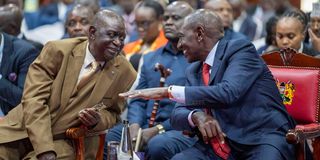
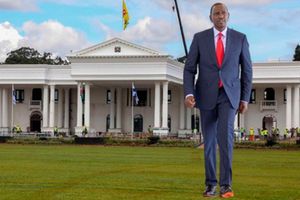
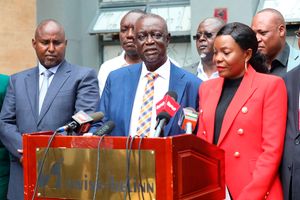
William Ruto’s people are very good at optics. Give them that. They understand the camera, choreography and the theatre of arrival: the overlong handshake, staged laughter and carefully selected crowd. For a while, it has worked.
Especially in Nyanza, where the government and its new friends have tried very hard to sell the idea that the region had finally been “brought in from the cold”; that the handshake had matured into something deeper; that the old opposition energy had been domesticated; that the people who once stood outside government demanding justice had now been folded neatly into the government’s sitting room.
Then this past weekend happened. The Linda Mwananchi tour, led by James Orengo, Edwin Sifuna and Babu Owino, landed in Kisumu to a hero’s welcome. The team took over Kisumu, drawing large crowds after earlier tension over possible confrontation with rival groups.
And suddenly, the smokescreen began to collapse. Because there are crowds that feel hired, and there are crowds that feel released. This one felt like the latter. It felt like Nyanza quietly rejecting the idea that its grief, its loyalty, its political memory and its democratic instincts could be auctioned off at State House and delivered as a regional voting bloc.
You can fool everyone sometimes. You can fool some people every time. But you cannot fool everyone every time. At some point, the citizen stops watching the performance and starts reflecting on their lived reality.
This government has mismanaged the economy with a level of confidence that would be impressive if it were not so destructive. Kenyans have been taxed harder, squeezed tighter, lectured louder and served worse. Every few months, there is a new explanation for why life must become harder.
Endless theatre of State House
Every new pain arrives wearing the vocabulary of reform. Taxes, cuts, confusion and broken promises are all branded reform. Even hunger, if explained by the right technocrat, apparently becomes reform.
But ordinary people experience government at the shops, not in press releases. When the same money buys less. They experience it in school offices, when headteachers are forced to run public institutions like beggars. They experience it in hospitals, in universities, in transport costs, in rent, in debt, in the small daily humiliations of trying to survive under a government that keeps insisting things are improving.
Take education. President Ruto said the Ministry of Education had received Sh23 billion for schools, to be sent before reopening. Why must basic school funding sound like presidential generosity or a rescue mission? Why should the money required to keep children learning arrive with the drama of a rescue mission?
Even worse, officials have had to clarify that public primary school capitation is Sh1,400 per learner per year. Sh1,400 shillings. Per child. Per year.
Now place that against the endless theatre of State House. The concerts. The delegations. The hosting. The political pilgrimages. The public impression, fair or unfair, is that State House has become a place where visitors leave with something in their pocket, while schools and hospitals are told to stretch coins.
A parent may not read every budget document. A teacher may not have time to argue with government economists on television. But they know when the school is broke. They know when their child has been sent home. They know when university fees have become a blockade. They know when public education is being weakened while political hospitality remains well-fed.
The government’s new higher education funding model was launched in 2023 with promises of fairness, need-based support and sustainability.
Under it, universities and TVETs no longer receive block funding in the old capitation form; students are instead funded through scholarships, loans and household contributions, which has produced anxiety, confusion and hardship for families already drowning under the cost of living.
By February 2026, reporting indicated that Kenya’s higher education sector faced a Sh260 billion deficit in the 2026/2027 budget proposals, threatening the very funding architecture students are supposed to rely on.
So when government people wonder why the political mood is shifting, they should stop overcomplicating the answer. It is the economy. It is education. It is arrogance. It is the widening gap between official speech and lived reality.
It is the insult of being told the country is being fixed while every basic experience of citizenship feels more expensive, more punitive and more uncertain.
This is why Nyanza matters as a symbol. Because Nyanza has often carried political stubbornness: refusing sedation and refusing to forget.
Ruto’s team thought they could manufacture a new emotional settlement. Bring in a few familiar faces. Soften the edges. Use ODM’s internal contradictions. Turn opposition confusion into government insurance. Create the impression that displeasure had been contained, converted and stored somewhere safe for 2027.
But there is no political chess move that can absolve you from a citizenry whose experience with your politics is no longer abstract. Once people feel your government in the price of unga, in the empty school account, in the tax notice, in the hospital bill, in the daily exhaustion of being governed by people who seem insulated from consequence, your cleverness begins to expire.
Nyanza people are not as captured as the cameras suggested. The region is not as settled as State House wanted Kenya to believe. The ground is not taking instructions from the optics team.
William Ruto may not have lost Nyanza this past weekend. But the illusion that he had already won it took a serious, satisfactory beating.