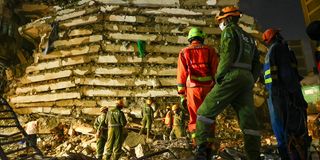
Last Friday, a multi-storey building under construction collapsed on Eastleigh’s 9th Street in Nairobi. Emergency teams, including the Kenya Red Cross and county responders, mounted rescue operations.
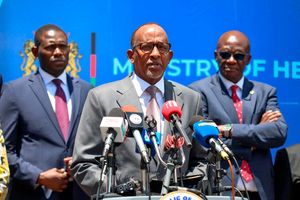
I am concerned that we often assess emergencies through the number of people rescued, rather than examining the conditions that exposed them to danger and the systems responsible for protecting them. Where were the building inspectors? Were warnings issued? How quickly did trained rescue teams, firefighters and ambulances arrive? Was there a coordinated incident command system? These questions deserve documented answers, not simply statements from political leaders visiting the scene.
The collapse comes as Kenya anticipates above-average rainfall during the October to December season. We have experienced enough flooding to understand the risks. Yet in parts of Nairobi, homes flood after heavy rain while residents face unreliable taps during dry periods. Poor drainage, construction in flood-prone areas, inadequate sewerage and weak enforcement of planning regulations increase the health risks associated with rainfall.
Research supports this concern. A 2024 peer-reviewed study in the Journal of Environmental Management assessed 200 shared sanitation facilities in Kibera. Researchers found that toilets connected to sewers and septic systems were more resilient to flooding than pit latrines and hanging toilets.
When poorly designed sanitation floods, untreated human waste can enter drains and living spaces, increasing exposure to diarrhoeal disease. Public health preparedness therefore requires more than distributing water-treatment tablets after contamination has occurred.
Another study, published in the American Journal of Tropical Medicine and Hygiene in 2025, examined water access in Nairobi’s informal settlements. It showed that the reliability and type of water supply matter for household health. A piped connection does not necessarily mean continuous, safe water. Counties must monitor water quality, protect supply infrastructure, maintain drainage and ensure safe sanitation before rainfall creates an emergency.
This is not only Nairobi’s problem. In 2024, some of the worst flood impacts were recorded in Kisumu, Garissa, Mandera and Tana River. Flooding destroyed homes, damaged roads and disrupted access to health facilities. Across Kenya, about 61,000 acres of cropland were destroyed and more than 11,000 livestock deaths were reported. For farming and pastoralist households, these are losses of food, income and the resources needed to recover. In Tana River, recurring floods and droughts expose families to alternating threats. A 2024 study in the peer-reviewed journal Disasters found that fragmented flood-risk governance contributes to unequal vulnerability. This matters for counties such as Garissa, Busia and Kisumu as well: preparedness must connect water management, agriculture, housing, health and county disaster services rather than assign each problem to a different office after the damage.
A 2021 study in the Emergency Care Journal examined ambulance services in Nairobi and found fragmented dispatch arrangements and limited public awareness of emergency services. Members of the public were the first to assist in 79 per cent of emergencies studied. This is not evidence that professional responders were absent in Eastleigh. It does, however, raise a legitimate concern about our reliance on untrained bystanders when timely, skilled intervention is needed.
The country has trained firefighters, rescue personnel, ambulance providers and the Kenya Red Cross. But a credible system requires adequate equipment, clear dispatch arrangements, accessible roads, regular simulation exercises and publicly reported response times. Families should know whom to call, which service is responsible and where injured people will be taken. An emergency response cannot depend on which politician reaches the scene first.
The current investigations in Eastleigh should establish both the circumstances of the collapse and the adequacy of the response. Beyond this incident, Kenya needs public reporting on building safety inspections, ambulance coverage, firefighter readiness, water quality and flood preparedness by counties. Accountability should extend to prevention, not begin when people are buried under rubble or displaced by floods.
The Sendai Framework for Disaster Risk Reduction calls on governments to identify risks, strengthen disaster governance, invest in prevention and prepare for effective response. The Sphere humanitarian standards emphasise safe water, sanitation and dignified conditions for people displaced by emergencies. These principles require functioning institutions and measurable preparedness, not simply contingency documents.
County governments should publish flood-risk maps, inspect high-risk buildings and drainage systems, and act on violations before disasters occur. They should identify safe evacuation sites, protect health facilities and water infrastructure, and pre-position rescue equipment and emergency medical supplies. National agencies must clarify coordination with counties and report lessons from each incident, including what failed and what has changed.
We have early warnings, legislation, technical institutions and previous experience. What we need is evidence that these are being used to reduce avoidable harm. Public health preparedness should be measured by safe homes, reliable water and sanitation, protected livelihoods and emergency services capable of reaching people in time.