On oil prices; this is the truth we must confront. The government is walking a tightrope. It can artificially suppress fuel prices to buy temporary peace on the streets, but this will not guarantee long-term structural damage to our economy. In the calculus of state survival, we must weigh between a painful price at the pump and a bankrupt nation.
Begin with the most basic fact in this debate, the one that almost no political voice is acknowledging: Kenya is a price taker. We import virtually all our petroleum. The price of crude is set in Rotterdam, in Dubai, on the Chicago Mercantile Exchange futures market. No act of Parliament, no Finance Minister’s statement, no public protest or demonstrations can change that number by a single cent.
In the current circumstances; the government has only two choices: let the consumer pay the true cost at the pump, or use public funds to absorb the difference.
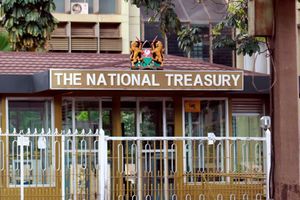
The state has chosen the latter, and the cracks are already showing. By halving VAT on petroleum products to 8 per cent alone; the government — according to estimates of the National Treasury — is haemorrhaging revenues at a rate of Sh12 billion a month. Annualised, it represents Sh144 billion — resources that would otherwise fund thousands of teachers, equip hundreds of health facilities, or service a portion of our crushing debt obligations.
Simultaneously, the state has depleted the Petroleum Development Levy (PDL) fund at an unsustainable rate —burning through Sh6.2 billion in April and another Sh5 billion in May. Out of a Sh17 billion buffer as at March this year, a mere fraction remains. At this velocity, the stabilisation fund will be completely dry before the next financial year even begins.
And, when the stabilisation fund runs dry, the government faces a brutal choice: absorb the full, unshielded price shock in a single adjustment — far more disruptive than a gradual increase would have been — or finance a fuel subsidy directly from the budget.
The underlying problem remains entirely intact. Global prices keep rising. The government merely treats the symptom while leaving the disease untouched.
That second option has a name in public finance: it is called borrowing to subsidise consumption. And it is precisely the fiscal pathway that has driven Nigeria, Zambia, and Ghana into sovereign debt crises.
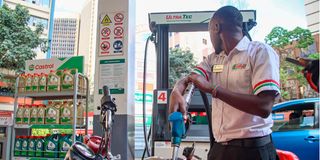
Granted, high fuel prices cause real hardship. The pain especially hits transport-dependent livelihoods hardest: the boda boda operator whose margins are squeezed by every fuel cycle, the matatu driver absorbing costs that passengers cannot always absorb in higher fares, the small-scale farmer for whom the cost of inputs is directly linked to fuel prices. These are real people facing real pressure, and their hardship deserves a real policy response.
But the point to always remember is this. When the government spends billions artificially lowering pump prices, it is not making fuel cheaper to ordinary folk—it is simply changing how the citizen pays for the high prices.
Instead of paying at the pump station, the citizens will pay through the gutting of essential public services like healthcare, delays in exchequer releases of capitation fees to schools; increased national debt, higher interest rates, and delays in repayment of government contractors.
Put in another way, when the government cuts VAT on fuel or releases money from the stabilisation fund, it does not reduce the cost of oil. It reassigns who absorbs that cost — shifting the burden from the consumer at the pump to the national exchequer.
What we should be debating is the whole idea of blanket subsidies. Blanket tax primarily benefits vehicle-owning households. They are notoriously regressive. While they do offer marginal relief to low-income earners via public transport stabilisation, the lion’s share of a fuel subsidy inherently benefits wealthier households who drive private, fuel-heavy vehicles. We should be thinking about how to design targeted interventions that can give relief to the working-class commuter more efficiently.
Kenya has watched Nigeria spend decades subsidising petrol it could not afford. The reckoning, when it came under President Tinubu in 2023, was brutal and immediate: a subsidy removed overnight, prices nearly tripling in weeks, inflation spiking, and economic pain of a magnitude that dwarfed anything a gradual market adjustment would have produced.
The lesson from Lagos to Lusaka to Accra is consistent across every case study — the pain deferred by a subsidy is not avoided. It is compounded — and it is delivered later, to people with fewer resources to absorb it, in an economy with less room to adjust.