Life in Nairobi has a predictable rhythm, usually dictated by traffic on Mombasa Road or the latest political drama. But over the past month, our attention shifted entirely across the Atlantic.
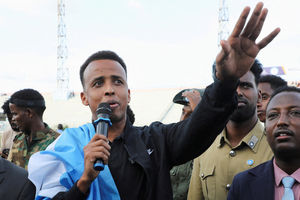
The 2026 World Cup in North America has been a beautiful, dizzying show. Yet watching it from the commercial heart of East Africa brings a familiar, quiet ache. Once again, we found ourselves looking into a mirror that reflects our immense love for the game, alongside our complete absence from its biggest stage. Even Omar Abdulkadir Artan from our shores, the first-ever Somali referee to officiate at a Fifa World Cup, was denied entry by a prejudiced America.
Africa’s Atlantic coast wrote the story of this tournament. The incredible runs of Morocco and Senegal into the knockout rounds did more than fly the continent’s flag. They exposed the footballing mediocrity of our eastern side.
While West and North African teams routinely test themselves against the world’s best, East African teams remain stranded in the qualifiers. One can only hope that hosting the Africa Cup of Nations in Kenya, Tanzania and Uganda in 2027 will finally spark something deeper in us.
As it stands, we have all the passion of true believers, but none of the bones to match. Look at the massive sea of red crowds that turned out in Nairobi and Kampala to celebrate Arsenal’s English Premier League title win in May.
This World Cup also showed that migration has changed international football forever. The modern national team by global journeys as much as by by local towns. We glimpsed this in the sheer number of foreign-born players anchoring African squads. At one point during a crucial match, every single Moroccan player on the pitch had been born outside the country. Makes you rethink what a country actually is. Belonging is no longer about where you took your first breath, but also about the roots that pull at your heart.
At the same time, we saw the quiet rise of island nations. Consider Cape Verde, which went unbeaten deep into the tournament. They stood proud as the second-smallest nation at the World Cup, larger only than fellow debutants Curaçao – another island state from the southern Caribbean Sea many hadn’t heard of, that punched far above its weight. What makes these tiny places so special? It seems to be a mix of close-knit community scouting, deep ties to European academies, and a unique grit born of being surrounded by the sea. They proved that in the modern game, a small population is no barrier to a massive spirit.
Beyond geography, the tournament offered a beautiful, undeniable shift in colour. There was a noticeable rise in Black and brown players on teams traditionally seen as homogeneous. From Western Europe to the Americas, squads looked less like exclusive clubs and more like the multicultural world we live in today.
As a result, we witnessed the fading power of Europe’s traditional giants. Teams like the Netherlands and Germany looked tired, lacking the youthful energy needed to survive this gruelling tournament. We now watch France and England’s final matches, wondering whether their young, diverse generation can break England’s old curses, or if they, too, will fall to the changing times.
Market for replica European shirts
In the haze, a broader decline seems to be creeping over Europe and older societies like Japan. It is hard not to make a drunken connection between their fading football dominance and their demographic winter.
The tournament featured several nations visibly struggling with declining birth rates. It is telling that Italy, an old powerhouse with one of the lowest birth rates on the planet, did not even qualify for the tournament. When a society has fewer children, its talent pool shrinks, its energy wanes, and the conveyor belt of young talent slows down.
The tournament offered another realisation: America’s moment at the top of the world feels like it is winding down. You could see this by contrasting the heavily secured, corporate American venues with those in Mexico. In Mexico’s stadiums — and how spectacular Estadio Azteca is — the pure joy, the warmth shown to fans from the rest of the world felt entirely different. The future, it seems, belongs to places that still know how to live, laugh, and welcome a stranger.
For those of us watching from Nairobi’s living rooms and local pubs, MultiChoice’s Swahili World Cup channels are an absolute joy. When God created mouths, and our ancestors created words, they surely saved the best ones for the Swahili commentators. Their poetic, rhythmic delivery turns basic midfield passes into epic poetry. Of course, we must also admit, if a bit grudgingly, that the Arab commentators matched them with their incredible, lung-bursting passion.
In the end, the 2026 World Cup reminded us that the world is moving faster than our sports chieftains can handle. If East Africa wants to be more than just a market for television rights and replica European shirts, Afcon 2027 must change us. It is time we stopped just watching the world make history and started making some of our own.
The author is a journalist, writer and curator of the Wall of Great Africans. X@cobbo3