Caption for the landscape image: Sweet bribes and school oligarchs Thursday, June 18, 2026 Scroll down to read the article Schools mirror the corruption and bribery of adult politics. Photo credit: Shutterstock By Charles Onyango-Obbo Columnist Article Related Uganda’s Daily Monitor, sister paper to Kenya’s Daily Nation, just published a disturbing investigation into secondary school elections. It revealed how schools mirror the corruption and bribery of adult politics. Gone are the days of nervous speeches in assembly halls, the popularity contests of the playground, and humble posters taped to corridor walls. PREMIUM Kwamchetsi Makokha: Do traitors ever become heroes? Death permits the living to claim the dead without accommodating their contradictions or capacity to unsettle the order. PREMIUM Kaltum Guyo: Frequent product shortages symbolise corrupt systems There is a sense that shortages are created to make room for deals PREMIUM Hanifa Adan: Why women still struggle to claim political power Kenya has operated under male-dominated political structures for decades. PREMIUM Irungu Kang’ata: Kenya needs to bury its coins and notes It is time we made a radical decision: in five years, let Kenya cancel coins and notes and go fully digital. PREMIUM Makau Mutua: Why 2027 won’t be 2002 redux The dinosaurs will be sent packing with their minions. Even if those minions are in their 40s. . Recommended for you PREMIUM Drone strikes stall two fuel tankers bound for Kenya PREMIUM Family’s Russia hope shattered by DNA confirmation of Shakahola death PREMIUM Kwamchetsi Makokha: Do traitors ever become heroes? PREMIUM Kaltum Guyo: Frequent product shortages symbolise corrupt systems PREMIUM Kisumu cement industry expands with new factory Login to join the discussion Please enable JavaScript to view the comments powered by Disqus. In the headlines Elections News Counties Business Opinion Sports Life & Style Health Podcasts Photos Newsletters Puzzles PREMIUM Civil servants face vetting over Sh6.2bn payroll fraud State renews push to identify irregular recruitment and weaknesses in management of public funds. PREMIUM Machetes, extortion and fear: Inside Homa Bay’s gang crisis Local business operators bore the brunt of the lawlessness. PREMIUM Mosiria exposes bitter fallout with Sakaja Nairobi County Chief Officer declares intention to challenge Governor Sakaja in 2027.
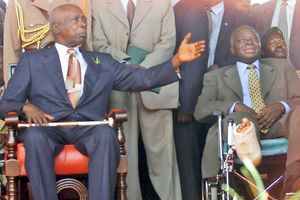
PREMIUM Kwamchetsi Makokha: Do traitors ever become heroes? Death permits the living to claim the dead without accommodating their contradictions or capacity to unsettle the order.
PREMIUM Kaltum Guyo: Frequent product shortages symbolise corrupt systems There is a sense that shortages are created to make room for deals
PREMIUM Hanifa Adan: Why women still struggle to claim political power Kenya has operated under male-dominated political structures for decades.
PREMIUM Irungu Kang’ata: Kenya needs to bury its coins and notes It is time we made a radical decision: in five years, let Kenya cancel coins and notes and go fully digital.
PREMIUM Makau Mutua: Why 2027 won’t be 2002 redux The dinosaurs will be sent packing with their minions. Even if those minions are in their 40s.
PREMIUM Civil servants face vetting over Sh6.2bn payroll fraud State renews push to identify irregular recruitment and weaknesses in management of public funds.
PREMIUM Machetes, extortion and fear: Inside Homa Bay’s gang crisis Local business operators bore the brunt of the lawlessness.
PREMIUM Mosiria exposes bitter fallout with Sakaja Nairobi County Chief Officer declares intention to challenge Governor Sakaja in 2027.