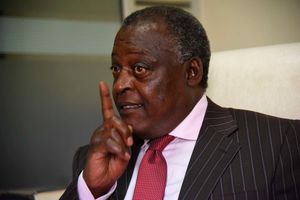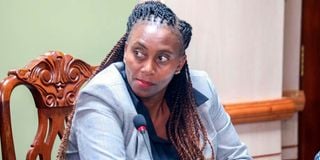
Public Health Principal Secretary Mary Muthoni before the National Assembly Departmental Committee on Health at Parliament Buildings on February 19, 2025, to discuss the processing of 2025 budget policy statement.

The 78th edition of the World Health Assembly meets later this month in Geneva under the theme ‘One World for Health’. This annual convening is the decision-making arm of the World Health Organisation (WHO). It brings together ministers of health, experts, and other actors.
The unsurprising focus for this year is the ways in which the WHO can be better repurposed to deliver on its goal of advancing ‘health for all’ despite present challenging geo-economic and political circumstances which place its very existence in jeopardy. The world’s multilateral health entity is facing a funding crisis, worsened by the intended withdrawal of the United States.
Up for debate during the assembly is an effort to soar annual mandatory member contributions, known as “assessed contributions” (typically based on a country’s wealth and demographic outlook), with fears the depressed economic outlook for many countries will mar progress in getting the resolution for a 20 per cent increase passed.
Significant indications suggest that Russia and China are not supportive, dealing a blow to this critical predictable financing source that has been on a declining trajectory. Member states’ contributions (mandatory and voluntary) are a key source of funding for the WHO.
The Assembly will happen in the context of the changing dynamics in the global development financing landscape which has directly affected health budgets negatively as priorities in donor countries shift. The dangers of over reliance on donor financing have been exposed even as universal health provisioning evades most countries.
The WHO’s rapid assessment of the reduction in aid budgets (conducted across 108 countries) cautions of dire impacts especially for the poor and vulnerable as health systems and services meet sudden disruptions. Even at this early stage of these recent cutbacks, the biggest impact is on health emergency preparedness and response, followed closely by public health surveillance. In terms of service provision, disruptions are clear in malaria, HIV, TB, family planning and maternal and child health services. Another obvious and damaging effect is health care worker-job losses.
Public health spending
Twenty-four years ago, at the end of April 2001, African governments adopted the Abuja declaration which benchmarked a minimum 15 per cent annual budgetary allocation to health care. Unfortunately, most countries have not met this target. At an estimated 14.62 per cent annual spend, Botswana comes close to meeting it. They have been consistent in prioritising public health spending. The WHO’s benchmark for minimal annual health spending is five per cent of GDP.
On this metric, the WHOs’ Global Health Expenditure data base (2025 estimates) show that Botswana spent an equivalent 5.7 per cent of its GDP on health care. In contrast, Kenya spent 4.3 per cent. Cuba, a touted exemplar of what commitment to public health financing looks like spent 11.7 per cent of its GDP on health care for its citizens. South Africa and Namibia spent 8.7 and 9.3 per cent of their GDP on health care, respectively.
Despite enshrining the right to health in the Constitution and making aspirational policy pronouncements on universal health coverage, Kenya has been registering declines in its annual budgetary allocations to health care over the past few years and has not reached these targets.
A 2022 analysis by the UN’s Office of the High Commissioner for Human Rights recommends a more than double investment (from current levels) in the health sector to meet these targets and come close to delivering universal health coverage for citizens. As of 2021, the life expectancy at birth (for a child born in Kenya) is 66.8 years.
Africa’s average for this metric which estimates the average number of years a newborn would expect to live is 63.6. Without public investment in healthcare, the burden falls on citizens. When households must spend large sums of money on health needs (out-of-pocket), they tend to fall into poverty, inequalities deepen and quality of life and life expectancy regress. Health is pivotal to the enjoyment of other human rights.
Health care systems are vulnerable to external shocks such as pandemics. The ensuing challenge is to craft resilient systems that work for citizens. Disparities in access and quality of health care usually mean that the poorest and most vulnerable suffer disproportionately. According to the WHO, more than half of the world’s population lacks access to some aspects of essential health services.
Skilled health workforce
Although pivotal, funding is only a part of the puzzle in securing the right to health care. Another important plank is a skilled health workforce. Projections of shortage of trained and equipped health professionals (especially in less developed countries) signposts a key challenge to achieving progress towards universally set health goals.
The WHO places the shortfall in health care workers at 11 million by 2030. The increased migration of the few trained health care workers from less developed countries to developed ones worsens the situation in places facing even greater health needs. Climate change also poses added health risks as do the increases and changes in the disease burden in terms of access and quality of health systems.
As the Assembly meets, aside from focusing on its existential crises, it should make compelling resolutions on how to address crippling external public debt as a key to freeing resources for health care financing. This crisis moment presents an opportunity for ideas around sustainable and innovative financing for health care.
Ms Ndomo is a social policy analyst with a keen interest in political economy