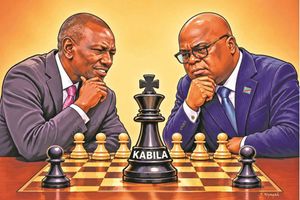
Kenya is approaching another election with an old political habit dressed up as a new beginning. The men who have spent years competing for power are assembling, rearranging loyalties and preparing to tell us that this time, their alliance is about the country.
We have heard this story before. The handshake changes, the photographs change, but those sitting at the negotiating table rarely do.
The question is whether removing William Ruto will finally break this cycle or simply give it another presidential term. TIFA Research’s November 2026 report, Kenya’s 2027 Electoral Landscape: Political Alignment and the Evolving Presidential Contest, offers a revealing snapshot. Ruto and Edwin Sifuna are tied at 31 per cent in presidential preference. Kalonzo Musyoka follows at 9 per cent, Fred Matiang’i at 5 per cent and Rigathi Gachagua at 4 per cent. Fifteen per cent remain undecided.
Ruto is not running away with the election, but neither has the opposition consolidated a convincing alternative. Sifuna’s rise has disrupted the established pecking order, while familiar presidential hopefuls have lost ground.
The opposition faces a choice beyond finding a candidate who can defeat Ruto. It must decide what kind of political arrangement it is asking Kenyans to endorse.
The purist argues that Kenya cannot be rebuilt by rehabilitating those who helped ruin it. There is little appetite for another coalition assembled around political survival, with familiar faces promising unfamiliar results.
Bringing together figures such as Matiang’i, Gachagua and Kalonzo may be presented as a practical route to State House, but it raises an uncomfortable question: are we building a new political order or restoring the old one?
The realist has a different argument. Politics is not a seminar in moral consistency. Numbers and electoral arithmetic matter. Power is not surrendered because citizens write eloquent essays about accountability. If removing Ruto requires working with people whose records are deeply contested, perhaps the greater good demands uncomfortable compromises.
Both positions have merit. The purist risks confusing political purity with effectiveness. A movement that refuses every imperfect alliance may find itself morally correct and permanently powerless. The realist, however, risks making compromise an excuse for abandoning the principles that gave the struggle meaning.
The distinction is not whether we engage politicians with compromised records, but whether engagement comes with conditions, scrutiny and consequences. TIFA’s findings on opposition unity make this dilemma more urgent. Among opposition supporters, 57 per cent consider it very likely that the Linda Mwananchi and Ukombozi leaders will unite before the election. Yet 43 per cent identify Gachagua as mainly responsible for disagreements among opposition leaders.
Kenyans want unity. They are also watching those who claim to be building it. A private conversation between leaders cannot absolve anyone of public responsibility. A handshake cannot settle questions of corruption, human rights violations, constitutional abuses or decisions that have impoverished millions. National unity cannot mean the powerful forgive one another on behalf of citizens who were never consulted.
The same poll shows that 43 per cent oppose the Broad-Based Government, against 32 per cent who support it. The appetite for change is real, but change cannot be measured by politicians abandoning one camp for another.
The opposition must tell Kenyans what happens after Ruto. What becomes of the Constitution, institutions weakened by political interference, public debt, police brutality, land injustice and the concentration of wealth? What guarantees exist that the next administration will not inherit the same machinery and turn it against those who helped bring it to power?
Ruto is a symptom of a deeper national crisis. The political economy that produced his presidency predates him. Patronage, ethnic bargaining, impunity and the capture of public institutions by private interests have survived successive elections because we treat political succession as national transformation.
Our unresolved questions remain: Who owns Kenya? Who benefits from its resources? Why does political power remain the surest route to wealth? Why do communities negotiate their place in the country through ethnic brokers rather than equal citizenship? Replacing Ruto may be necessary. It is certainly not sufficient. Kenya does not need another saviour assembled through backroom negotiations. It needs a political settlement in which no president, coalition or party can exercise power without accountability.
The real test of the opposition is not whether it can unite against Ruto, but whether it can unite around a Kenya that will remain worth fighting for after Ruto is gone.